


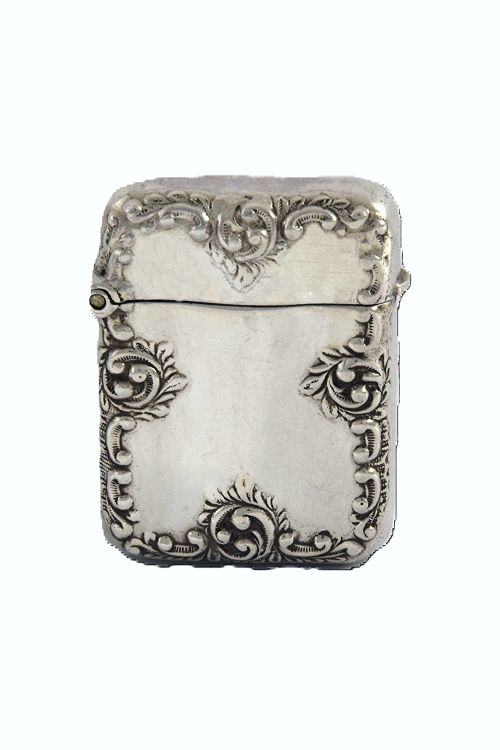

Silver Match Box Holder
When you search for a silver match box holder, you find small functional vessels designed to protect and present matches in domestic or pocket use.
Silver Match Box Holder
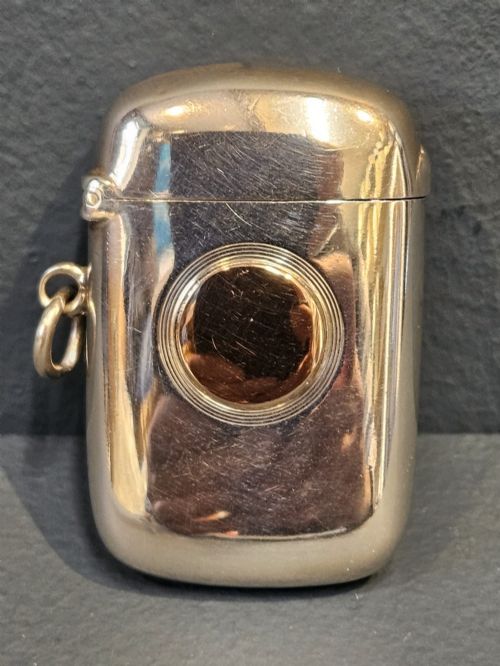
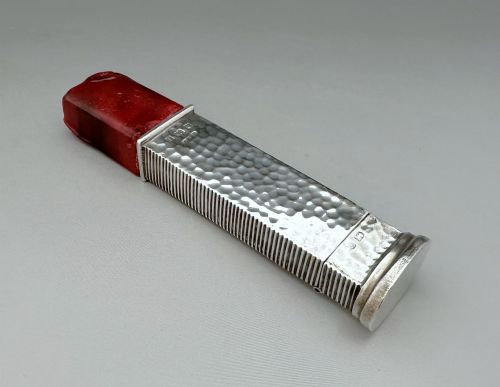
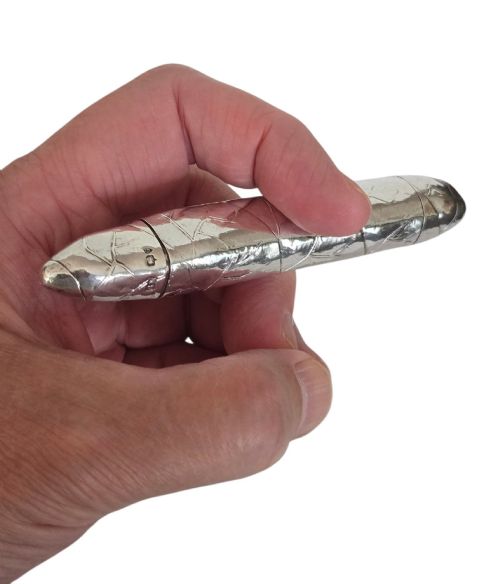
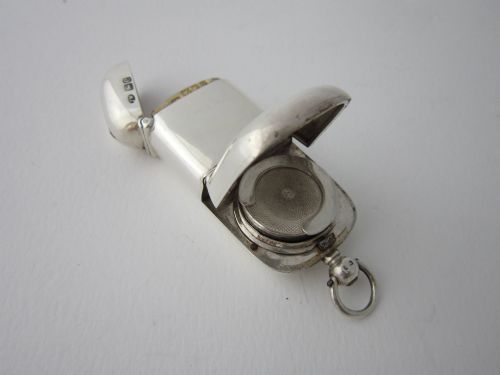
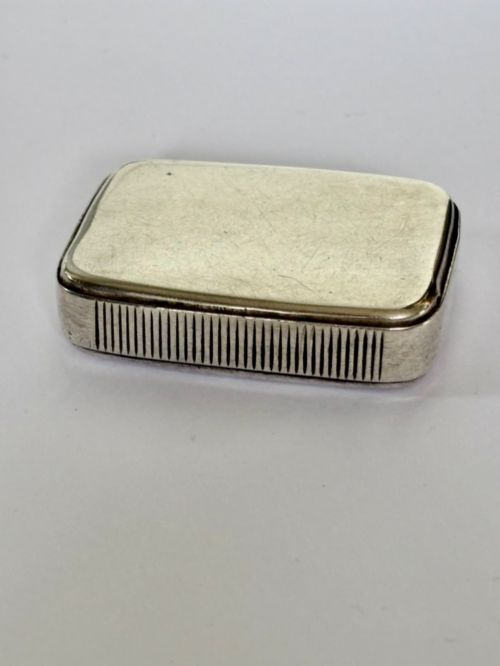
A silver match box holder or vesta case serves to house safety matches or strike-anywhere vestas, keeping them dry and preventing accidental ignition in a pocket or on a table. The form ranges from simple pocket vestas to heavy table matchbox covers and combination cases that integrate sovereign holders, scent flasks, or writing wax.
The pieces appearing on this page span the Victorian, Edwardian, and George V periods, alongside Art Deco and Arts & Crafts designs. You will encounter standard rectangular sleeves alongside elaborate novelty shapes modelled as animals, figures, and architectural castle tops.
Makers utilised sterling silver and silver gilt, frequently augmenting the metal with vitreous enamel, tortoiseshell, gemstones, or nickel. Both pocket and desk-bound varieties reflect the social rituals of smoking and domestic lighting prevalent from the late nineteenth century onward.
How they were made
Silversmiths constructed these holders primarily from sterling silver sheet, shaped by pressing, stamping, or folding around a core, then joining the seams with solder. Cast elements provided dimensional novelty forms such as animals, owls, and standing sentries, requiring hand-chasing to define surface textures like feathers, fur, and scrollwork.
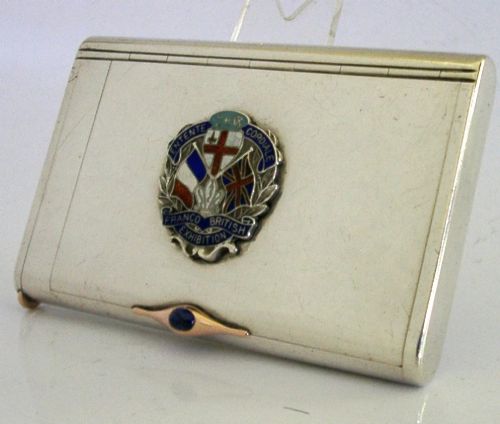
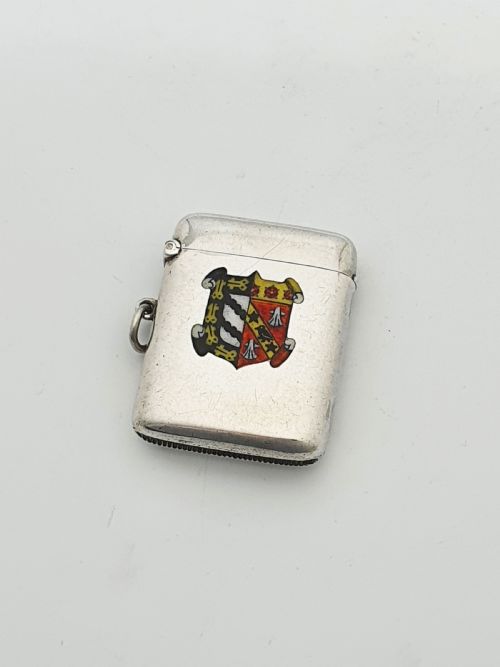
Colour and decoration came from applied vitreous enamel, guilloché patterns, and inset panels of hardstones like lapis lazuli, onyx, and jade. Makers also combined materials by lining boxes with cedar wood or incorporating secondary compartments for stamps, sovereign coins, and sealing wax.
Pug dogs, owls, and jockey caps peer out from silver match containers, proving that even a box for lighting fires demanded a sense of humour.
What varies in quality
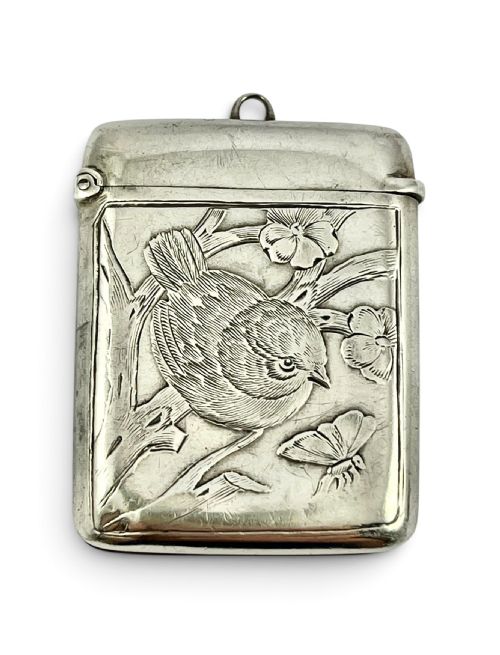
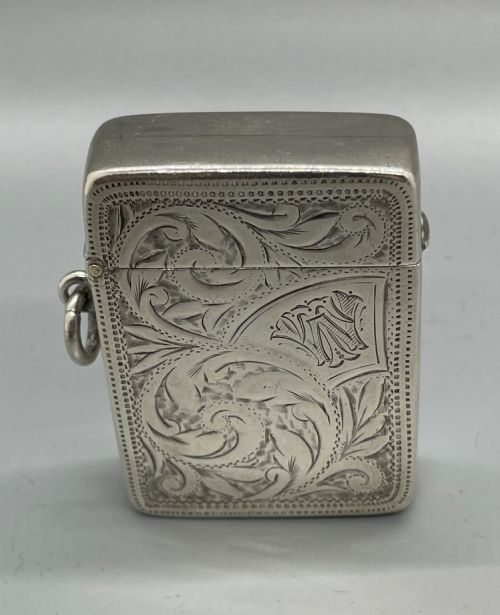
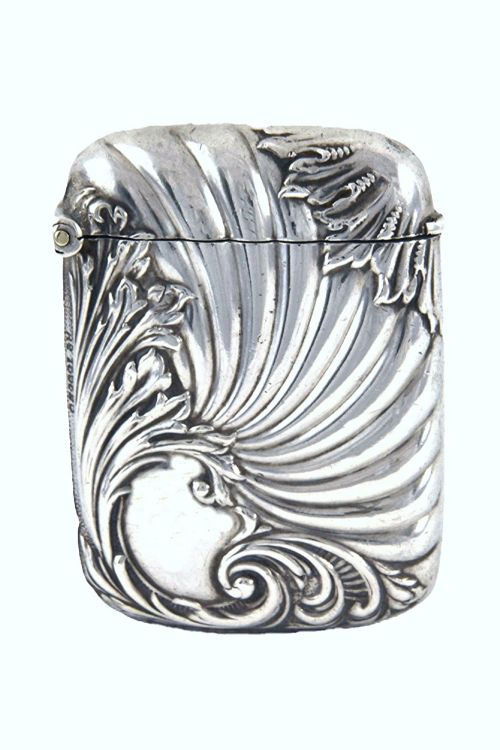
Quality rests upon the crispness of the original die-stamping or the sculptural fidelity of cast novelty pieces. Superior examples exhibit deep, unrubbed hand-engraving of foliage, crests, and scenic views, whereas lesser items rely on shallow machine rolling that softens over time.
The integrity of applied decoration separates standard production from exceptional work. Intact polychrome enamel free from hairline fractures, secure hinge mechanisms with a tight snap closure, and clear, legible hallmarks demonstrate superior original manufacture and careful preservation.
Sampson Mordan & Co·A & J Zimmerman·Robert Pringle·George Betjemann·Levi & Salaman·Mappin & Webb·Edward I Farmer·Adie Lovekin·S Blanckensee·William Comyns·Deakin And Francis
The Silver Match Box Holder Glossary
- Vesta case
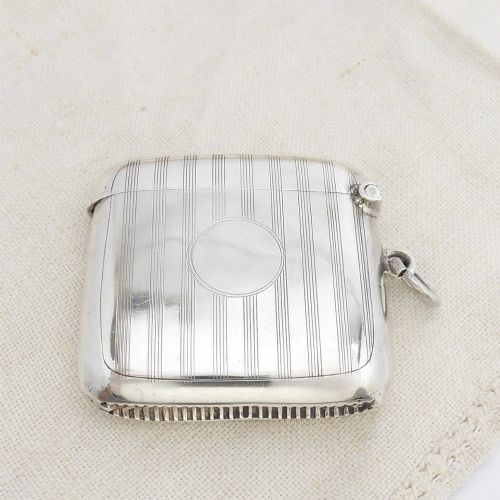
- A small pocket container specifically designed to hold short wax matches known as vestas, fitted with a striking serration on the base. These items were ubiquitous accessories in the Victorian and Edwardian periods.
- Castle top
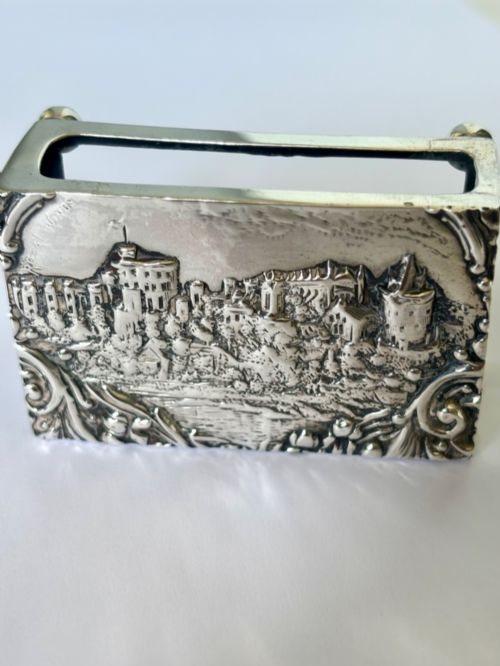
- A decorative style featuring a detailed, high-relief image of a famous building or historic landmark stamped onto the metal lid or cover. Windsor Castle and various scenic views frequently appear on these pieces.
- Guilloché
- A decorative technique where a precise, intricate geometric pattern is mechanically engraved into a underlying metal surface before translucent enamel is applied. This creates a shimmering, light-reflecting backdrop of colour.
- Silver gilt
- Sterling silver that has been coated with a thin layer of gold through an electrochemical process or mercury amalgamation. This treatment produces a rich golden interior or exterior finish.
- Novelty
- A piece shaped to resemble an animal, human figure, or inanimate object rather than following a standard geometric container form. Collectors prize these imaginative interpretations for their sculptural engagement.
Silver Match Box Holder: Frequently Asked Questions
What is the difference between a vesta and a matchbox holder?
A vesta case is typically a closed pocket container with a hinged lid and a striking surface on the bottom for individual matches. A matchbox holder is an open sleeve designed to slide directly over a standard cardboard box of safety matches.
Both items served to keep matches secure and dry, but vesta cases were meant for personal pocket carriage while matchbox holders often sat on dining tables or desks.
How do I identify the date of a silver match holder?
British silver match holders almost invariably carry hallmarks stamped into the metal. These marks typically include a maker's mark, a purity standard mark such as the lion passant for sterling, a town assay office mark like the anchor for Birmingham, and a date letter.
Matching the specific letter font and shield shape to published assay office tables reveals the exact year the piece was hallmarked.
Why do some match holders have compartments for wax?
Before the widespread adoption of self-adhesive envelopes, sealing wax was routinely used to secure personal correspondence and official documents. Makers incorporated a dedicated wax compartment and taper holder into the design for convenience.
These combination pieces allowed a Victorian or Edwardian user to light a match, melt their wax, and seal a letter using a single pocket accessory.
Are novelty match holders rarer than standard designs?
Novelty match holders fashioned as animals, figures, or architectural subjects generally required more labour and specialised casting skill to produce. Consequently, makers manufactured them in smaller quantities than standard plain or engraved rectangular sleeves.
Their whimsical forms made them popular gifts, and today they attract significant attention from collectors seeking unusual sculptural silver.