


Silver Wax Seal
When you handle a silver wax seal, you hold a tangible piece of personal correspondence history that still carries weight on the desk.
Silver Wax Seal
A silver wax seal is a desk accessory designed to impress a personal crest, initial, or figural motif into melted sealing wax on correspondence. These pieces span from simple nineteenth-century fobs and desk seals to elaborate Edwardian novelty figures, combined vesta cases, and bougie boxes.
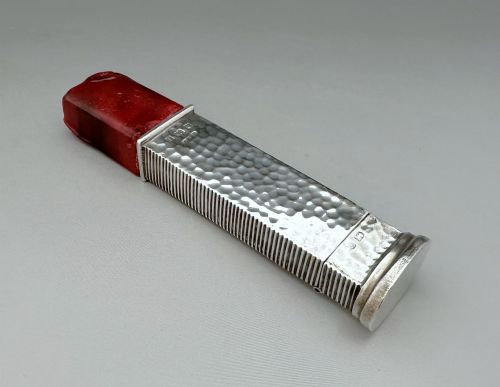
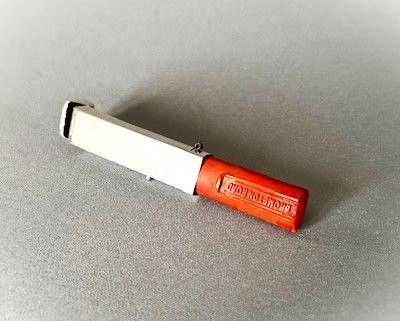
The versions most commonly met on this page are Edwardian and Victorian desk seals cast in solid sterling silver, frequently taking the form of animals, historical figures, or combined writing implements. Alongside standalone seals, you will encounter multi-functional desk tools that house sealing wax sticks, matches, or pencils within the handle.
Originating largely from British workshops, these utilitarian desk items reflect the Victorian and Edwardian obsession with detailed figural casting and correspondence etiquette. Collectors find them in various formats, from heavy desk rulers to miniature seals topped with carved hardstones, glass intaglios, or amber.
Materials and construction
The construction of a silver wax seal typically relies on solid sterling silver, cast or fabricated into handles shaped as animals, human figures, or architectural columns. Many incorporate contrasting materials like cut glass, mother of pearl, amber, or coloured glass intaglios inserted into the matrix for stamping.
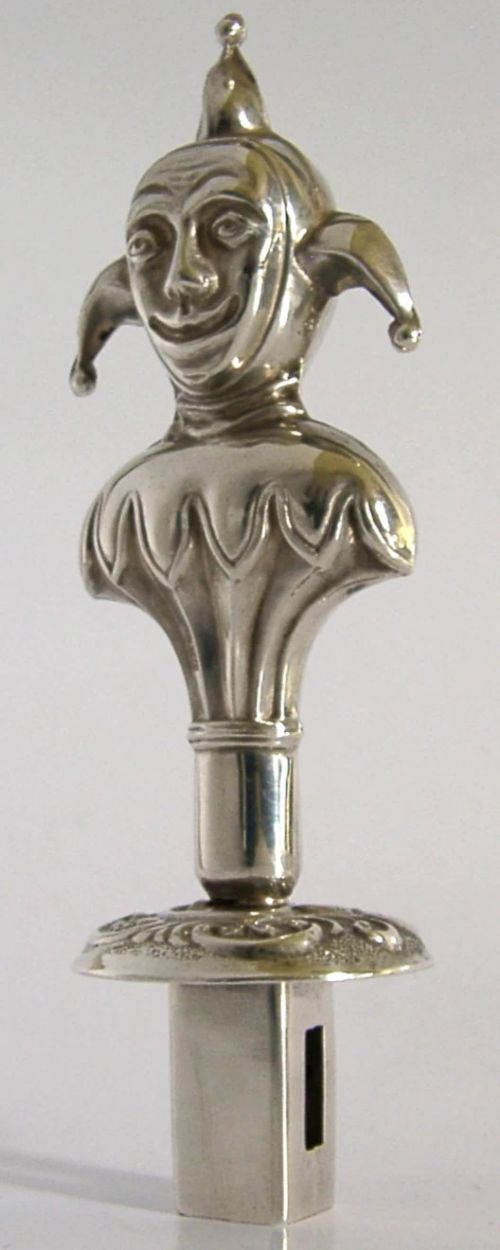
Makers utilised casting techniques to achieve high levels of sculptural detail in figural handles depicting characters like Mr Punch, jesters, or animals. Hollow-formed components often doubled as containers for sealing wax sticks, while steel matrices provided the durable stamping face required for repeated use.
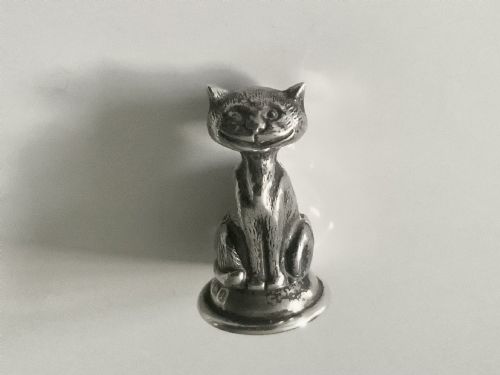
Keep an eye out for the mischievous grin of a silver Cheshire Cat seal.
Distinctions in quality
The quality of a silver wax seal rests upon the crispness of the cast figural detail and the sharpness of the engraved or cut matrix at the base. Superior examples retain deep, legible impressions in the metal matrix and exhibit careful chasing rather than generalized smoothing from wear.
The inclusion of functional complications, such as integrated vesta compartments, retractable mechanisms, or original unused sealing wax, elevates the desirability of a piece. Furthermore, the presence of clear hallmarks indicating esteemed makers like Sampson Mordan provides a benchmark for fine craftsmanship.
Sampson Mordan·Robert Hennell·Mappin and Webb·Adie and Lovekin
The Silver Wax Seal Glossary
- Matrix
- The engraved or carved face at the base of the seal that presses into the wax. It reverses the intended design so the stamped impression reads correctly.
- Intaglio
- A design incised into the flat face of a stone, glass, or metal seal. When pressed into wax, the design appears in relief.
- Vesta case
- A small pocket or desk box designed to hold matches. These are frequently combined with sealing wax holders in Edwardian desk accessories.
- Bougie box
- A specialised container used to hold a taper or small wax candle. These provided the flame necessary to melt sealing wax for correspondence.
Silver Wax Seal: Frequently Asked Questions
What is a silver wax seal used for?
These pieces were employed to melt and impress sealing wax onto letters and documents, securing the contents and authenticating the sender's identity. The base of the seal carried a personal monogram, family crest, or figural intaglio.
Beyond their practical function, they served as decorative desk ornaments that demonstrated the owner's status and attention to correspondence etiquette. Many incorporated secondary tools like pencils, vesta compartments, or taper holders to facilitate the letter-writing process.
How do I date an antique silver seal?
Dating relies heavily upon the assay office hallmarks stamped into the silver, which reveal the year of manufacture and the city of origin. Stylistic clues, such as the Art Nouveau curves of French examples or the whimsical figural casting typical of the Edwardian era, also narrow down the period.
Examining the materials used for the handle and matrix helps distinguish Georgian pieces from later Victorian and Edwardian iterations. Records of specific makers associated with desk accessories provide further chronological context.
How should I display a desk seal?
Desk seals are best exhibited upright on a writing surface, within a cabinet, or arranged alongside other vintage desk accessories like inkwells and blotters. Their figural handles, whether shaped as animals or historical figures, make them engaging sculptural objects when viewed from all angles.
Because many feature delicate materials like amber, glass, or enamel, they require placement away from direct sunlight and extreme temperature fluctuations. Boxed sets with intaglio glass seals can be laid flat to showcase the variety of interchangeable stamping faces.
Are these seals still functional today?
Most antique silver seals retain their structural integrity and can be used with traditional sealing wax for modern correspondence. The stone, glass, or silver matrices are durable enough to impress warm wax repeatedly without sustaining damage.
Users should ensure the matrix is clean and slightly chilled or oiled if necessary to prevent modern wax from sticking to the antique surface. The primary consideration is preserving the original patina rather than heavy daily use.