
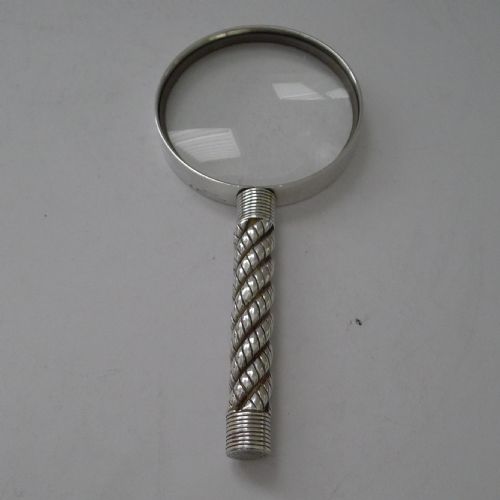
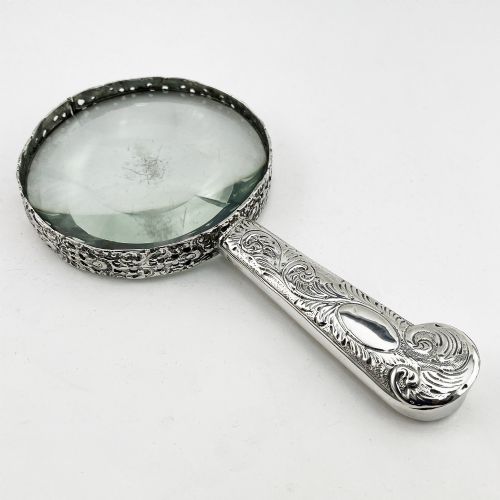
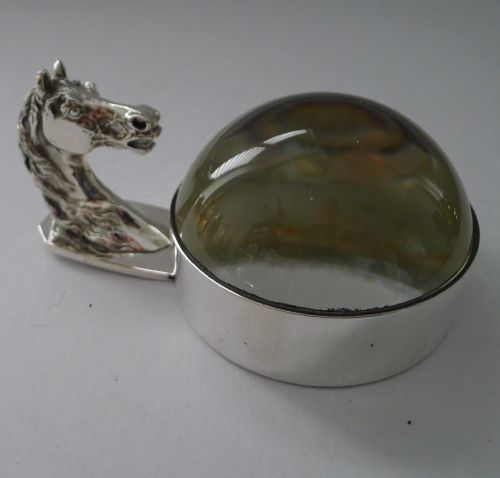
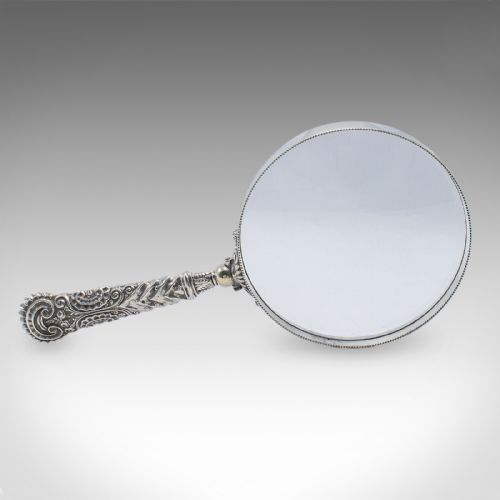


Silver Magnifying Glass
A silver magnifying glass combines practical focus with refined desk utility, spanning Victorian craftsmanship to mid-century modern design.
Forms and Origins
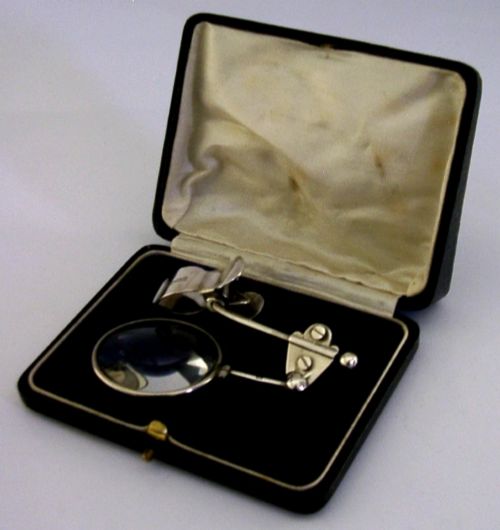
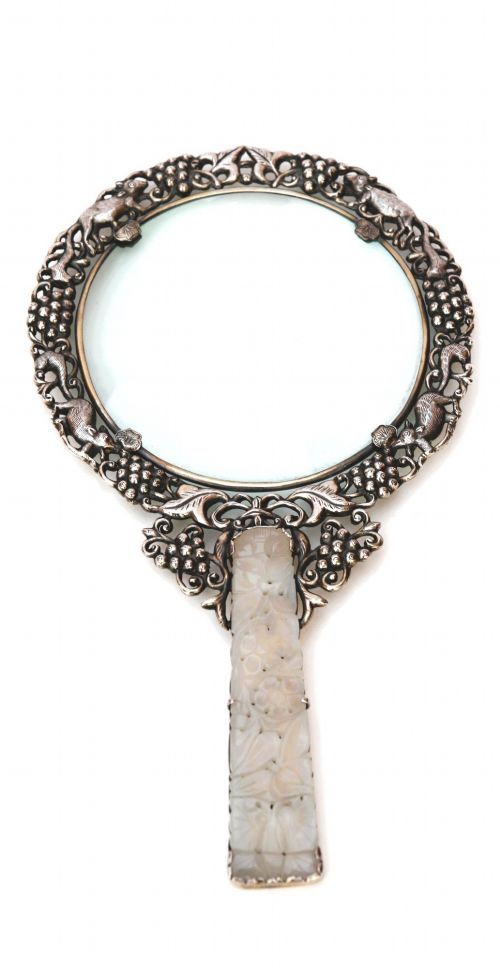
A silver magnifying glass serves as a desk accessory, folding pocket tool, or pendant, appearing across Victorian, Edwardian, and Art Deco periods. The selection runs from simple silver-handled reading glasses to elaborate combination pieces incorporating letter openers, rulers, or miniature dictionaries.
Makers produced folding pocket variants alongside large desk pieces, utilising materials such as sterling silver, silver plate, glass, ebony, brass, shagreen, and guilloche enamel. Examples range from standard utilitarian reading tools to equestrian horse head motifs and coin-cased novelties.
Buyers most frequently encounter Victorian and Edwardian sterling silver hand-held pieces alongside Art Deco guilloche enamel designs from Birmingham workshops. These desk accessories reflect the changing domestic and office habits across the nineteenth and twentieth centuries.
Materials and Construction
Silversmiths formed the handles and mounts from sterling silver or silver plate, frequently pairing the metal with organic elements like mother-of-pearl, antler horn, shagreen, or ebony. Glass lenses sit securely within metal bezels, joined by hinges in folding variants or pinned to pistol-grip and straight handles.
Art Deco examples incorporate guilloche enamel applied over engine-turned metal bases, executed by specialist Birmingham makers. Combination pieces integrate steel blades for letter openers or calibrated markings for rulers directly into the silver framework.
Desk accessories dominate the listings, alongside pocket-sized folding instruments, bookmarks, and pendant magnifying glasses.
The Measure of Craft
Quality rests in the weight of the silver, the crispness of the hallmark stamps, and the clarity of the optical glass. Superior execution shows in the tight tolerances of folding hinges and the smooth integration of auxiliary materials like shagreen or enamel.
Makers such as Sampson Morden and Asprey demonstrate higher fidelity in chasing, casting, and mechanical assembly. Lesser pieces exhibit plain cast handles with minimal detailing and simpler lens mountings.
Hermes Paris·P H Vogel Co·Broadway Co·The Adie Brothers·Sampson Morden·Thomas J Watson·Horton Allday·Henry Matthews·Asprey·Adie Lovekin Ltd·William Yates·Henry Greaves
The Silver Magnifying Glass Glossary
- Sterling silver
- A silver alloy containing 92.5 percent pure silver by mass, standard for quality British desk accessories.
- Guilloche enamel
- A decorative technique where intricate geometric patterns are engraved beneath translucent enamel layers.
- Lorgnettes
- Folding spectacles or magnifying glasses fitted with handles, popular during the Victorian period.
- Shagreen
- Undyed skin from shark or ray, characterised by a distinctive rough, granular surface texture.
- Eye loupe
- A small magnifying glass used primarily for examining fine details closely.
Frequently Asked Questions
How are silver magnifying glasses dated?
British pieces typically rely on assay office hallmarks stamped directly into the silver. These marks reveal the city of testing, the standard of silver, and a specific date letter.
Items lacking full hallmarks require stylistic comparison with known Victorian, Edwardian, or Art Deco production patterns and recorded maker marks.
What is a combination magnifying glass?
A combination piece merges the lens with another desk instrument, such as a letter opener, a ruler, or a miniature dictionary box. These multifunction tools were popular desk accessories in the late nineteenth and early twentieth centuries.
Makers like Sampson Morden produced elaborate versions to maximise utility and save space on crowded writing surfaces.
How should enamel magnifying glasses be cleaned?
Enamel surfaces require gentle cleaning with a soft, dry cloth to prevent scratching the translucent glass layer over the engine-turned metal. Silver components can be polished separately using a dedicated cloth while avoiding direct contact between polish and the enamel.
Harsh chemical dips damage both the enamel and organic handle materials like shagreen or mother-of-pearl.
Were these pieces meant for travel or desks?
Both formats exist within the historical record, determined by size and mechanical design. Folding pocket variants and pendant necklaces served travellers and readers on the move.
Large desk magnifiers, heavy rulers, and combination letter openers remained stationary on writing tables and libraries.