


Hand Magnifying Glass
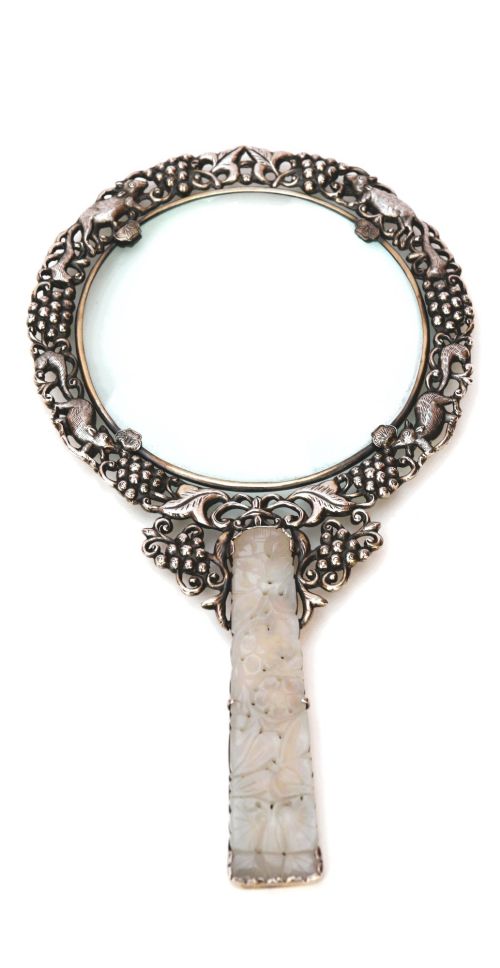
A hand magnifying glass combines practical desk utility with tactile materials like silver, horn and jade from the Victorian era onward.
Hand Magnifying Glass
A hand magnifying glass serves as a desk accessory or library aid, designed to enlarge small print and details. These items span periods from the Victorian era through the Edwardian years and into the mid-twentieth century.
The most common examples on this page feature sterling silver or silver-plated mounts paired with handles formed from natural materials. Desk lenses and folding handheld versions appear alongside library pieces.
Origins include English workshops and makers in Paris and Birmingham, reflecting diverse styles from Art Deco geometry to Qing Dynasty carving. Collectors encounter everything from plain brass frames to elaborate shagreen and enamel pieces.
How they were made
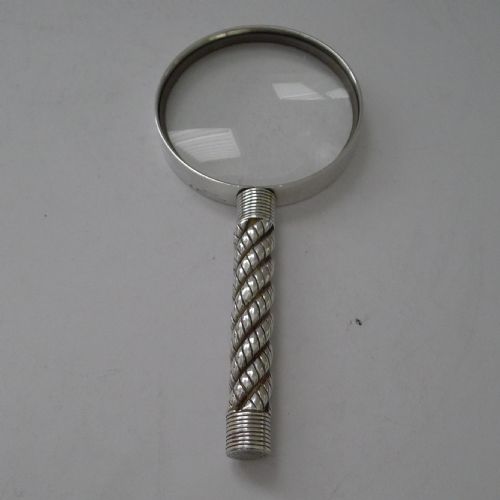
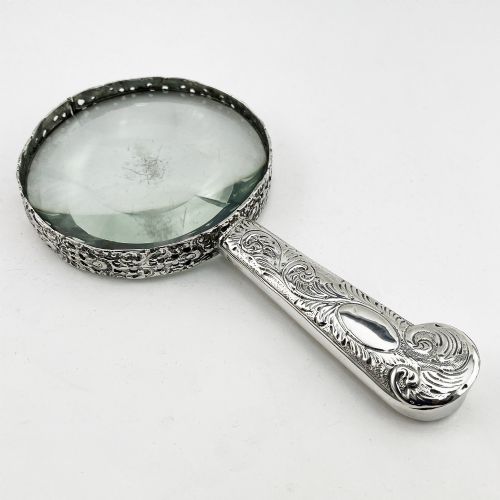
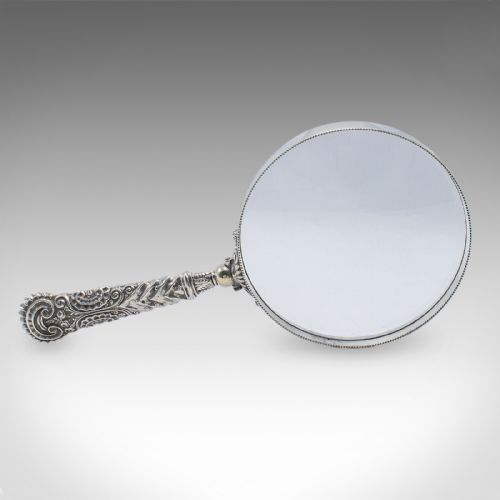
Frames and mounts utilise cast brass, silver plate and sterling silver, often marked with hallmarks indicating the assay office and year of production. Handles combine metals with organic materials such as mother of pearl, ivory, tortoiseshell, horn, bog oak and wood.
Specialised techniques include guilloché enamel work, where intricate geometric patterns are engraved beneath translucent coloured enamel, and delicate silver cordage framing. Lenses are set securely into bezels attached to shaped or turned handles.
Materials span sterling silver, silver plate, brass, glass, jade, enamel, tortoiseshell, mother of pearl, shagreen, ivory and bog oak.
What varies in quality
Quality rests in the selection and assembly of materials, distinguishing a standard utility glass from a luxury library piece. The weight of the sterling silver, the depth of the horn or jade, and the crispness of the handle turning establish the tier of the object.
Maker attribution elevates an example, particularly pieces bearing marks from established silversmiths or luxury houses like Hermes and CW Dixey. The integration between the handle material and the metal mount demonstrates the standard of craftsmanship.
Broadway & Co·P H Vogel & Co·CW Dixey London·Thomas J Watson·Hermes Paris
The Hand Magnifying Glass Glossary
- Hallmark
- A stamp or series of stamps applied to precious metals indicating the standard of purity, the maker, and the year of assay. These marks provide precise dating for silver items.
- Guilloché
- A decorative technique in which a precise, intricate pattern is mechanically engraved into metal beneath translucent enamel. This finish appears frequently on Art Deco pieces.
- Shagreen
- Untanned skin from the back of a shark or ray, historically dried and dyed for use on luxury covers and handles. It offers a distinctive pebbled texture.
- Bezel
- The grooved metal rim that holds the magnifying lens securely within its frame. It joins the handle or mount to the optical glass.
- Pistol grip
- A handle shaped with a distinct bend resembling the grip of a pistol, designed to fit comfortably in the hand during extended reading.
Hand Magnifying Glass: Frequently Asked Questions
How do I date a silver magnifying glass?
Dating relies on the assay office hallmarks stamped into the silver mount, which record the specific year letter and city of testing.
Style indicators such as Art Deco geometric lines or Victorian chased decoration also narrow down the period of manufacture.
What materials were used for the handles?
Handles incorporate sterling silver, silver plate and brass alongside organic materials including mother of pearl, ivory, tortoiseshell, horn, bog oak, jade and shagreen.
Turned wood and celluloid also appear on desk and library examples from the nineteenth and twentieth centuries.
Are these lenses suitable for daily reading?
These pieces function as reading and desk aids, offering clear magnification for books, maps and small print.
Handle designs ranging from straight bars to pistol grips ensure comfortable use during reading tasks.
How should I clean an antique magnifying glass?
Glass lenses require a simple wipe with a soft microfiber cloth to remove dust and fingerprints without scratching the surface.
Metal mounts and natural handles need specific care depending on the material, avoiding harsh dips that damage enamel or organic substances.