

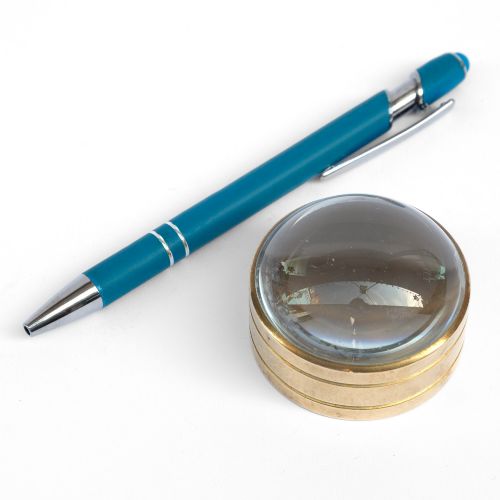


Antique Magnifying Glass
An antique magnifying glass brings practical optics and fine decorative craftsmanship together for the desk or library.
Antique Magnifying Glass
When searching for an antique magnifying glass, buyers encounter diverse desk accessories, library aids, and pocket lenses spanning the Victorian, Edwardian, and Art Deco periods.
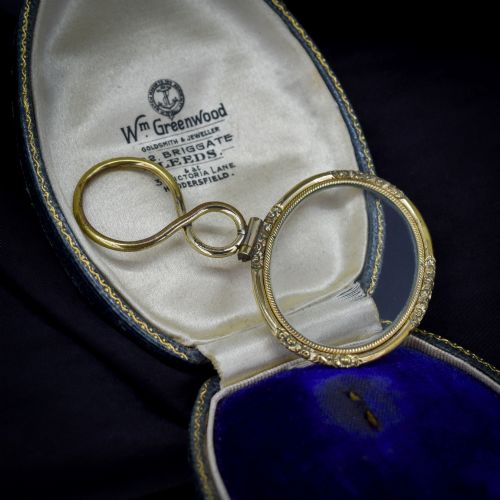
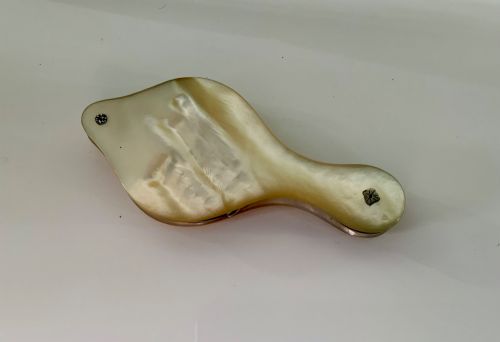
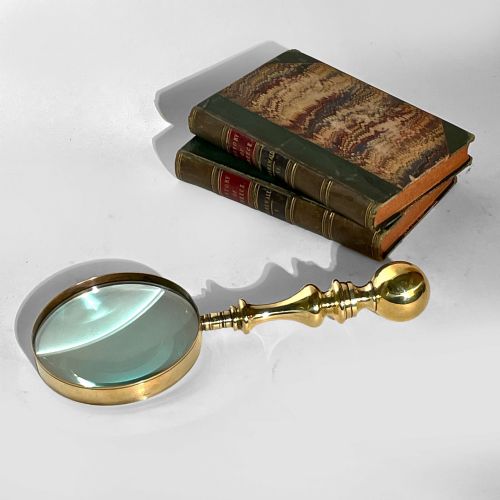
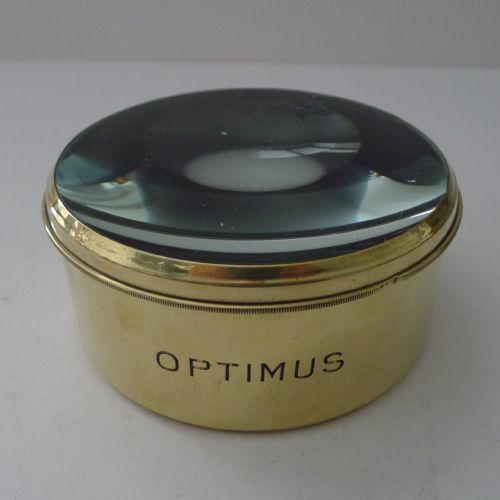
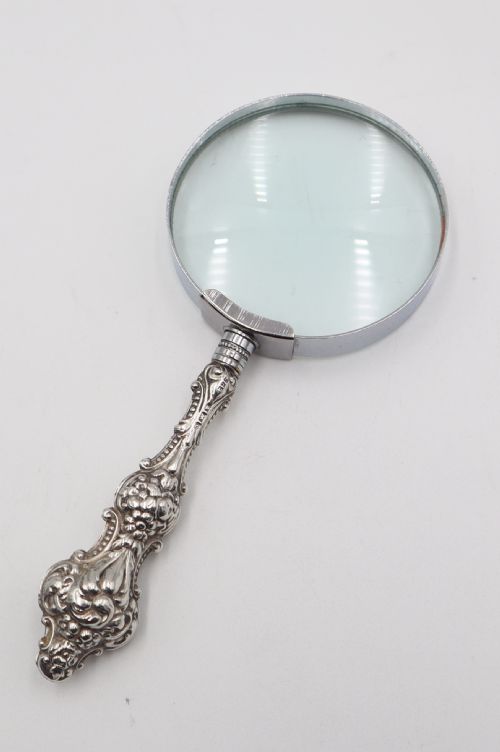
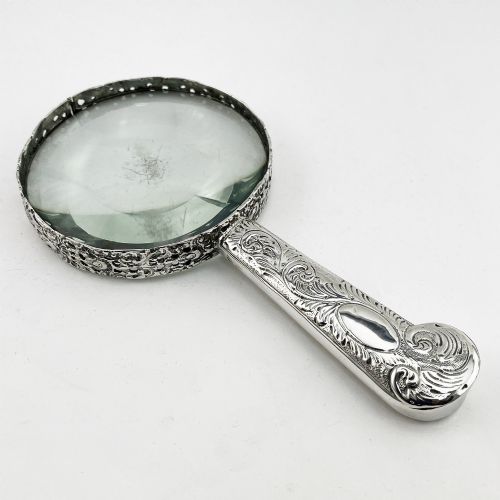
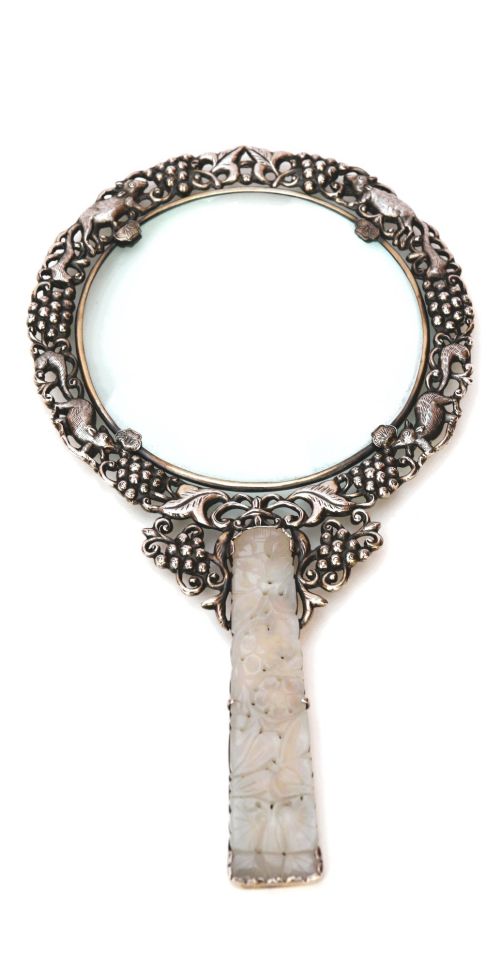
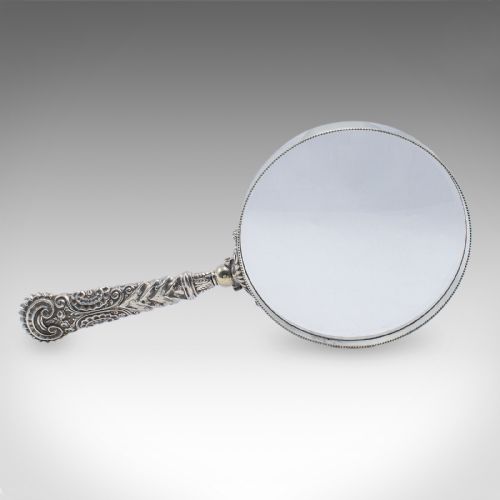
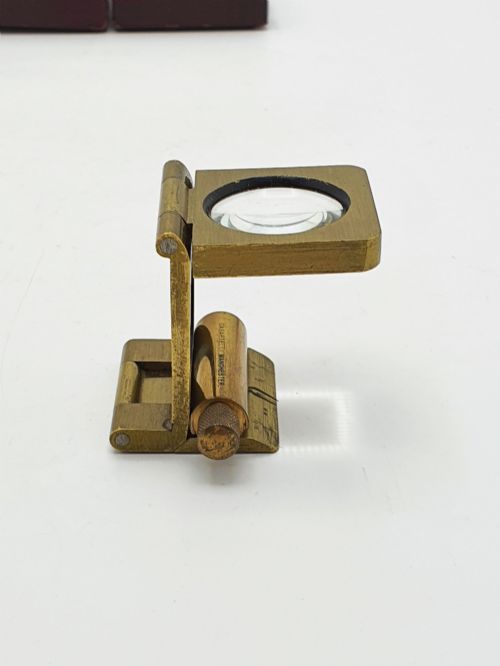
The most common examples on this page are handheld pieces with sterling silver or brass handles, alongside heavier brass desk-top magnifiers and folding pocket loupes.
Origins range from English workshops and London retailers to French fashion houses and continental makers, reflecting varied domestic and scientific uses.
Materials and Technique
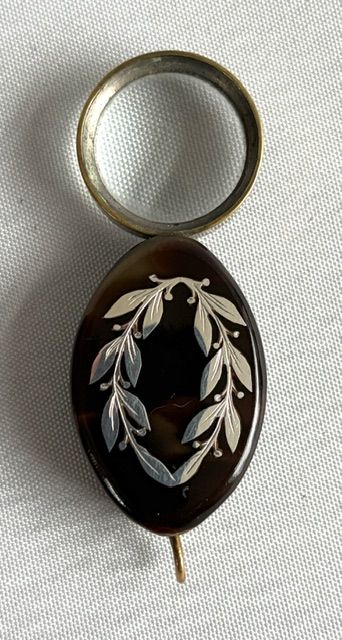
Frames and handles combine traditional metalworking with tactile organic elements, utilising brass, sterling silver, silver plate, and gold alongside materials like shagreen, horn, mother of pearl, and carved jade.
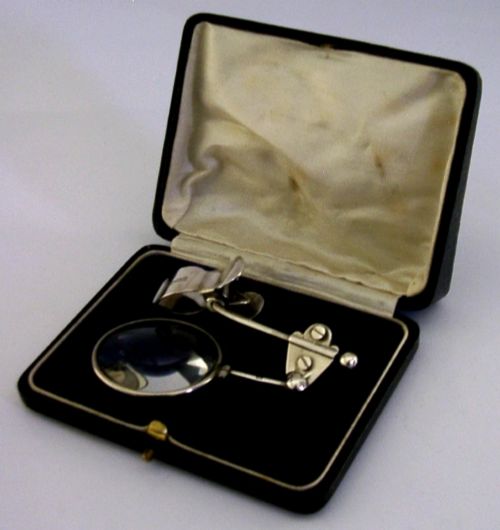
Optical lenses are securely seated within cast or soldered metal mounts, sometimes featuring folding mechanisms, measuring scales, or pivoting stands for desktop utility.
Antique Magnifying Glass Retail Price Guide 2026
Typical asking prices for magnifying glass among the pieces listed under this phrase on Sellingantiques today, from the lower quarter to the upper quarter. They describe what is for sale here now, not the wider market.
Several pocket magnifiers include built-in compasses, ensuring nineteenth-century travellers could read a map and check their direction simultaneously.
Quality Variations
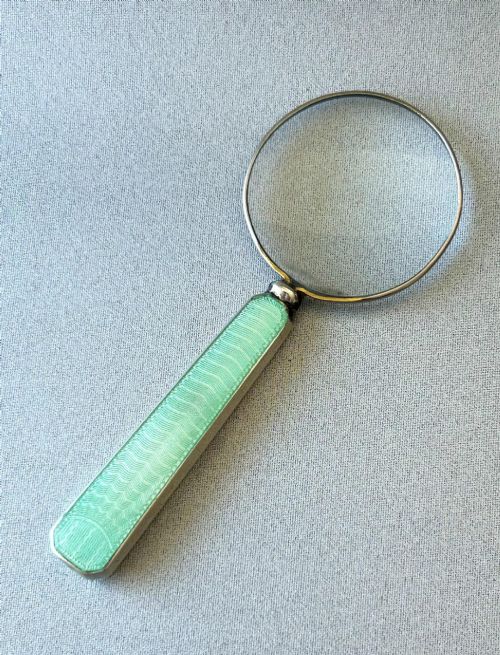
Distinctions in quality rest upon the weight and finish of the metal mountings, the clarity and heft of the glass lens, and the integration of specialty materials such as fine shagreen or guilloche enamel.
Pieces bearing clear assay office hallmarks or stamps from recognised silversmiths and luxury houses demonstrate superior manufacturing pedigree compared to unmarked utilitarian items.
Hermes Paris·Broadway And Co·Thomas Rubergall·Mappin And Webb·Francis West·CW Dixey·PH Vogel And Co·Thomas J Watson·Sampson Mordan·Adie And Lovekin Ltd
The Antique Magnifying Glass Glossary
- Loupe
- A small magnifying glass used to examine details closely. These pocket optical instruments often feature folding metal covers for protection.
- Lorgnette
- A pair of spectacles or magnifying lenses held to the eyes with a handle. Victorian versions frequently incorporated decorative sterling silver frames.
- Stanhope lens
- A cylindrical optical lens that produces a microscopic photograph view when held to the eye. Invented in the nineteenth century, these appear in various small optical items.
- Guilloche enamel
- A decorative technique where intricate geometric patterns are engraved beneath translucent enamel. It frequently adorns the handles of Art Deco desk accessories.
- Linen tester
- A small folding magnifying glass designed originally to count threads in fabric. Many antique examples include engraved measuring scales on the base.
Antique Magnifying Glass: Frequently Asked Questions
How do I clean an antique glass lens?
Use a soft microfiber cloth and mild lens cleaner to remove dust and fingerprints from the glass. Avoid harsh chemical solvents that might damage surrounding metal or organic handle materials.
Take care not to let moisture seep beneath the bezel or mount where the lens meets the frame, as older adhesives or settings can degrade.
Were these magnifiers used for reading?
Many larger handled lenses and heavy desk magnifiers served as library aids for reading small print, maps, and detailed documents. They were standard fixtures on nineteenth and early twentieth century writing desks.
Smaller folding versions and pocket loops were carried by individuals for portable inspection of textiles, coins, or botanical specimens.
How can I date an unmarked silver handle?
Sterling silver items produced in Britain generally feature hallmarks indicating the assay office, standard mark, and date letter. Consulting standard assay office tables helps pinpoint the exact year of manufacture.
When hallmarks are absent, dating relies on the overarching style of the piece, such as Art Deco geometric forms or heavy Victorian ornamentation.
Are desk magnifiers suitable for daily use?
Solid brass and silver magnifiers remain entirely functional for modern desk work, offering clear magnification and sturdy construction. Their substantial weight and tactile materials provide a pleasant physical experience during use.
Displaying them on a desk or table keeps them accessible while adding a traditional decorative element to the room.