




Vintage Brass Magnifier
A vintage brass magnifier brings both utility and desk charm, offering a clear view through heavy glass set in polished metal frames.
Vintage Brass Magnifier
A vintage brass magnifier is a functional desk accessory or scientific instrument designed to enlarge fine print, maps, and intricate details. These pieces emerge from the nineteenth and early twentieth centuries, spanning periods from the Victorian era through the Edwardian years and Art Deco times.
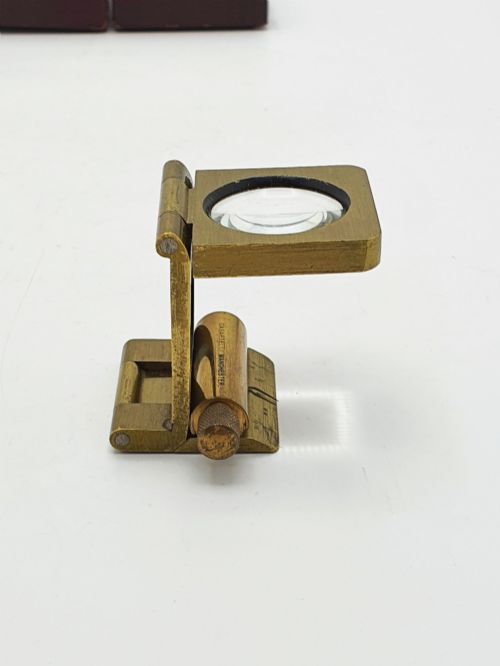
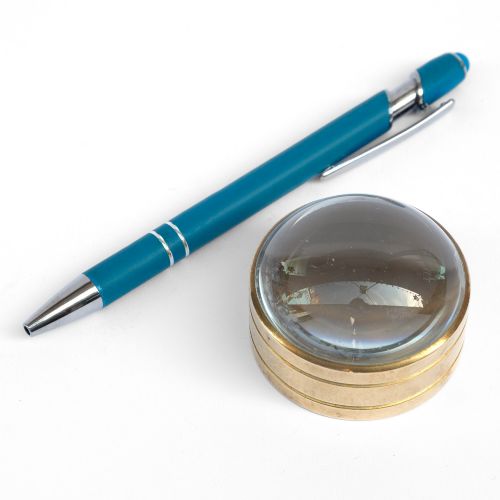
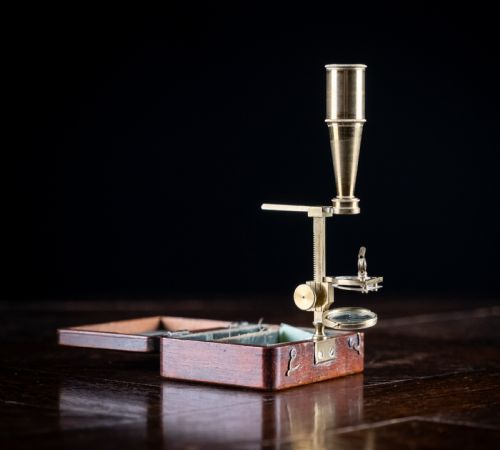
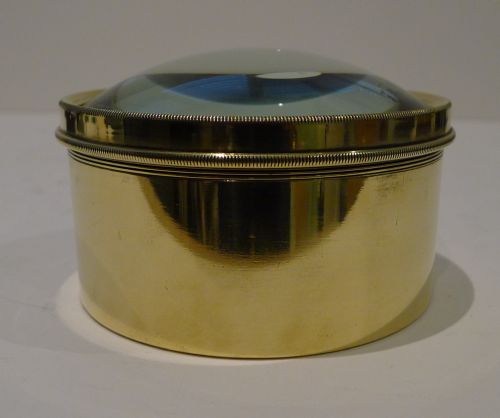
The version most commonly met on this page is the desk top magnifying lens or library glass, often mounted on brass stands or fitted with folding and pivoting frames. Handheld forms also appear, alongside specialised scientific instruments like linen testers and pocket microscopes.
Materials extend beyond metal alone, incorporating glass optics alongside timber handles or mounts in mahogany and rosewood. These items served practical roles in offices, libraries, and studies before evolving into collectible decorative objects for the modern interior.
Materials and construction
Makers shaped the primary frames from solid brass, utilising casting and turning techniques to create robust housings for heavy glass lenses. Metal components often feature pivoting joints or adjustable arms designed to hold positions securely during use.
Handles and desk mounts frequently incorporate turned hardwoods such as rosewood and mahogany, providing a tactile contrast to the polished metal. Some pieces integrate steel components or measuring scales directly into the metalwork for specialised technical tasks.
Some nineteenth-century pocket microscopes come in tiny wooden cases that smell faintly of old libraries and cedar wood.
Assessing quality and finish
Superior examples distinguish themselves through the optical clarity and thickness of the glass lens, which delivers distortion-free magnification. The weight and rigidity of the brass mounting also indicate grade, with heavier desk stands offering greater stability than lighter, folding variants.
Finishes show the level of original craftsmanship, evident in the precision of the turning on wooden handles and the smooth movement of pivoting joints. Signed pieces or those bearing maker details carry additional distinction through documented provenance.
Casartelli Manchester·Cary London·Webber Patent
The Vintage Brass Magnifier Glossary
- Linen tester
- A small magnifying glass with a measuring scale, originally used by textile merchants to count threads in fabric. These compact loupes fold flat when not in use.
- Bullseye lens
- A thick, convex magnifying glass designed to concentrate light or provide wide-angle viewing. They often sit upon metal stands that pivot to adjust the angle.
- Pocket microscope
- A portable scientific instrument used for close examination of biological specimens or fine details. These nineteenth-century devices typically feature brass tubes and folding tripod bases.
- Angle-poise
- A flexible mechanical arm arrangement that allows the magnifying glass to hold various positions. This design provides steady support for hands-free reading and inspection.
- Desk accessory
- A functional item intended for office or library use, combining practical utility with decorative appeal. These pieces often feature durable brass and timber construction.
Vintage Brass Magnifier: Frequently Asked Questions
How do I clean the brass frame?
Wipe the metal gently with a soft, dry cloth to remove dust without disturbing the age patina.
Avoid chemical polishes that strip historical character from the brass surface.
Can I use these for reading?
These optical lenses provide genuine magnification suitable for reading small print and examining maps.
Heavier desk models offer stable hands-free viewing for prolonged periods.
How do I date an antique magnifier?
Examine the style of the brass casting, the turning of any wooden handle, and the type of glass lens.
Patent marks and maker inscriptions stamped into the metal also help establish the decade of production.
Are folding magnifiers fragile?
The pivoting joints and hinges are engineered from solid brass to withstand regular adjustment and folding.
Gentle handling ensures the mechanical linkages and glass mountings remain secure over time.