


Boxed Microscope
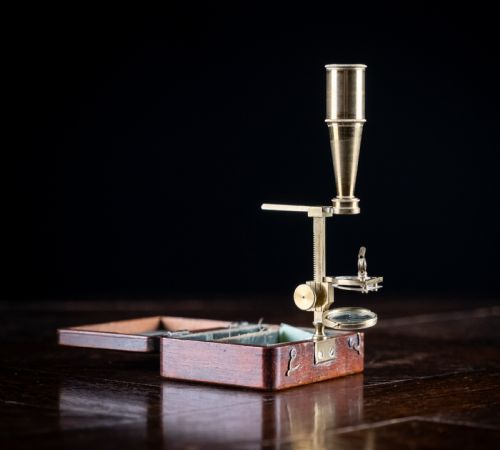
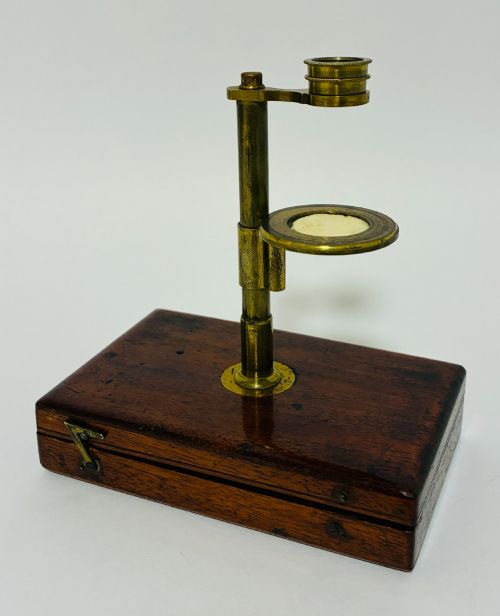
These boxed antique microscope setups are precision scientific instruments housed in fitted wooden cases, prized by collectors for their polished brass optics and period craftsmanship.
Boxed Microscope
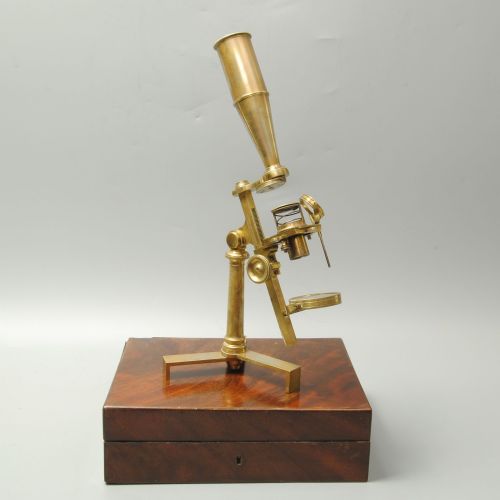
When you search for a boxed antique microscope, you encounter precision scientific instruments and their dedicated storage containers spanning the Victorian and Edwardian eras. These instruments range from portable field examples to substantial compound models kept in fitted wooden boxes.
The category also encompasses medical carrying chests and multi-drawer slide collectors cabinets designed to preserve biological specimens and botanical preparations. Each piece forms part of a tangible heritage of nineteenth century scientific inquiry.
How they were made
Maker workshops constructed these instruments primarily from polished brass for the optical bodies and mechanical stages, paired with heavy iron or steel for stable bases. Lenses and slide covers utilised specialised optical glass ground to precise curvatures.
Enclosing cases and slide cabinets relied on dense hardwoods including mahogany, walnut, oak, and pine. Joinery techniques such as dovetailed corners and fitted interior partitions ensured the delicate brass instruments and glass slides remained secure during transit.
Listings feature scientific instruments and cabinets spanning the nineteenth century, Victorian era, Edwardian period, and nineteen twenty.
What varies in quality
Quality separates simple portable field instruments from elaborate compound microscopes equipped with multiple objective lenses and complex mechanical stages. Superior examples retain their original lacquered brass finish and smooth focusing mechanisms.
The accompanying storage enclosures reveal significant variation, ranging from plain pine boxes to twenty-eight drawer walnut slide cabinets fitted with brass pulls. Complete sets containing original specimen slides elevate the historical interest of the ensemble.
Cary London·Swift and Son·E Leitz
The Boxed Microscope Glossary
- Compound microscope
- An optical instrument utilising multiple lenses to achieve higher magnification than simple single-lens designs. These instruments typically feature a main body tube mounted on a sturdy pillar and base.
- Specimen cabinet
- A specialised piece of furniture featuring multiple shallow drawers designed to house glass microscope slides. These cabinets often include secure locking doors and numbered drawer slots.
- Gould-type
- A portable pocket microscope design popularized in the nineteenth century. It packs down compactly into its own small wooden box for field use.
- Drum microscope
- An early Victorian optical design where the main body slides inside a cylindrical drum for focusing. This form offers a stable and straightforward mechanical arrangement.
Boxed Microscope: Frequently Asked Questions
What periods do these microscopes cover?
The available selection spans the nineteenth century through the Edwardian period, encompassing Victorian and Regency influences. Most instruments and cabinets date specifically from the eighteen nineties up to nineteen twenty.
Materials range from traditional brass and optical glass to fitted cabinetry in mahogany, walnut, oak, and pine.
How were slide cabinets used?
Slide cabinets served as organised archives for botanists, medical practitioners, and natural history collectors to store fragile glass specimens. Multiple shallow drawers protected thousands of individual slides from dust and light.
Many cabinets feature numbered indexing systems to keep botanical and medical preparations catalogued precisely.
Are the optical lenses still usable?
Many brass instruments retain their original glass lenses and remain capable of magnification. They function well for observation though modern standards surpass their historical optical power.
Careful handling of the rack and pinion focus ensures the delicate nineteenth century brass threads stay aligned.
How should I house a microscope cabinet?
Solid wood cabinets in walnut, mahogany, oak, or pine require stable indoor environments away from direct sunlight and damp conditions. This protects both the exterior timber polish and the delicate internal slide contents.
Placing the cabinet on a level surface prevents warping of the multi-drawer housing.