





English Brass Desk Accessory
An English brass desk accessory brings functional utility and character to a workspace through enduring Victorian and Edwardian craftsmanship.
English Brass Desk Accessory
An English brass desk accessory encompasses practical items used in 19th-century and early 20th-century studies and libraries. Buyers encounter functional writing implements and desktop tools such as inkwells, magnifying glasses, postal scales, book slides, and letter clips. These objects reflect the material culture of historical writing spaces, where utility met ornamental design.
The selections span distinct periods from the mid 19th century through the Edwardian era and 1930. Common forms include figural novelty inkwells shaped as owls, bulldogs, parrots, and stags, alongside traditional brass magnifiers, mounted bookends, and multi-piece desk sets. The most frequently observed items combine heavy cast metal with glass, wood, and stone elements.
Makers and designers from this tradition created objects that served daily clerical tasks while demonstrating sculptural ambition. Pieces range from straightforward brass postal scales by Ratcliff Birmingham to elaborate tortoise-shell, coromandel, and ormolu-mounted desk stands. Each piece provides a tangible connection to the domestic and professional interiors of the Victorian period and beyond.
Distinguishing quality
Construction integrity separates standard utility items from masterwork accessories. Heavy, stable bases, functional moving parts on postal scales or book slides, and the survival of original glass ink inserts or optical lenses demonstrate higher manufacturing ambition. Signed pieces by established retailers or makers like Ratcliff or Asprey retain stronger historical documentation.
English Brass Desk Accessory Retail Price Guide 2026
Typical asking prices for english brass desk accessory among the pieces listed under this phrase on Sellingantiques today, from the lower quarter to the upper quarter. They describe what is for sale here now, not the wider market.
Listings feature items spanning the 1850s to the 1930s, encompassing Victorian, Edwardian, and Art Deco styles.
Ratcliff Birmingham·Asprey London
The English Brass Desk Accessory Glossary
- Ormolu
- Gilded bronze or brass mounts applied to furniture and desk accessories. This decorative technique added rich metallic contrast to wood and tortoiseshell surfaces.
- Book slide
- An expanding desktop rack designed to hold a variable number of volumes upright. These often featured decorated brass ends and folding wooden or metal actions.
- Postal scales
- Precision weighing devices utilised for letters and small parcels before standard postal rates. They frequently incorporated brass lever arms and calibrated weights mounted on wooden bases.
- Agate cabochon
- A convex, polished gemstone lacking facets, often set directly into brass or metalwork. It served as a decorative accent on mid-nineteenth-century desk sets.
- Boulle work
- An elaborate form of marquetry utilising brass inlaid into tortoiseshell or dark wood. It was popular in Napoleon III and Victorian interpretations of French taste.
English Brass Desk Accessory: Frequently Asked Questions
What are novelty inkwells?
Novelty inkwells are functional desktop ink containers modelled after animals, birds, or figurative subjects. Makers during the Victorian era designed these pieces to add whimsy to formal writing desks.
Animals such as owls, dogs, and stags frequently incorporated hinged heads that lifted to reveal the ink reservoir inside. They combine practical clerical use with ornate sculptural craftsmanship.
How do brass magnifying glasses function?
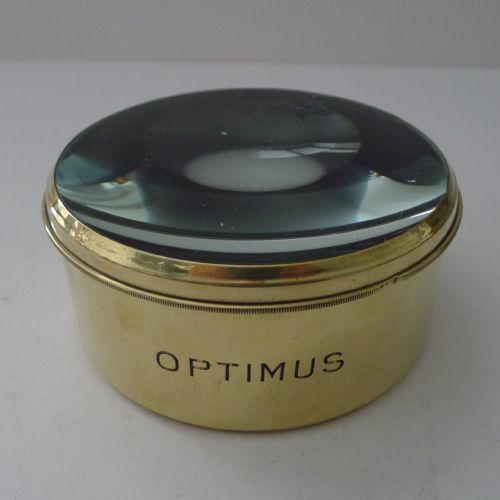
Antique brass magnifying glasses utilise heavy cast frames to secure large optical lenses intended for reading maps, documents, and books. Their substantial weight often allowed them to double as desk paperweights.
Handles and frames were cast in brass or bronze, sometimes featuring engraved details or Optimus lenses. They remain entirely functional instruments for detailed visual tasks.
What materials accompany brass on these desks?
Makers frequently paired brass with exotic timbers like coromandel, mahogany, and oak to create visually balanced desk accessories. Tortoiseshell, agate cabochons, and inlaid mother-of-pearl also appear on mid-nineteenth-century stands.
Glass served a dual purpose as magnifying lenses or as removable inkwell inserts within metal housings. These mixed-media constructions reflect the eclectic tastes of Victorian design.
How do I date an English desk accessory?
Dating relies on stylistic markers, prevailing manufacturing methods, and recorded historical periods such as the Victorian or Edwardian eras. The inclusion of specific mechanical patents or maker marks helps narrow the timeline.
Stylistic shifts from mid-century Napoleon III Boulle work to later Art Deco simplicity provide clear chronological boundaries. Material combinations and mounting styles further assist in identifying the decade of production.