



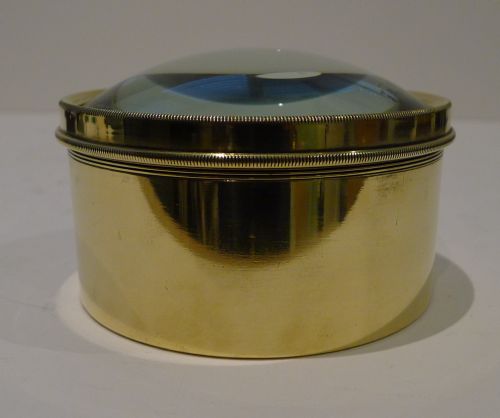


Brass Magnifying Glass
A brass magnifying glass combines utility and desk ornament, offering clear magnification through heavy metal frames.
Brass Magnifying Glass
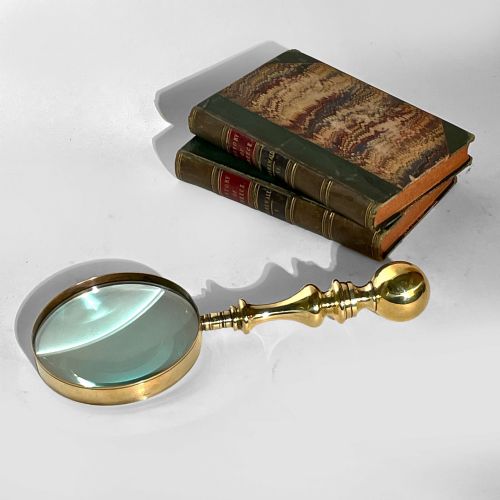
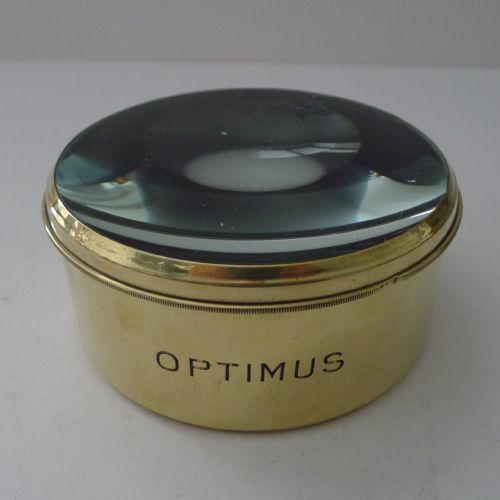
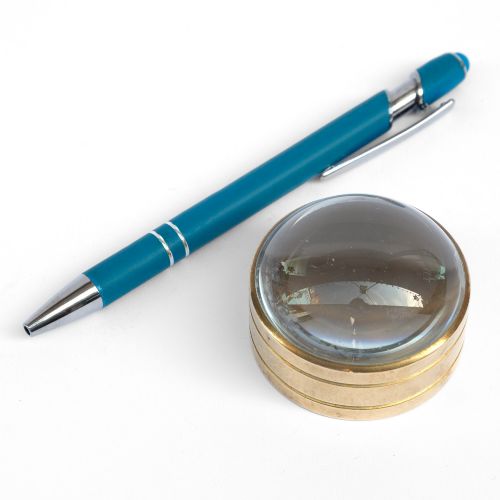
A brass magnifying glass takes many functional forms, from heavy desk paperweights and library readers to folding pocket models, linen testers, and pivoting bullseye stands. Most examples originate from the Victorian, Edwardian, and Art Deco periods, spanning the late nineteenth century through the nineteen-thirties.
The version most commonly met on this page is the desk accessory or handheld reader framed in solid brass. These pieces serve both daily reading tasks and desktop decoration.
English makers dominate the historical record, producing optical reading aids for offices, libraries, and counting houses. Surviving pieces range from small pocket loupes to oversized mammoth map magnifiers.
Materials and Construction Techniques
Makers constructed these optical tools primarily from solid brass and clear glass lenses, occasionally incorporating secondary materials such as silver plate, ebony, mother of pearl, and steel. Frames are cast, turned, or mounted with pivoting joints and folding mechanisms.
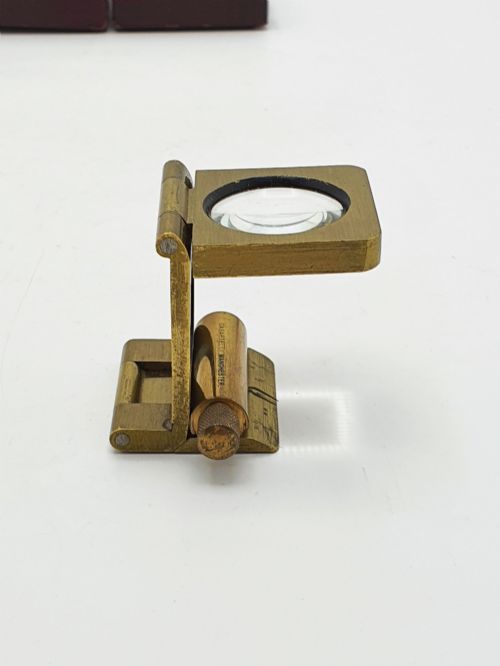
Specialised types utilise specific structural details, such as the folding brass frames of linen thread counters, the calibrated measuring scales of Manchester loupes, and the heavy weighted bases of desk paperweight magnifiers.
Brass Magnifying Glass Retail Price Guide 2026
Typical asking prices for brass magnifying glass among the pieces listed under this phrase on Sellingantiques today, from the lower quarter to the upper quarter. They describe what is for sale here now, not the wider market.
Listings span the nineteenth and twentieth centuries, incorporating periods from eighteen-eighty to nineteen-thirty alongside styles including Victorian, Edwardian, and Art Deco.
Distinctions in Quality and Make
Quality rests in the optical clarity of the glass lens, the weight and thickness of the brass frame, and the precision of mechanical elements like hinges, stands, and locking screws. Heavier desk magnifiers and signed examples show greater heft in the metal casting and superior polish.
Makers such as P H Vogel & Co. or Casartelli of Manchester contributed specialised engineering, whereas standard desk models relied on solid brass framing to provide stability and balance during use.
P H Vogel & Co·Casartelli Manchester
The Brass Magnifying Glass Glossary
- Loupe
- A small magnifying glass used for inspecting fine details, textiles, or stamps. These often feature folding pockets or mounted stands.
- Coddington
- A type of high-power magnifying glass featuring a thick glass cylinder with a central groove, used for precise optical work.
- Linen tester
- A small folding magnifier with a measured base opening, originally designed for counting threads in woven textiles.
- Bullseye condenser
- A thick convex lens mounted in a pivoting brass frame or stand, used to concentrate light or magnify text.
- Quizzer
- A historical term for a handheld magnifying glass or monocle used for casual reading or social inspection.
Brass Magnifying Glass: Frequently Asked Questions
How do I clean a brass magnifying glass?
Use a soft, dry cloth to remove dust from the brass frame and glass lens. Avoid harsh chemical polishes that can strip patination from the metal.
Keep moisture away from any fitted joints or housing mounts to preserve the historic materials.
Can I use an antique magnifier for reading?
Many historical magnifiers remain fully functional optical tools suitable for daily reading and desk work. The glass lenses provide standard magnification strength depending on their original design.
Larger desk models and handheld readers offer wide focal fields well-suited for books and maps.
What is a pivoting magnifier used for?
Pivoting magnifiers mounted on stands allow users to adjust the lens angle freely over documents or specimens. This design leaves hands free for writing, sorting, or detailed examination.
Such pieces were common fixtures in Victorian and Edwardian offices and libraries.
How do I date an antique brass magnifier?
Dating relies on stylistic clues, maker marks, and manufacturing techniques characteristic of periods like the Victorian era or the nineteen-tens. Stamped signatures and patent names often point to specific makers and production years.
Materials like mother of pearl inserts or specific screw configurations also help narrow down the decade.