


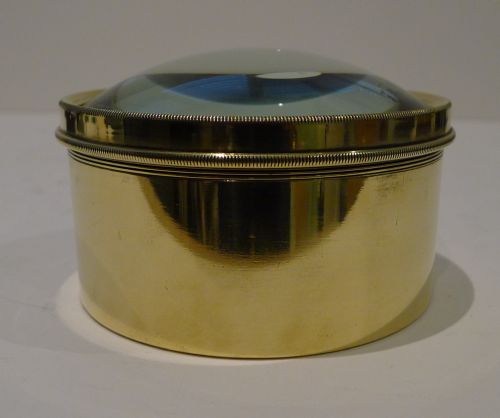

Edwardian Magnifying Glass
An edwardian magnifying glass brings period desk accessories into daily use, combining clear glass optics with silver or brass mounts.
Edwardian Magnifying Glass
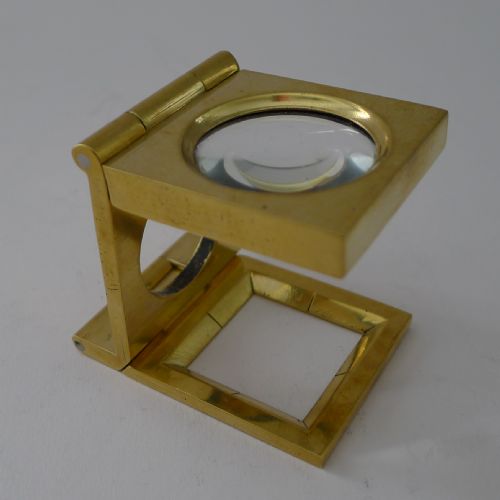
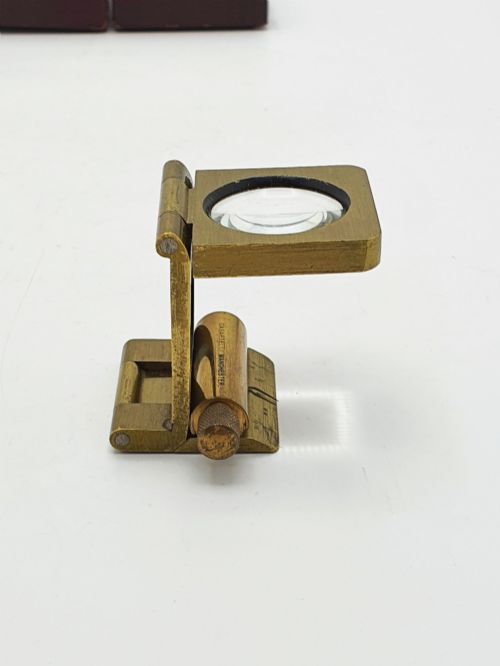
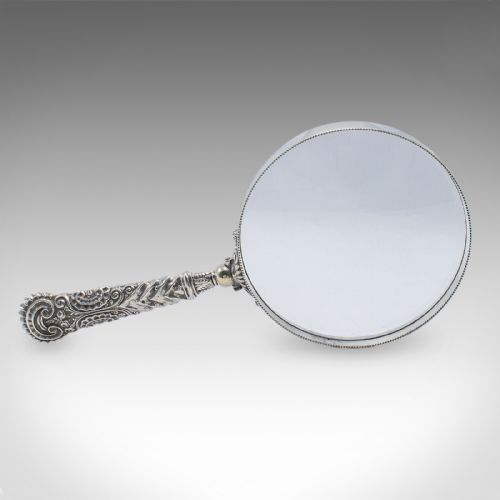
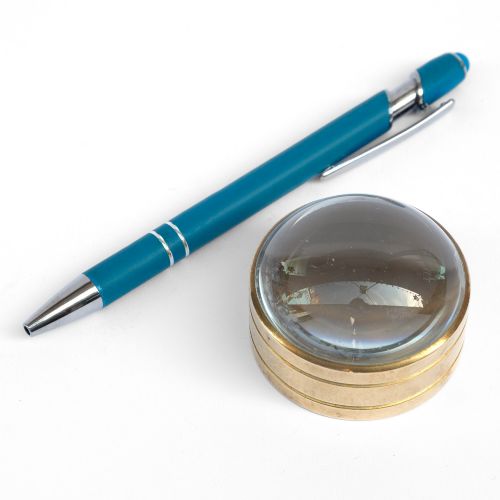
When buyers search for an edwardian magnifying glass, they encounter optical tools designed for reading, desk work, and personal carry during the early twentieth century. These pieces appear as handheld readers, heavy desk lenses on stands, folding pocket versions, and combination library aids.
The material record spans sterling silver, silver plate, and brass frames, alongside mother of pearl handles and occasional mahogany supports. Styles draw upon Edwardian tastes, extending into Victorian survivals, Arts and Crafts spot-hammered finishes, and Art Deco geometry.
Most examples meet the collector as handheld sterling silver pieces bearing Birmingham or London hallmarks from the opening decade of the 1900s. Desk-bound brass models and pivoting bullseye lenses represent the sturdier functional items from the same period.
Materials and Construction
Metals form the core structure of these optical tools, utilising cast and turned brass alongside stamped sterling silver. Silversmiths mounted glass lenses into bezels, attaching them to handles formed from silver, mother of pearl, or wood.
Specialised variations incorporate mechanical folding joints, measuring scales for linen testers, and pivoting desk stands. Makers applied hand-hammered textures to silver mounts and engraved handles with floral or cherub motifs, such as Reynolds Angels.
Object forms span desk accessories, magnifying glasses, lorgnettes, paperweights, linen testers, and combination letter openers.
Quality and Distinction
Distinction rests upon the weight of the metal and the clarity of the glass lens. Substantial sterling silver mounts and clear, distortion-free optics separate functional library tools from decorative pieces.
Maker attribution elevates certain examples, particularly those bearing the marks of specialised silversmiths or retailers like Asprey. The precision of mechanical joints in folding pocket glasses and combination letter openers also dictates the tier of the piece.
Sampson Morden·Charles Hanbury Tracy·Adie and Lovekin Ltd·Henry Greaves·A and J Zimmerman·A Barrett and Sons·Cooper Bros and Son·Britton Gould and Co
The Edwardian Magnifying Glass Glossary
- Linen tester
- A small folding magnifying glass used in the textile trade to inspect the weave of fabric. It often includes a measuring scale at the base.
- Hallmark
- An official stamp applied to precious metals indicating the assay office, metal purity, and date letter. Birmingham and London marks appear frequently on silver pieces.
- Bullseye lens
- A thick, rounded convex glass mounted on a stand or pivot to concentrate light and magnify text. These sit heavily upon library desks.
- Lorgnette
- A pair of spectacles or lenses held with a handle rather than fitted over the ears. Platinum and diamond variants bridge the gap between optical aid and jewellery.
- Pistol grip handle
- A curved handle shape mirroring the butt of a firearm, designed to fit comfortably in the palm during reading.
Edwardian Magnifying Glass: Frequently Asked Questions
What is an edwardian magnifying glass used for?
These optical instruments served library readers, desk workers, and individuals examining fine details such as stamps or textiles. Handheld versions assisted with books and newspapers, while heavier desk models remained stationary on writing tables.
Pocket-sized and folding variants allowed users to carry a lens for daily tasks away from the home. Combination pieces also served as letter openers or rulers.
How do I date an edwardian magnifying glass?
Silver examples carry hallmarks that record the exact year of assay, the town of origin, and the silversmith's mark. Birmingham and London offices stamped these metals reliably during the period.
Brass and mother of pearl pieces lack hallmarks, requiring stylistic cues and patent dates to place them between the late Victorian era and the 1920s.
Are the lenses glass or plastic?
Optical lenses from this era consist entirely of genuine glass, often ground into thick convex shapes. These glass lenses provide the weight and clarity characteristic of early twentieth-century optics.
Replacements may occur in damaged pieces, but original survivals retain their clear, heavy glass construction.
How do I care for silver and brass mounts?
Silver mounts require gentle cleaning with a soft cloth to preserve the stamped hallmarks and surface details. Avoid aggressive chemical dips that strip away the aged patina accumulated over a century.
Brass frames benefit from occasional dusting and minimal polishing to retain their warm tone without removing evidence of handling.