


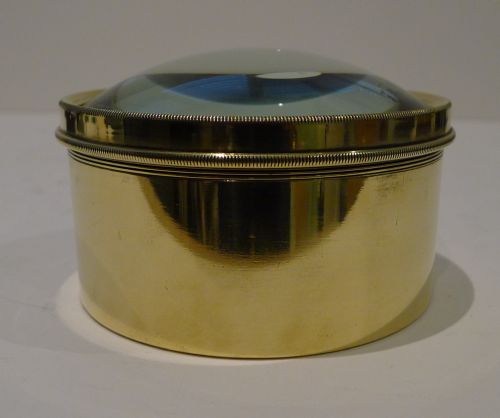


Vintage Desk Magnifier
A vintage desk magnifier brings practical optics and fine craftsmanship to a study, offering clear detail through period glass and metal.
Vintage Desk Magnifier
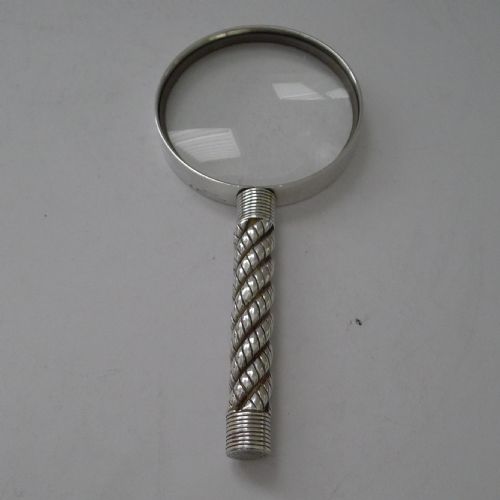
A vintage desk magnifier is primarily found as a reading aid or desk accessory designed to sit upon a library table or writing surface. These pieces span from the Victorian era and the 19th Century through Edwardian, Art Deco, and Mid-Century Modern periods, reflecting changing aesthetic preferences across decades.
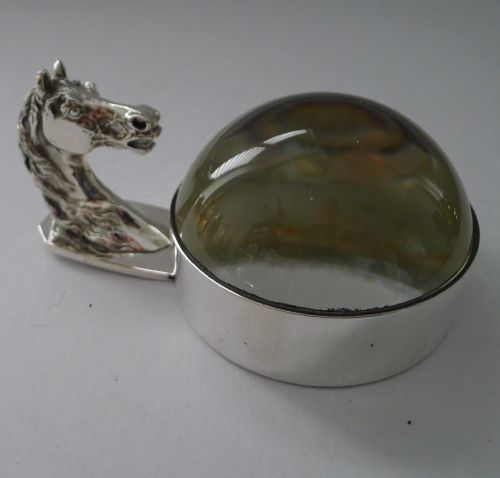
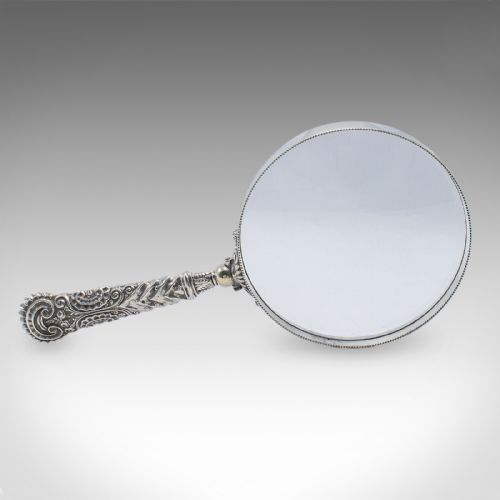
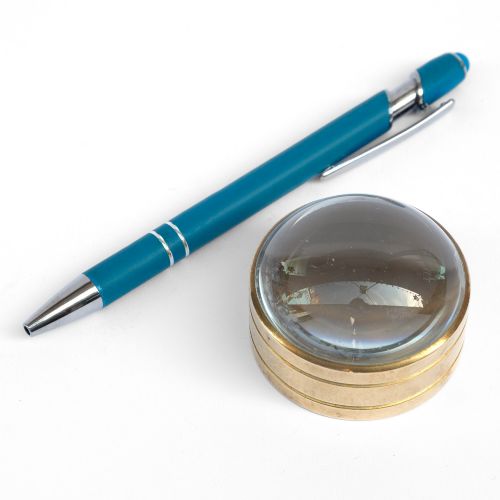
The version most commonly met on this page is a brass mounted or sterling silver handled lens, often taking the form of a library aid, paperweight, or pivoting bullseye glass. Origins range from English workshops to Parisian luxury houses, alongside occasional Chinese export examples featuring silver and jade.
Forms vary from folding adjustable designs and angle-poise desk stands to small handheld reading glasses intended for close work. Each piece serves as both a functional tool and a decorative object suited for daily use on a desk.
Materials and construction
Metalworking forms the structural foundation of these pieces, utilising cast brass, silver plate, and sterling silver to mount the optical glass. Frames and handles are shaped with precision, sometimes incorporating pivoting joints or folding mechanisms for adjustable focus.
Surface decoration and tactile elements distinguish individual pieces through the use of natural materials like shagreen and jade, alongside coloured guilloche enamel. Celluloid and rosewood also appear as handle materials, shaped to fit the hand comfortably.
Periods represented span from the 19th Century and Victorian era through Edwardian, Art Deco, and Mid-Century Modern designs.
Assessing quality in optical accessories
Quality in a vintage desk magnifier rests upon the optical clarity of the glass and the weight of its mount. Heavier brass frames, solid sterling silver handles, and unblemished lenses represent superior manufacture compared to lighter, plated alternatives.
The sophistication of the mechanism, whether a smooth pivoting stand, a patented folding action, or fitted shagreen casing, separates standard utilitarian items from luxury pieces produced by established makers.
Hermes Paris·Broadway And Co·Mappin And Webb·Asprey·CW Dixey London
The Vintage Desk Magnifier Glossary
- Guilloche enamel
- A decorative technique involving precise engine-turned patterns beneath a translucent coloured enamel coating. This method was frequently utilised on Art Deco desk accessories.
- Shagreen
- Prepared shark or stingray skin with a granular texture, prized for its tactile quality and distinctive appearance. It was often wrapped around handles on luxury pieces.
- Bullseye lens
- A thick, rounded magnifying glass that provides strong magnification, typically mounted on a pivoting stand for desk use. It allows the user to adjust the angle of view.
- Sterling silver
- An alloy consisting of ninety-two point five percent silver and seven point five percent other metals, chiefly copper. British pieces feature hallmarks indicating the assay office and year.
Vintage Desk Magnifier: Frequently Asked Questions
How do I use a desk magnifier?
Place the magnifier directly onto documents, maps, or books to enlarge small print and fine details. Stand-mounted versions allow hands-free reading across a desk or library table.
Pivoting and folding models can be adjusted to various angles, making them suitable for detailed inspection work or daily study.
What metals were used for frames?
Makers utilised solid brass, sterling silver, and silver plate to construct the frames and mounts. Brass provides sturdy weight for desk stands and heavy-duty reading aids.
Sterling silver and silver plate appear more frequently on handheld reading glasses and luxury desk accessories, often bearing Birmingham or London hallmarks.
How are different periods identified?
Victorian and 19th Century pieces often feature ornate silver work, rosewood, or celluloid handles. Edwardian designs lean towards refined sterling silver and traditional library aids.
Art Deco examples introduce geometric lines, shagreen wrapping, and colourful guilloche enamel, while Mid-Century Modern pieces favour clean forms like the Hermes cordage designs.
Can I clean the optical glass?
Clean the glass lens using a soft microfiber cloth and a mild glass cleaner to remove dust and fingerprints. Avoid harsh chemical abrasives that might damage surrounding metal or enamel.
Take care around mounted edges involving shagreen, enamel, or jade, ensuring moisture does not seep beneath the settings.