




Antique Desk Magnifier
An antique desk magnifier brings both practical clarity and tactile weight to a writing table, offering a tangible connection to nineteenth- and twentieth-century study.
Antique Desk Magnifier
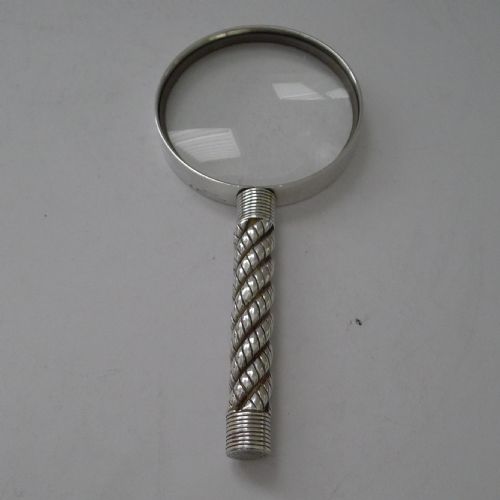
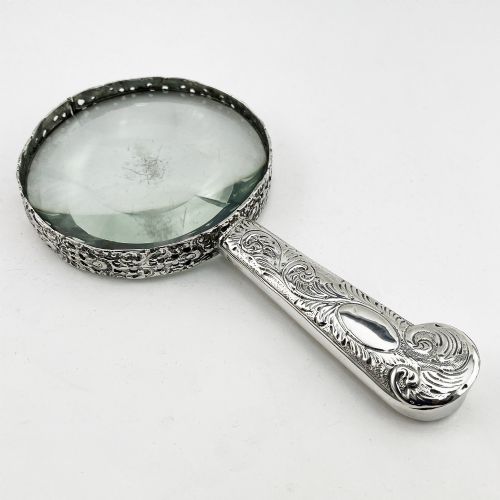
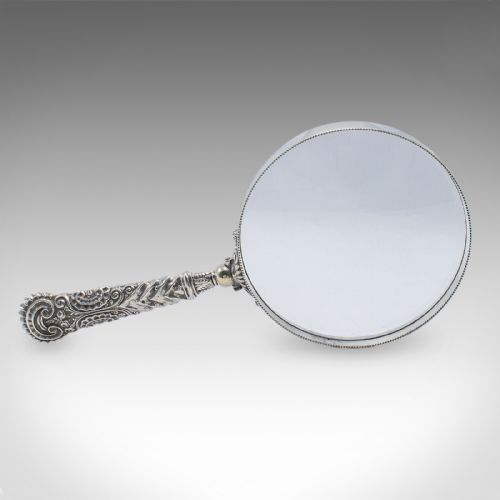
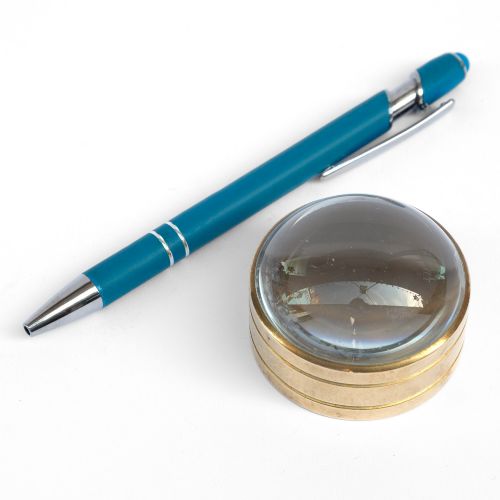
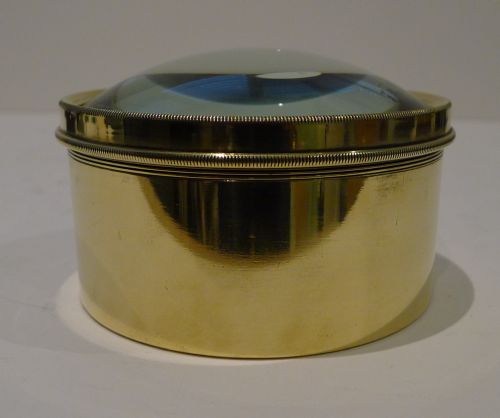
An antique desk magnifier serves as a functional accessory designed for reading fine print, maps, and documents upon a library or writing table. These objects range from handheld sterling silver library aids to substantial brass lenses mounted on pivoting stands or tripod bases.
The pieces appearing on this page span the Victorian era, the Edwardian period, and the Art Deco years, alongside mid-century twentieth-century designs. Handheld forms frequently feature ornate metal handles, while desk-bound versions often incorporate heavy weighted bases or folding mechanisms.
Makers and retailers from London, Paris, and Birmingham produced these desk accessories in varied configurations, utilising precious metals, exotic skins, and carved stones. The selection mirrors the changing tastes of study and office spaces across more than a century of manufacture.
Materials and construction
Brass and sterling silver form the primary structural framework for the majority of mounts, bezels, and handles. Silversmiths and metalworkers shaped these metals by hand, often incorporating hallmarks from assay offices such as Birmingham and London to denote metal purity.
Optical glass lenses provide the magnifying power, set securely within metal bezels or secured to stands with pivoting joints. Decorative elements include applied shagreen panels, guilloche enamel, carved jade, and rosewood handles, reflecting the luxury goods trade of the period.
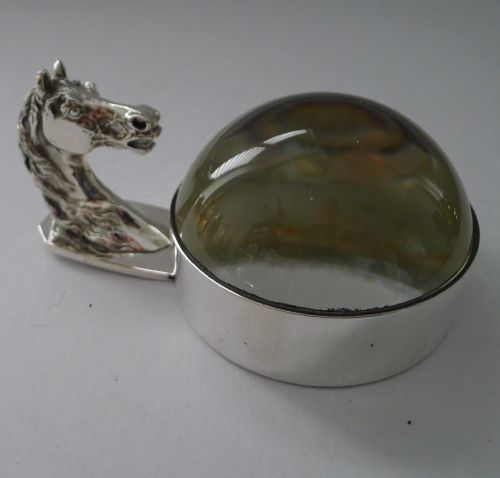
Several designs include equestrian horse head handles, turning an ordinary reading glass into a miniature stable master.
Qualities of distinction
Quality rests heavily upon the optical clarity of the glass lens and the rigidity of its mount or stand. Superior pieces maintain smooth articulation in pivoting joints and secure seating within their bezels.
The execution of decorative details, such as the precision of engine-turned enamel, the tightness of shagreen wrapping, and the weight of the metal handle, separates utilitarian items from luxury desk accessories produced by notable firms.
Hermes Paris·Broadway And Co·Mappin And Webb·Asprey·CW Dixey London
The Antique Desk Magnifier Glossary
- Guilloche enamel
- A decorative technique involving precise, intricate mechanical patterns engraved beneath a translucent layer of coloured enamel. This finish frequently appears on Art Deco desk accessories.
- Shagreen
- Untanned skin, typically from shark or stingray, prepared with a granular surface and often dyed. It provides a tactile, textured grip on luxury handles.
- Assay office mark
- A stamp indicating the testing and certification of precious metal purity by an official body. These marks help date silver mounts.
- Bullseye lens
- A thick, rounded convex lens that provides strong magnification, often mounted on a swivel stand for desk use.
- Magnifying glass loupe
- A small lens used for inspecting fine details, sometimes fitted to a tripod stand for stationary desk work.
Antique Desk Magnifier: Frequently Asked Questions
How do I clean an antique lens?
Use a soft microfiber cloth and mild lens cleaner to remove dust and smudges from the glass surface.
Avoid harsh chemical solvents that might damage surrounding metal, enamel, or shagreen mounts.
Are these magnifiers still practical to use?
Most lenses offer genuine optical magnification suitable for reading small text or examining fine details on documents.
Desk-mounted versions remain particularly useful for hands-free study at a writing table.
How do I date a silver magnifying glass?
Look for hallmarks stamped on the metal mount, which typically include a maker's mark, a standard mark, and a date letter.
Matching these stamps against official assay office records reveals the exact year of manufacture.
What is the difference between a handheld and a stand magnifier?
Handheld pieces feature decorative handles designed for lifting and moving across pages during reading.
Stand magnifiers use weighted bases, tripods, or pivoting arms to hold the lens steady above the desk surface.