



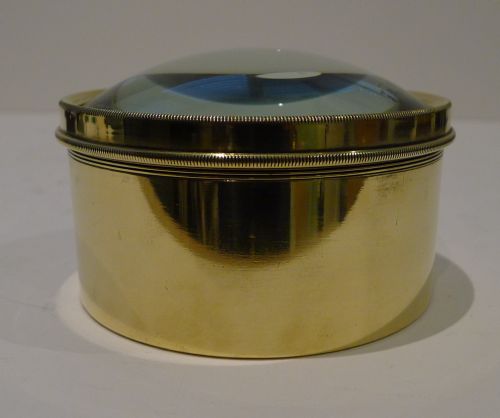
Antique Desk Magnifying Lens
An antique desk magnifying lens is a practical library instrument that brings small print and fine details into sharp focus.
Antique Desk Magnifying Lens
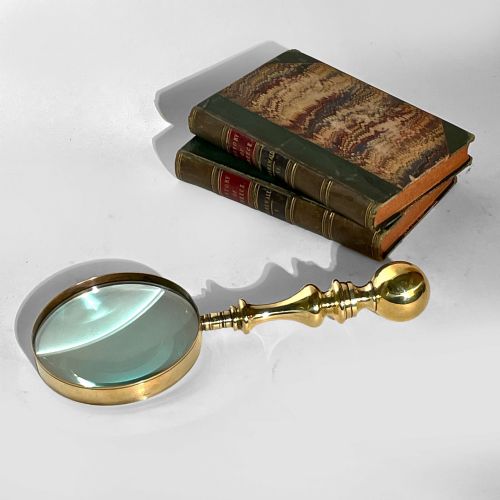
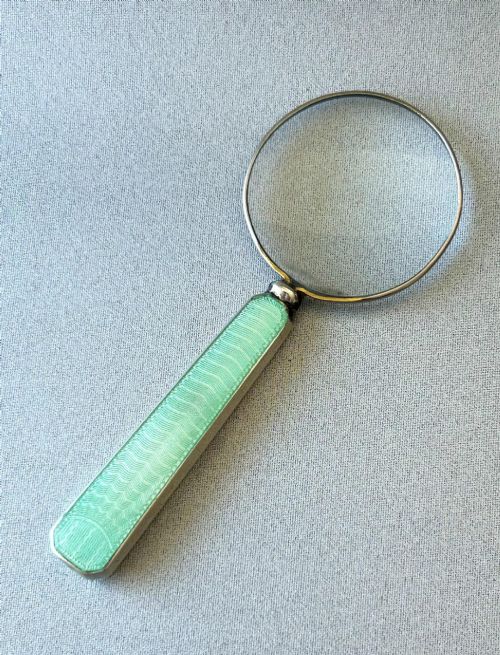
An antique desk magnifying lens is a functional accessory designed for reading and close inspection at a desk or library table. These pieces range from simple handheld readers to substantial desk-top stands and combined paperweights.
The selections span several periods, with Edwardian and Victorian examples appearing frequently alongside later Art Deco and mid-century designs. Most items originate from English makers, though continental and Chinese pieces also feature.
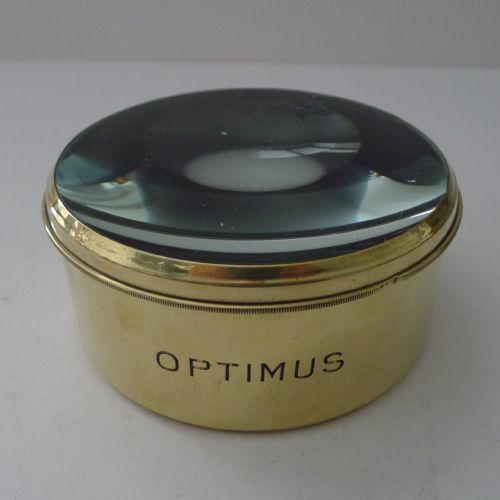
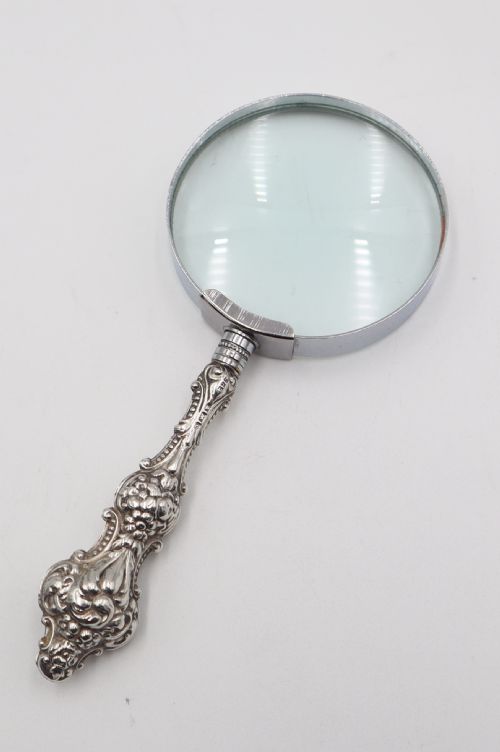
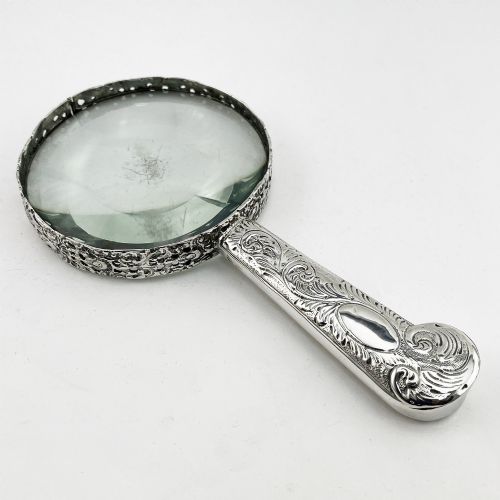
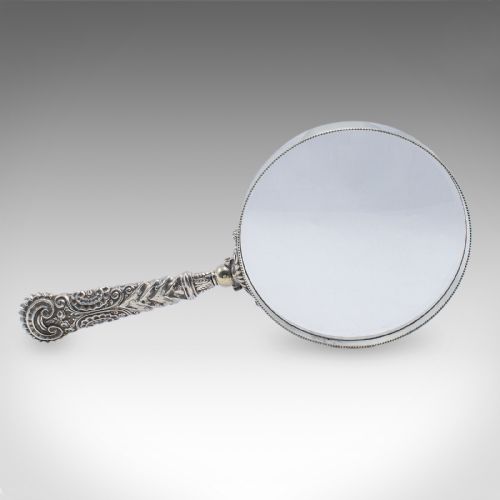
Common forms include traditional silver-handled glasses, brass-mounted bullseye lenses on stands, and folding or adjustable pocket-style instruments intended for permanent desk placement.
Materials and construction
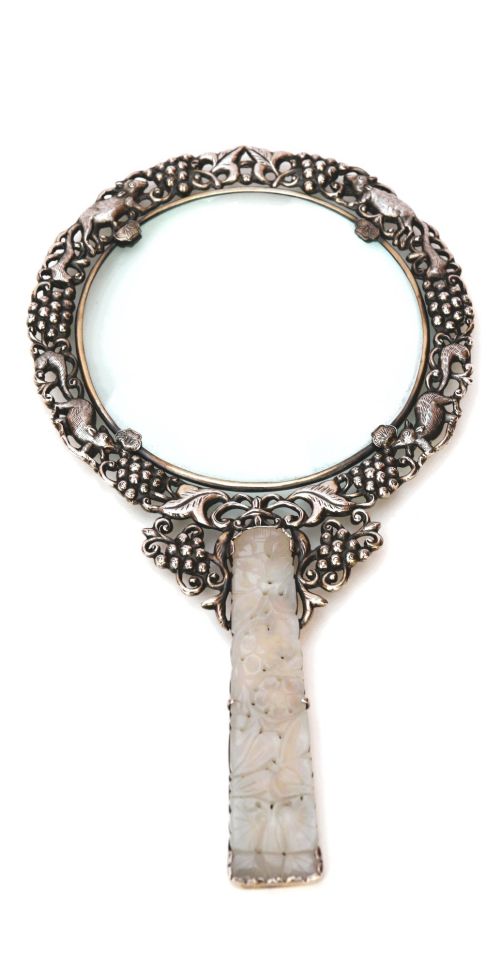
Makers utilised clear optical glass paired with robust mounting materials such as brass, sterling silver, and silver plate. Frames and handles frequently incorporate tactile natural elements including shagreen, jade, and ebony.
Metal components involve casting, turning, and silversmithing techniques, often bearing hallmarks from assay offices like Birmingham. Lenses are securely seated within metal bezels, sometimes featuring pivoting or adjustable brass arms for desk use.
Antique Desk Magnifying Lens Retail Price Guide 2026
Typical asking prices for desk magnifying lens among the pieces listed under this phrase on Sellingantiques today, from the lower quarter to the upper quarter. They describe what is for sale here now, not the wider market.
Materials across these listings include glass, brass, silver plate, sterling silver, shagreen, jade, and ebony.
Assessing quality and craftsmanship
Quality rests upon the clarity of the glass and the precision of the mechanical mountings, such as smooth pivoting joints or folding mechanisms. Heavier brass and solid sterling silver settings indicate superior manufacture compared to lighter plated alternatives.
The refinement of the handle materials, from finely finished shagreen to carved jade and turned ebony, distinguishes standard library aids from luxury desk accessories produced by notable makers.
Mappin & Webb·P H Vogel & Co·Francis West of Fleet Street London·CW Dixey London·Hermes Paris·Asprey
The Antique Desk Magnifying Lens Glossary
- Sterling Silver
- A silver alloy containing 92.5 percent pure silver by mass, frequently utilised for the handles and mounts of fine desk magnifiers.
- Shagreen
- Rawhide typically sourced from stingray or shark, dried and sanded to create a distinctive pebbled texture used to cover luxury handles.
- Bullseye Lens
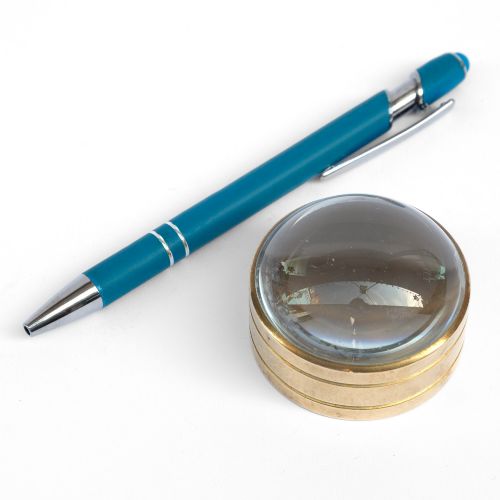
- A thick, hemispherical magnifying lens mounted on a brass stand, heavy enough to double as a paperweight on a desk.
- Stanhope Lens
- A microscopic optical lens that reveals a tiny hidden photograph when held to the eye, found in specialised nineteenth-century pieces.
- Silver Plate
- A thin layer of silver applied to a base metal core, commonly used for nineteenth and early twentieth-century reading aids.
Antique Desk Magnifying Lens: Frequently Asked Questions
How were desk magnifying lenses used?
These instruments sat on library tables and desks to assist with reading small print, maps, and detailed documents.
Larger brass versions often doubled as paperweights while keeping the lens constantly to hand for daily correspondence.
What materials are common?
Frames and handles were constructed from brass, sterling silver, and silver plate.
Luxury versions incorporated exotic materials like shagreen, carved jade, and ebony for the handles and cases.
How do I date an antique lens?
Silver mounts frequently carry hallmarks indicating the year and assay office of manufacture, such as Birmingham hallmarks from the early twentieth century.
Stylistic cues like Art Deco geometric lines or Victorian ornamentation also help narrow the period.
Are these lenses still functional?
Most optical glass lenses remain entirely clear and fully capable of magnification for everyday desk use.
They serve as practical reading aids alongside their decorative appeal in a study.