

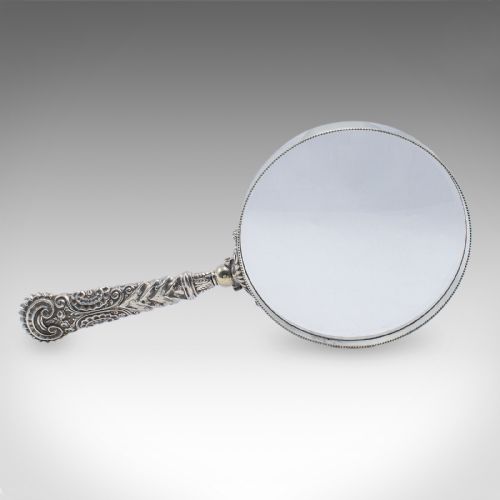


Silver Desk Lens
A silver desk lens brings fine optics and precious metal together on the writing table, offering both daily utility and distinct period character.
Silver Desk Lens
A silver desk lens typically takes the form of a handheld magnifying glass intended for reading, library work, and correspondence. The examples found here span several decades, ranging from nineteenth-century Victorian designs to mid-century modern interpretations.
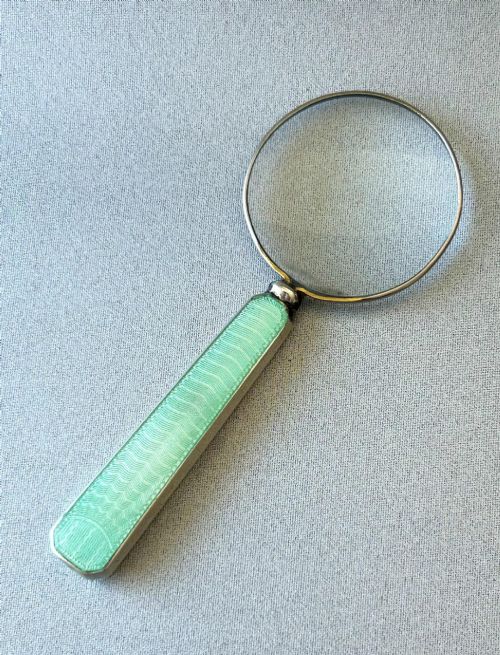
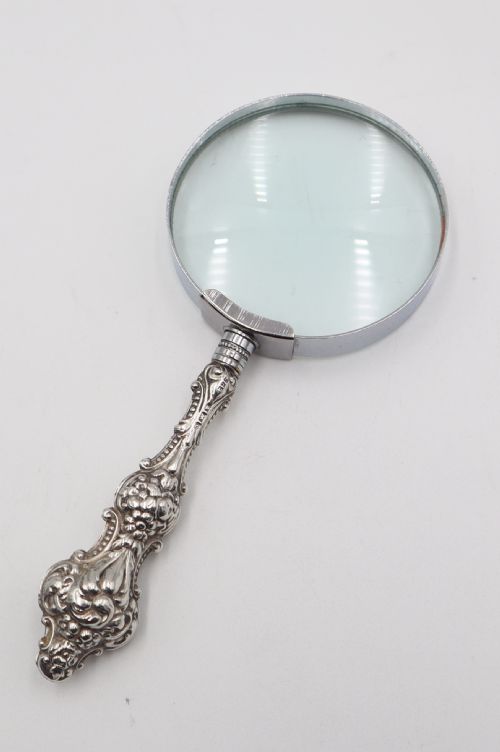
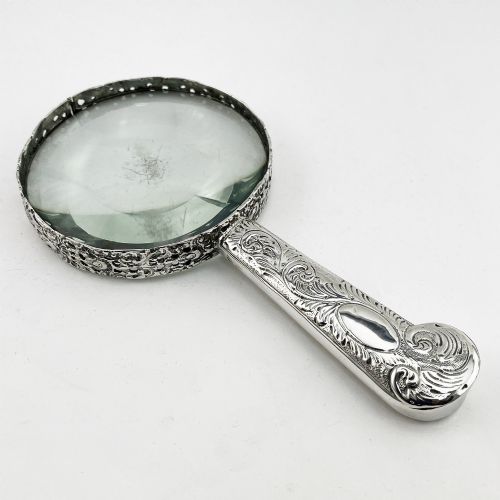
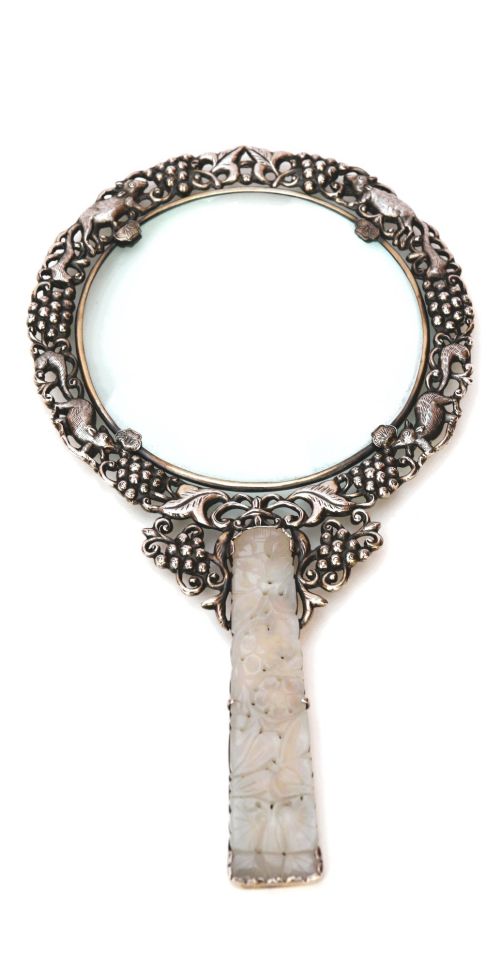
Buyers will encounter varied interpretations of a silver desk lens across different decorative styles, including Edwardian arts and crafts, Victorian repousse work, and geometric Art Deco creations. Materials extend beyond silver to incorporate glass, brass, shagreen, vitreous enamel, and jade.
Origin and date markers vary widely, with pieces originating from English workshops alongside items bearing continental marks or specific period hallmarks. The overarching function remains consistent as a desk accessory designed for detailed reading tasks.
Materials and construction
Construction relies on combining optical glass lenses with structural mounts fashioned from sterling silver, silver plate, or brass. Makers securely housed the glass within metal bezels attached to distinct handles.
Handles introduce contrasting textures through the use of organic and decorative materials such as shagreen, vitreous enamel, and carved jade. These elements are fastened to the metal mounts using period techniques suited to each workshop.
Silver Desk Lens Retail Price Guide 2026
Typical asking prices for silver desk lens among the pieces listed under this phrase on Sellingantiques today, from the lower quarter to the upper quarter. They describe what is for sale here now, not the wider market.
Listings incorporate items from the Victorian, Edwardian, and Art Deco periods, featuring materials ranging from sterling silver to shagreen.
Assessing quality in desk optics
Quality rests upon the optical clarity of the glass lens and the substance of the metal mount, where heavier gauges of sterling silver provide a more substantial feel in the hand. The precision of the joinery between the handle and the lens bezel indicates the maker's level of skill.
Superior examples incorporate decorative secondary materials like fine shagreen or applied enamel that remain intact and well-fitted to the frame. The distinction between simple silver plate and solid sterling silver also marks the hierarchy of these desk objects.
Hermes Paris·Asprey·P H Vogel And Co
The Silver Desk Lens Glossary
- Sterling silver
- A silver alloy containing ninety-two point five percent pure silver by mass, frequently encountered in British desk accessories and marked with official assay office hallmarks.
- Silver plate
- A base metal object coated with a thin layer of silver, offering the visual appearance of solid silver at a different tier of production.
- Shagreen
- Prepared shark or ray skin with a granulated surface, utilised by makers such as Asprey to cover handles on luxury desk pieces.
- Guilloche enamel
- Decorative metalwork covered with translucent enamel over an engine-turned background, seen on Art Deco pieces.
- Repousse
- Metalworking technique where the silver is hammered into relief from the reverse side, characteristic of certain Victorian designs.
Silver Desk Lens: Frequently Asked Questions
What is a silver desk lens used for?
These pieces function as magnifying aids for reading small print, examining maps, and inspecting documents at a desk or library table. They served as practical stationery tools for Victorian and twentieth-century readers.
Beyond utility, they functioned as decorative desk accessories that reflected the aesthetic tastes of their owners through materials like shagreen, enamel, and carved jade.
How do I date a silver desk lens?
Dating relies on reading Birmingham or other assay office hallmarks stamped into the metal mounts, which reveal exact assay years for British sterling silver pieces. Stylistic indicators also help assign periods.
Design motifs such as geometric Art Deco lines or elaborate Victorian repousse work point directly to the era of manufacture. Surviving maker marks further narrow down the production period.
Are these lenses made of solid silver?
The listings include both solid sterling silver pieces and items constructed from silver plate over base metals like brass. Hallmarks on the metal mounts typically confirm sterling standard composition.
Handle materials also vary, incorporating non-metal elements such as glass, enamel, and shagreen alongside the primary silver structure.
How should I care for a silver desk lens?
Maintain the metal mount by gently cleaning sterling silver or silver plate with a soft cloth designed for precious metals, avoiding abrasive polishes that might damage enamel or shagreen handles. Glass lenses require standard glass cleaner applied sparingly.
Store the piece in a dry environment away from direct sunlight to preserve organic handle materials like shagreen and delicate vitreous enamel finishes.