

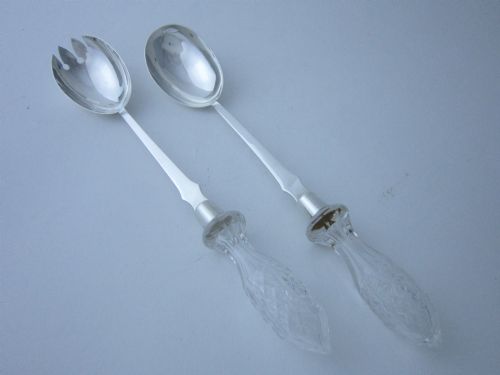


Silver Handled Glass
Silver handled glass brings together functional glassware and precious metal mounts, uniting serving vessels and desk aids from the Victorian and Edwardian eras.
Silver Handled Glass
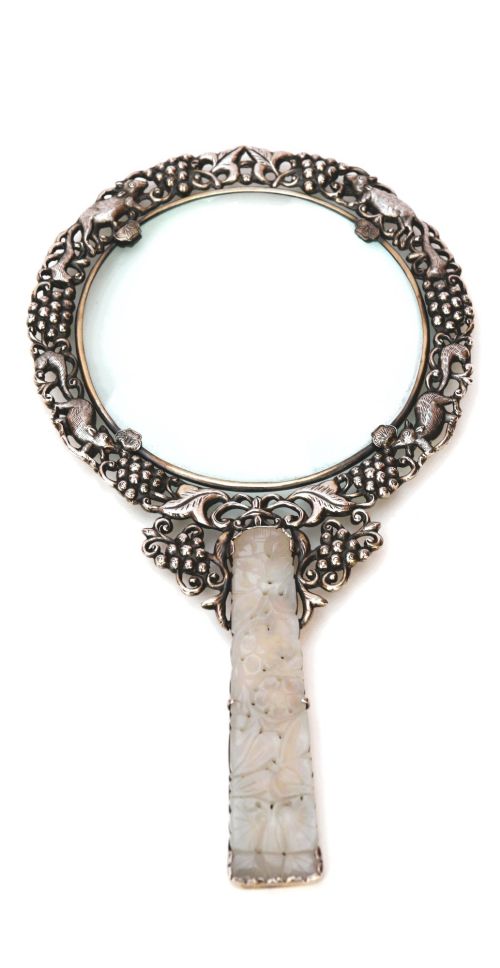
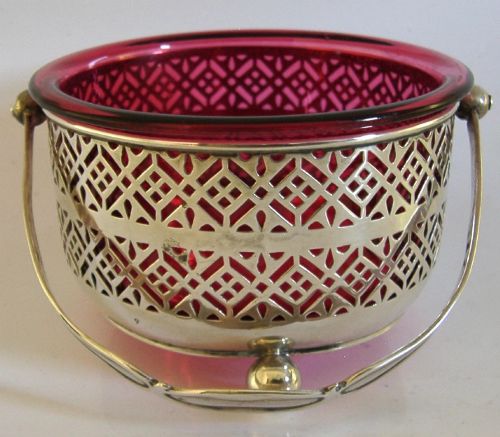
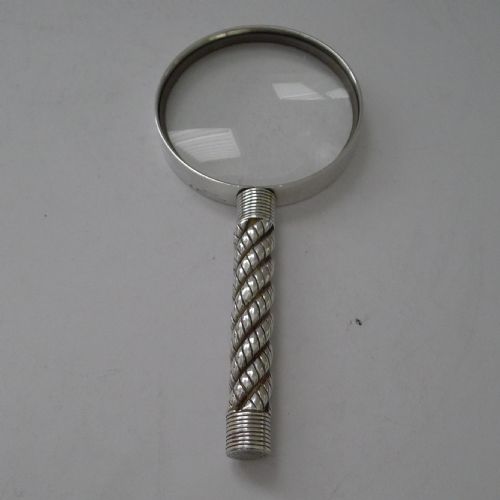
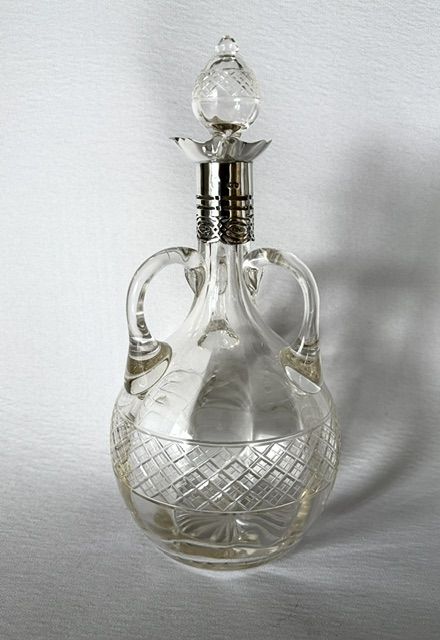
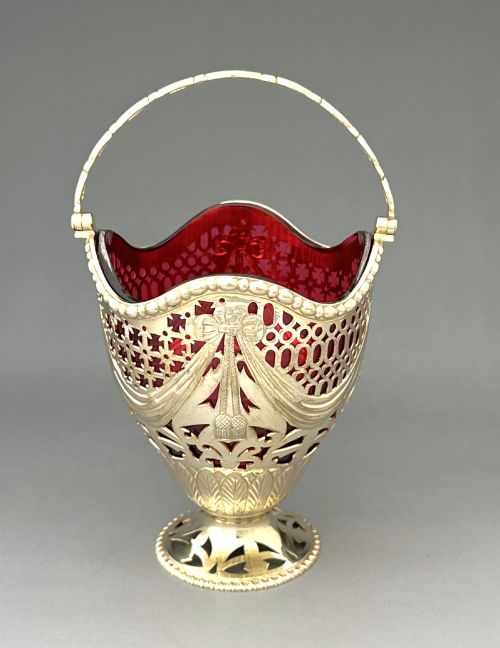
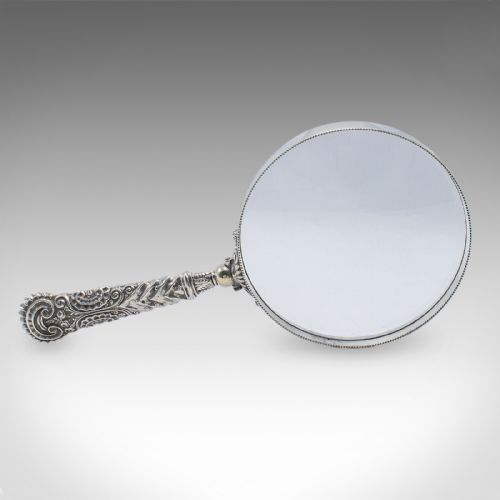
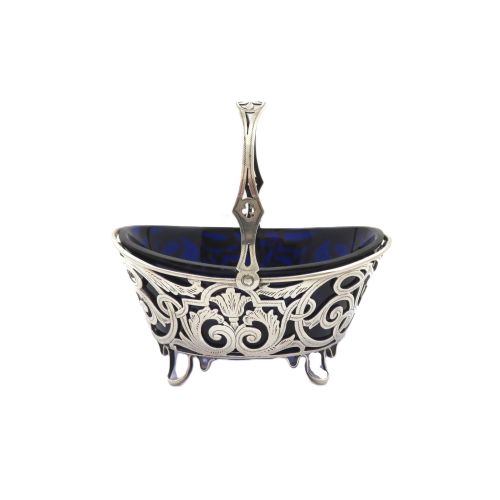
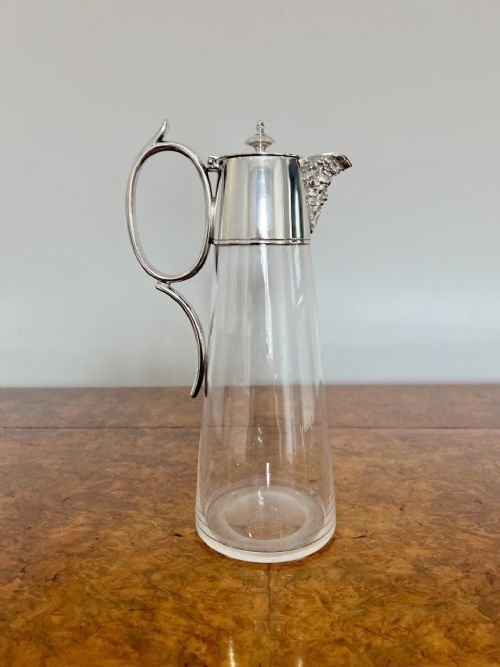
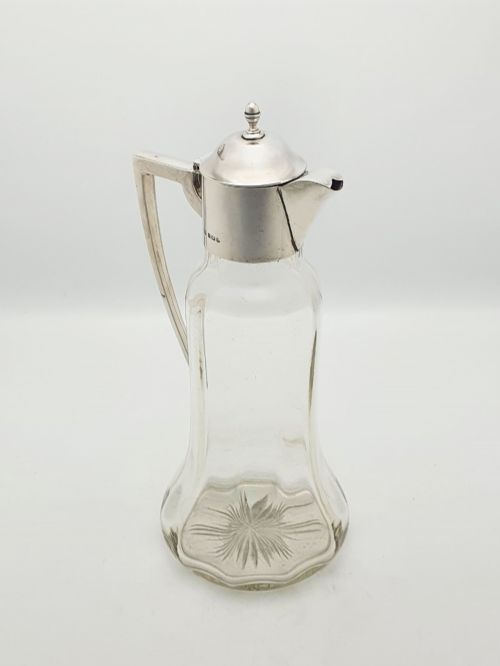
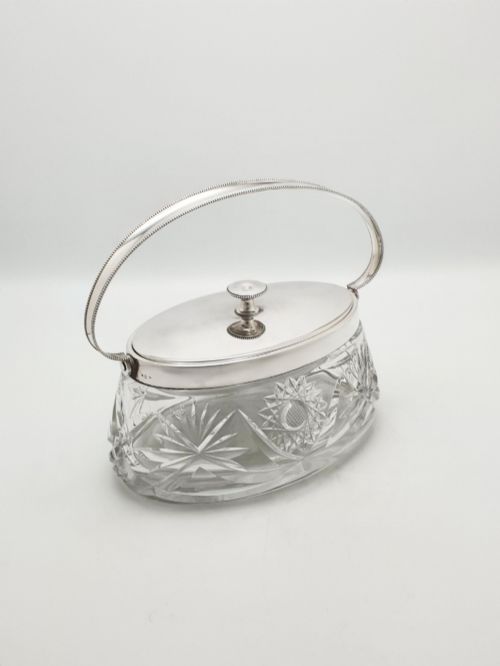
Silver handled glass encompasses a diverse category of antique tableware, desk accessories, and decorative vessels where glass bodies are combined with silver or silver-plated mountings. You will frequently encounter elegant magnifying glasses featuring solid silver handles alongside practical items such as claret jugs, decanters, and swing-handled baskets. These pieces bridge the gap between utility and display, often incorporating coloured glass liners in ruby, cranberry, or green hues.
The selection ranges widely across the nineteenth and twentieth centuries, with a strong representation of Edwardian and Victorian craftsmanship. Serving pieces like biscuit barrels, cream pails, and sugar baskets dominate the larger vessels, while handheld reading glasses make up the bulk of the smaller implements. Originating primarily from English workshops, these items reflect the heavy dining and writing traditions of their respective periods.
Materials and construction
Makers combined blown or cut crystal and glass bodies with cast, pierced, or hammered silver mounts and handle attachments. The metalwork was frequently executed in sterling silver or silver plate, secured directly to the glass through collars, rims, and hinged mounts.
Coloured glass varieties such as cranberry and ruby required specific mineral additions during the glass-blowing stage before being fitted with swing handles or silver-gilt frames. Magnifying glass variants combined the glass lens with silver, antler horn, tortoiseshell, or guilloche enamel handles.
Dr Christopher Dresser lent his radical modernist eye to functional vessels, proving Victorians enjoyed pouring claret from geometry.
Factors determining quality
Quality rests heavily on the crispness of the glass cutting and the weight of the silver mounts used in the construction. Pieces featuring deep hand-cut facets or intricate pierced silver work sit comfortably above simpler, mass-produced counterparts.
The presence of clear hallmarks, maker marks, and well-integrated original glass liners or lenses significantly elevates an object. Finer items demonstrate a seamless union between the metal handle and the glass body without loose fittings or visible adhesives.
Walker & Hall·Hukin & Heath·Mappin & Webb·P H Vogel & Co·Aldridge & Green
The Silver Handled Glass Glossary
- Claret jug
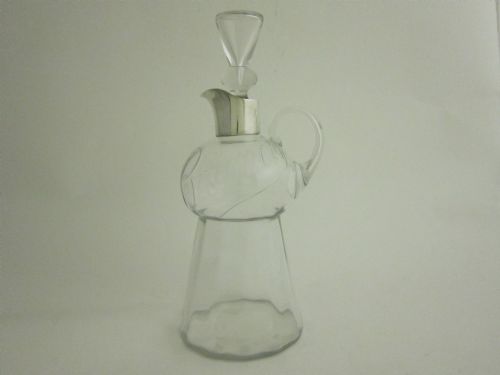
- A tall pouring vessel designed for serving red wine at the table, usually featuring a glass body with a hinged silver lid and handle. These often date from the Victorian and Edwardian periods.
- Biscuit barrel
- A covered container used for storing biscuits or dry goods, typically comprising a glass body encased in silver plate or sterling silver with a swing handle. They were popular dining table accessories in the late nineteenth century.
- Swing handle
- A movable arched metal handle attached to the rim of a basket or bowl via pivot pins. This feature allows the handle to lie flat against the sides when not in use.
- Guilloche enamel
- A decorative technique where a precise, repetitive pattern is mechanically engraved into a metal surface beneath a translucent layer of enamel. It frequently appears on the handles of smaller desk items.
- Tantalus
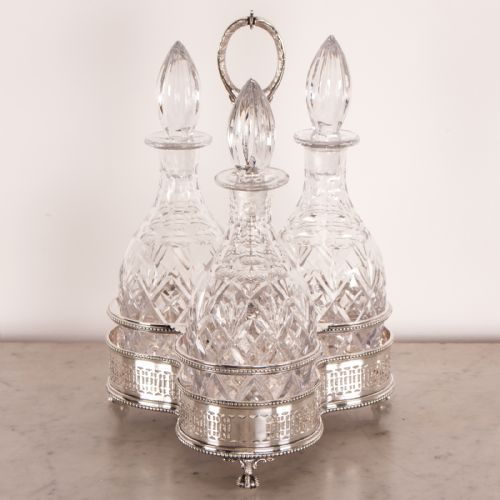
- A locking beverage cabinet holding decanters within a frame that prevents removal without a key. Victorian examples often combine cut glass bottles with substantial silver-plated framework.
Silver Handled Glass: Frequently Asked Questions
How were silver handled decanters used?
These vessels served wine and spirits at the dining table, allowing hosts to pour drinks directly from cut crystal containers fitted with secure silver mounts and stoppers.
Their decorative nature also made them suitable for display on sideboards and serving trays during formal meals.
What is a swing handled basket used for?
Swing handled baskets held sugar, sweetmeats, or fruit on the dining table, with the movable handle making them easy to pass between guests.
Coloured glass liners inside pierced silver frames provided a vibrant contrast for serving small food items.
How do I identify an Edwardian magnifying glass?
Edwardian magnifying glasses often feature sterling silver handles stamped with clear assay office marks and date letters corresponding to the first decade of the twentieth century.
Stylistic cues include clean Edwardian scrollwork or smooth silver surfaces sometimes paired with tortoiseshell or enamel.
Are glass liners original to the baskets?
Original liners fit snugly within the pierced silver framework and match the manufacturing period of the outer metal mount.
Matching the contours of the glass to the interior dimensions of the silver basket helps determine whether they started out together.