
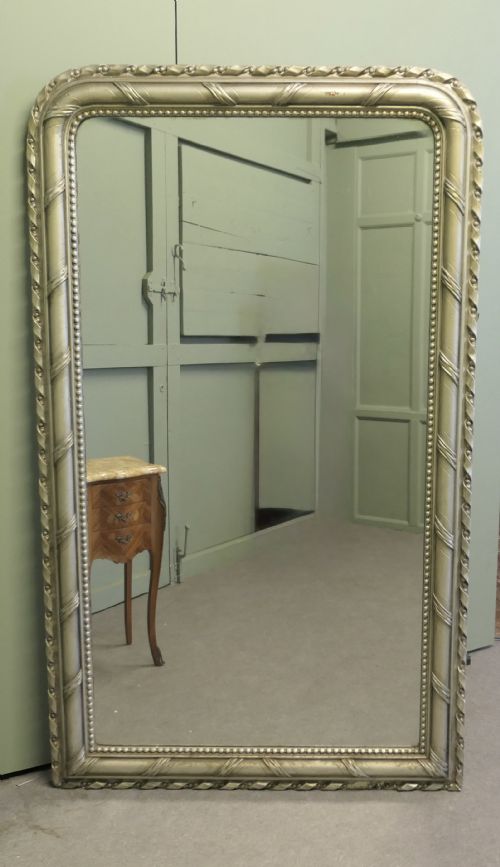

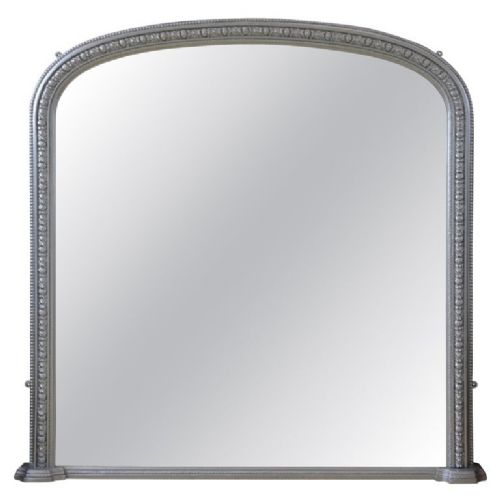

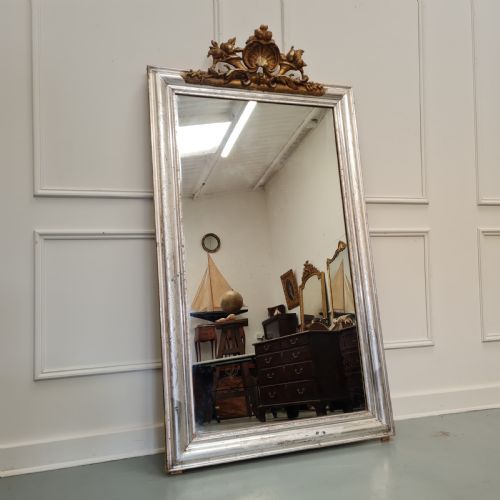


Silver Leaf Overmantel Mirror
A silver leaf overmantel mirror brings commanding scale and reflective brilliance to a principal reception room.
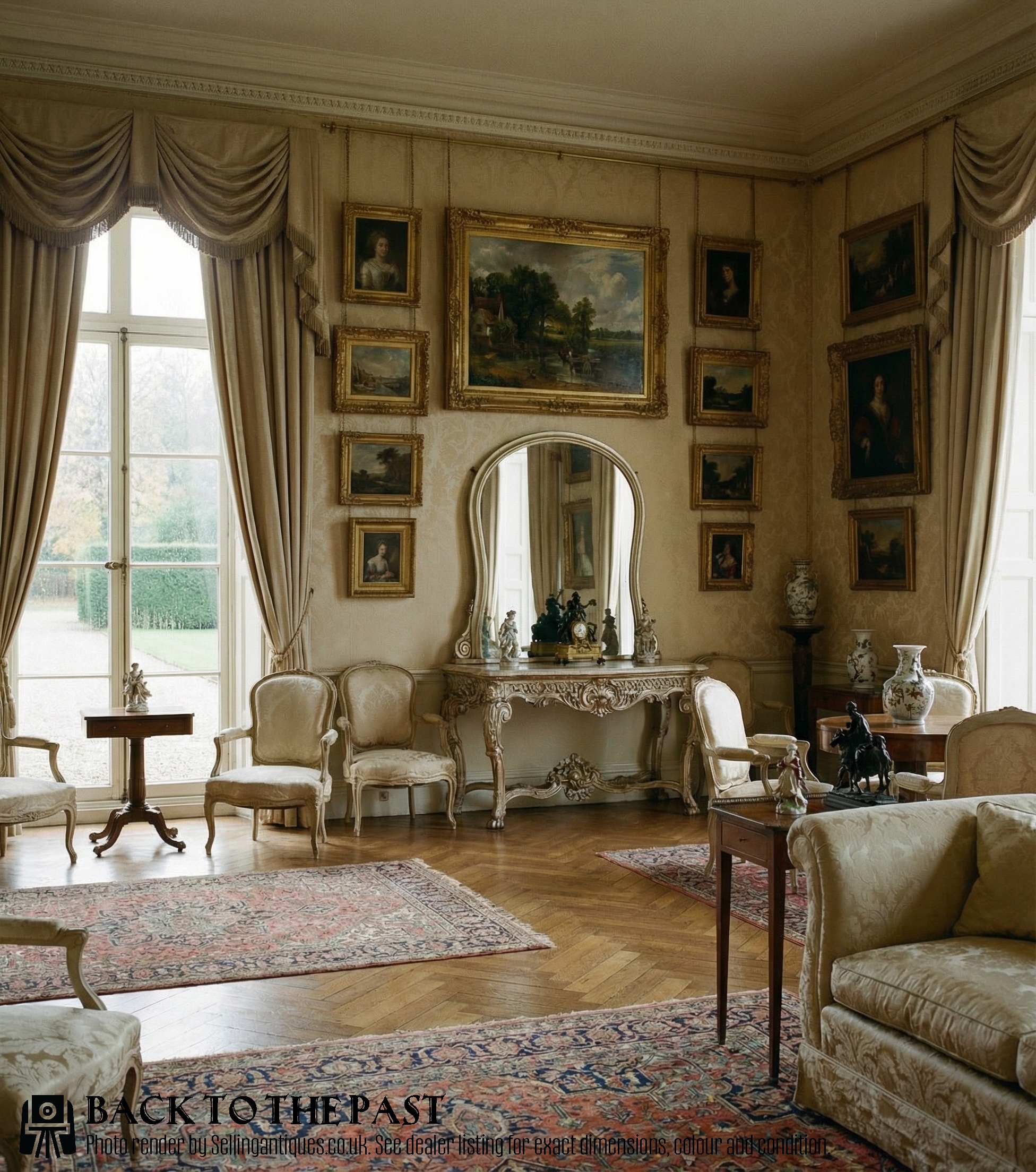
Silver Leaf Overmantel Mirror
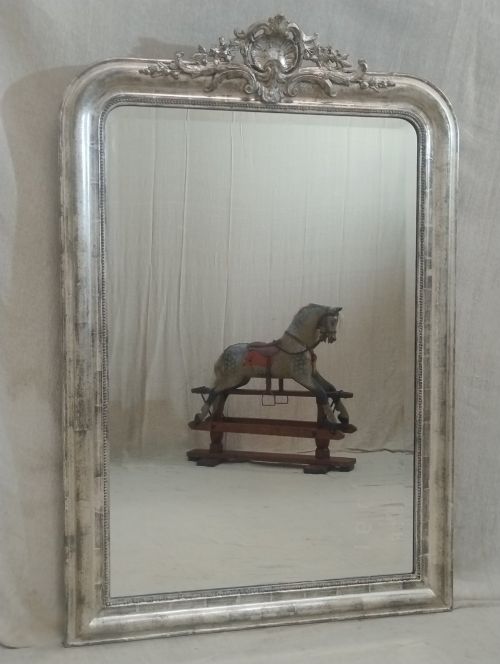
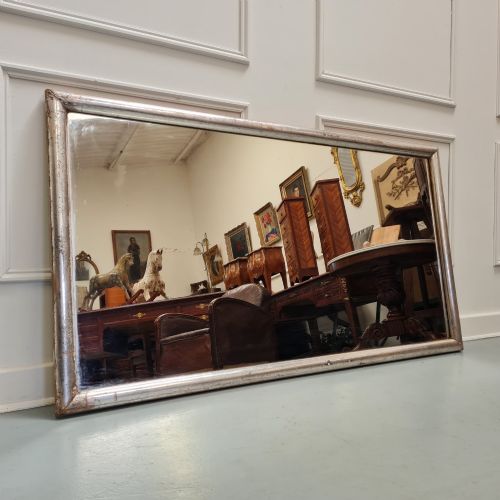
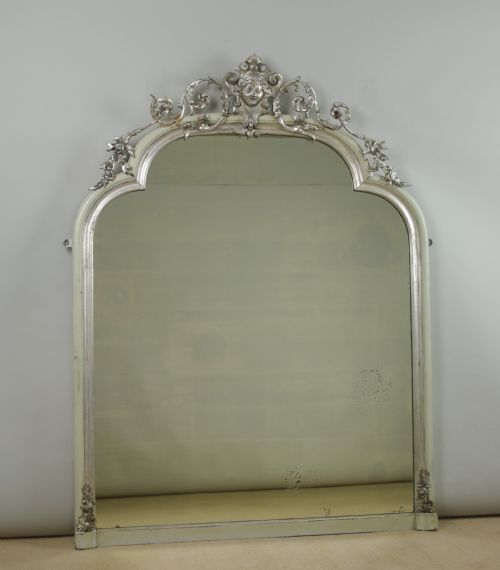
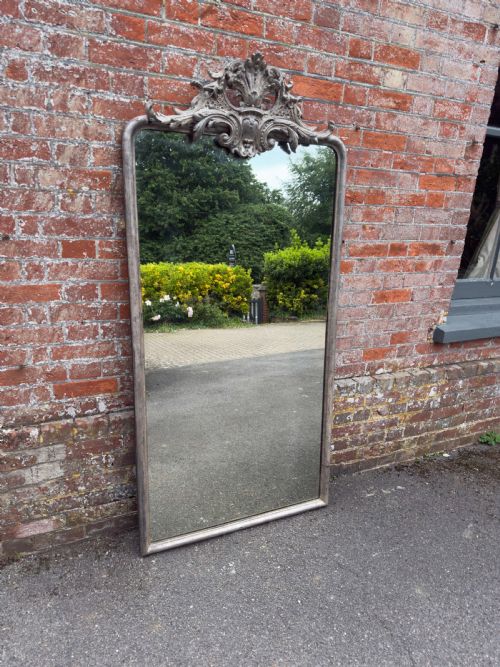
A silver leaf overmantel mirror is a substantial looking-glass designed specifically to sit above a mantelpiece, anchoring the hearth within the room. These pieces span the eighteenth, nineteenth, and early twentieth centuries, drawing on Victorian English and French styles including Louis Philippe and Rococo.
The version most commonly met on this page is a large nineteenth-century French or English piece featuring an arched or shaped top. These mirrors often combine generous proportions with architectural framing to reflect light deep into the interior space.
How they were made
The structural carcass is typically built from pine or carved wood, providing a rigid foundation for the heavy glass plates. Artisans applied layers of gesso to the wooden base to build up smooth surfaces and crisp decorative relief before applying the finish.
Finishing involved laying delicate sheets of silver leaf or applying silvered treatments over the gesso and wood. This traditional metallic application created the bright, reflective surface characteristic of these grand wall mirrors.
The listings feature pieces spanning the eighteenth century through to the 1930s, constructed primarily from pine, wood, gesso, and silver leaf.
What varies in quality
Quality depends on the depth and precision of the hand-carved wooden and gesso ornament adorning the frame. Finer examples display crisp botanical or classical motifs that retain their definition beneath the metallic leaf.
The weight and clarity of the mirror glass itself distinguish finer pieces from simpler utilitarian items. Substantial plates with deep bevelling and well-preserved silvering elevate the overall presence of the hanging.
The Silver Leaf Overmantel Mirror Glossary
- Overmantel mirror
- A large wall mirror specifically proportioned to hang above a fireplace mantel. These pieces frequently feature horizontal or vertical grandeur suited to period drawing rooms.
- Silver leaf
- Extremely thin sheets of beaten silver applied to a prepared gesso and wood surface. This material provides a bright, reflective metallic finish distinct from standard oil gilding.
- Gesso
- A plaster-like mixture applied to wood frames to create a smooth base for carving and gilding. It allows artisans to shape intricate relief details before finishing.
- Louis Philippe style
- A nineteenth-century French aesthetic known for understated elegance and gently rounded upper corners. These frames balance restrained architectural lines with generous reflective surfaces.
Silver Leaf Overmantel Mirror: Frequently Asked Questions
How do I hang a heavy overmantel mirror?
These substantial pieces require secure fixing directly into masonry walls using heavy-duty brackets and fixings. Professional installation is strongly recommended due to the combined weight of the wood, gesso, and thick glass.
Ensure the weight is distributed evenly across multiple anchor points to support the frame safely above the fireplace.
Can I place these mirrors in a dining room?
Placing an overmantel mirror in a dining room creates a sense of expanded space and multiplies the candlelight from wall sconces or chandeliers. The reflective surface brightens darker corners during evening meals.
Position the mirror at eye level to ensure it reflects the room rather than the ceiling or floor.
How do I clean silver leaf frames?
Dust the carved wooden and gesso frame gently with a soft, dry brush to prevent the delicate metallic leaf from lifting. Avoid using liquid polishes or chemical cleaners that can degrade the historic finish.
Clean the mirror glass separately using a microfiber cloth and a mild glass cleaner sprayed onto the cloth rather than directly onto the glass.
What distinguishes Victorian from French styles?
Victorian English overmantel mirrors often emphasise sturdy architectural proportions and restrained decoration suited to terraced townhouses. French pieces, particularly those in the Louis Philippe or Rococo style, frequently incorporate arched tops and more fluid, ornate carving.
Both traditions rely on carved wood, gesso, and silvered finishes to achieve their distinctive visual impact.