





Silver Kettle Burner
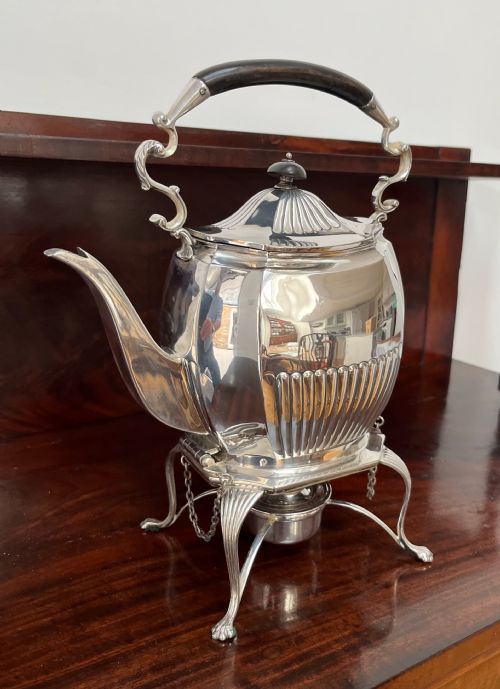
A silver kettle burner provides a traditional way to keep water hot at the table, combining a stand, vessel and spirit lamp.
Silver Kettle Burner
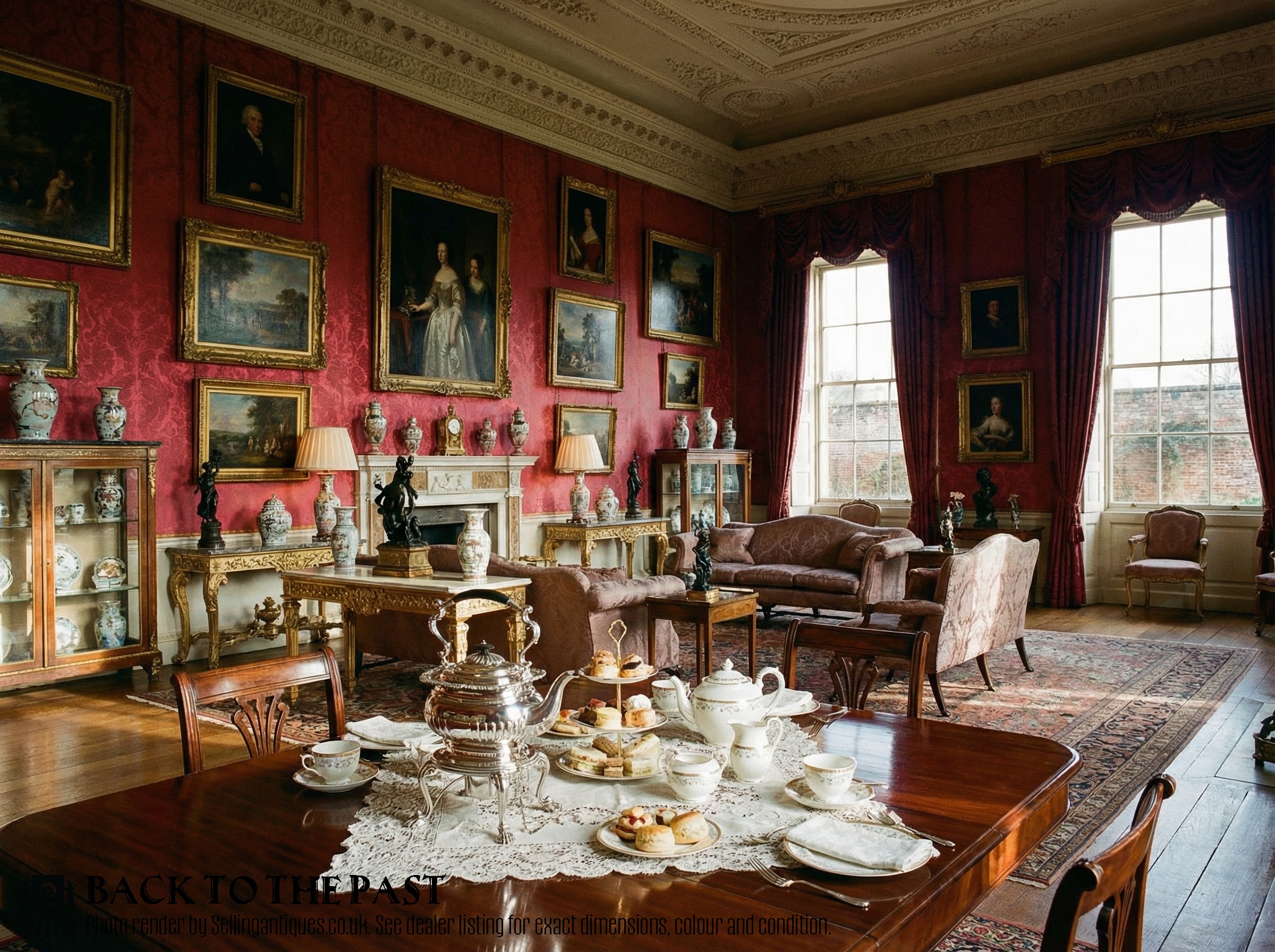
A silver kettle burner brings together a hot water vessel, a supporting stand and an underlying flame source for tea service. When searching for a silver kettle burner, buyers encounter various forms primarily dating from the Victorian and Edwardian eras.
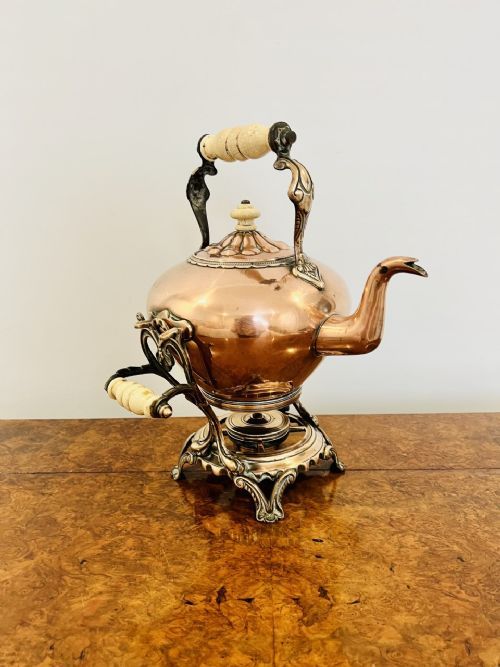
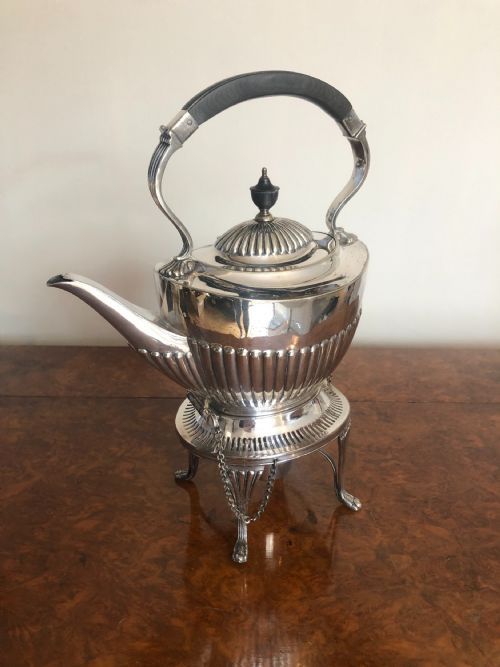
Most examples found here are silver plated or EPNS over a base metal, often paired with copper or wooden elements. The form typically includes a pivoting stand and a small spirit burner designed to maintain water temperature during tea service.
Construction and materials
Makers utilised silver plating techniques over base metals to achieve the appearance of solid silver while keeping the teaware functional and robust. Stands and vessels incorporate metal alongside contrasting materials such as ebony, bone, ebonised wood or copper for handles and fittings.
The construction relies on sturdy frames and pivoting mechanisms that allow the kettle to tilt safely above the spirit burner. Insulation is provided by inserts or handles in wood and bone to prevent heat transfer during use.
Keepers of these kettles once relied on tiny snuffer caps to starve the spirit flame of oxygen before tea could be poured.
Assessing quality and craftsmanship
Quality in a silver kettle burner rests on the balance of the stand and the integrity of the plating over the underlying metal. Finer examples display crisper execution in the Georgian Revival or Edwardian styles, with well-fitted burners and stable frames.
The choice of secondary materials such as genuine ebony or bone handles rather than plain wood often signals a higher grade of manufacture. Maker attribution also plays a role, with established firms producing more substantial mounts and heavier gauge plating.
Fenton Brothers·Frederik Ellis Tim and Co
The Silver Kettle Burner Glossary
- Spirit kettle
- A tea kettle mounted on a dedicated stand with an integrated spirit burner beneath to heat the water. These pieces formed part of formal nineteenth and early twentieth century tea service.
- Silver plate
- A thin layer of silver applied to a base metal such as copper or brass. This technique allowed manufacturers to produce large decorative items at a lower cost than solid silver.
- EPNS
- Electroplated Nickel Silver, a common base metal alloy used under silver plating. It provides a durable and stable foundation for plated teaware.
- Ebonised wood
- Timber treated to imitate ebony, commonly used for kettle handles and knobs to provide a dark, smooth grip that resists heat.
Silver Kettle Burner: Frequently Asked Questions
How do you use a spirit burner?
The small burner beneath the kettle is filled with methylated spirit or similar fuel and lit to maintain water temperature at the table.
The flame is controlled or extinguished using a snug-fitting cap that smothers the fire when heat is no longer required.
What is the difference between silver plate and EPNS?
Silver plate is a general term for any base metal coated with a layer of silver. EPNS specifically denotes Electroplated Nickel Silver as the underlying metal.
Both materials were widely used for Edwardian and Victorian teaware to offer a bright finish without the weight and cost of solid silver.
Are these kettles safe for boiling water?
Most antique spirit kettles are intended for keeping pre-heated water warm rather than bringing cold water to a boil from scratch. The spirit burner provides a gentle heat source rather than a powerful stove.
Using them for table service preserves the internal linings and keeps the vintage components functioning as intended.
How do I date an Edwardian kettle?
Edwardian pieces often display characteristic stylistic revivals, such as Georgian Revival motifs combined with early twentieth-century manufacturing marks. Maker stamps and the style of the stand help narrow down the decade of production.
Comparing the materials, such as the use of ebonised wood or bone insulators, also assists in placing the item within the Victorian or Edwardian periods.