

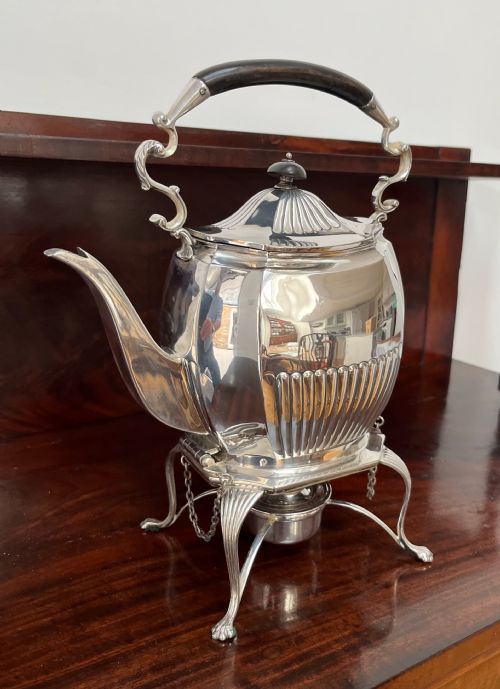


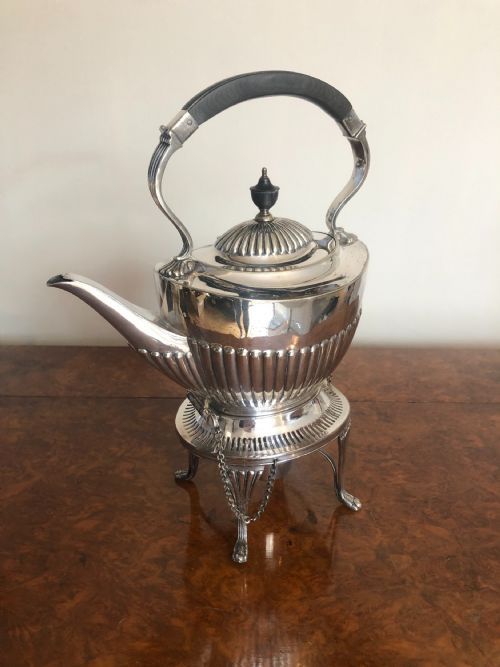
Silver Water Kettle
These silver water kettle examples bring warmth and ceremony to a room, offering functional hospitality through period craftsmanship.
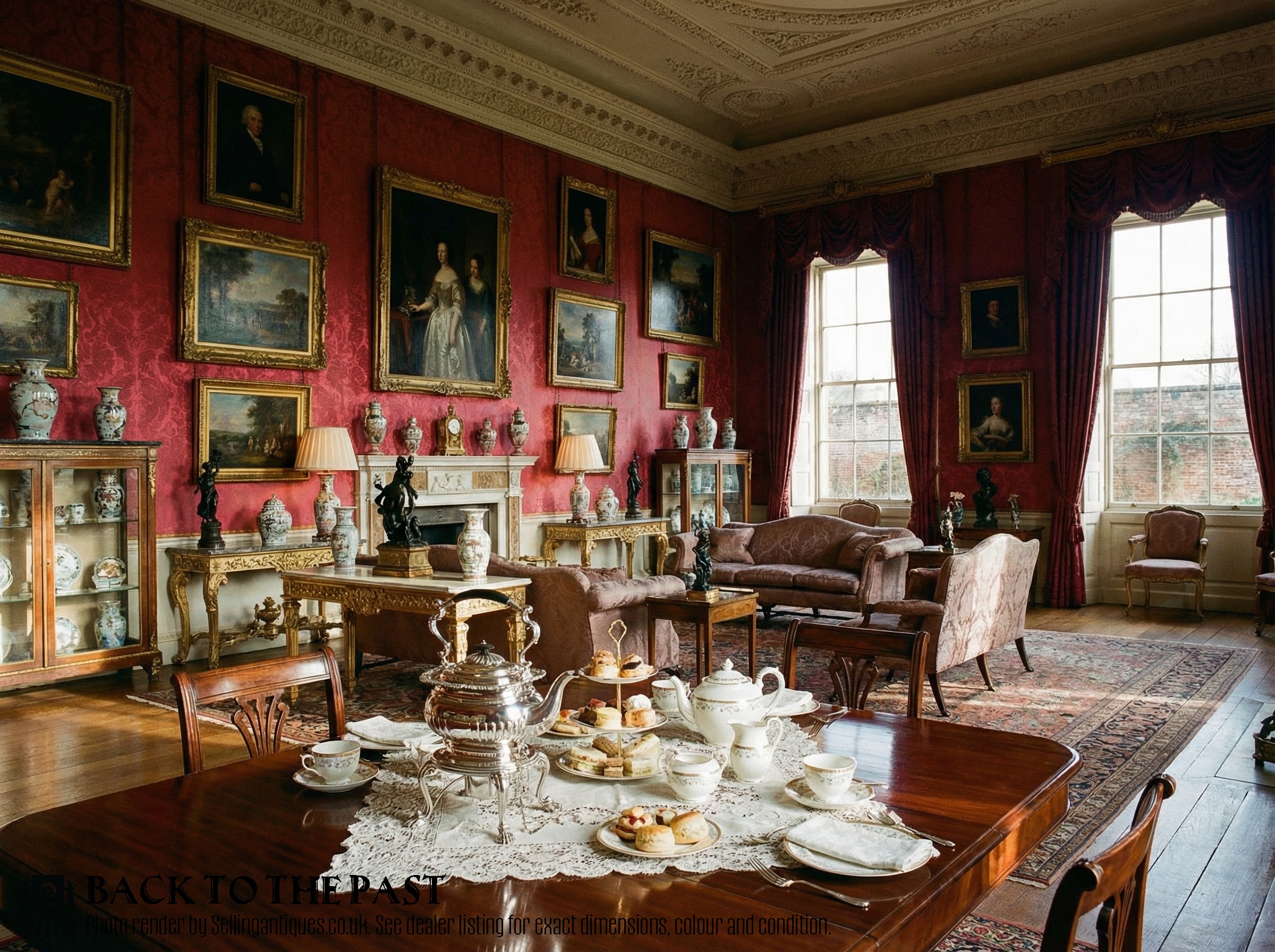
Silver Water Kettle
A silver water kettle sits upon a dedicated metal stand, often accompanied by an integral burner to keep water hot at the table or sideboard. These items emerge primarily from the Victorian and Edwardian eras, alongside Georgian Revival pieces and Regency interpretations.
Forms span from spirit kettles on stands to tea urns, samovars, and larger tea services. The Edwardian spirit kettle stands as the most common variant encountered on this page.
Makers utilised silver plate, nickel silver, and EPNS to achieve the gleam of solid metal without prohibitive cost. Handles frequently incorporate insulating materials such as ebony, bone, ebonised wood, or ordinary wood to prevent heat transfer during handling.
How they were made
Silversmiths applied silver plating techniques over base metals like nickel silver and EPNS, creating a durable reflective surface. This method allowed intricate decorative styles to flourish during the Victorian and Edwardian periods.
Handles and insulators required careful turning of wood, bone, and ebony, fitted securely into metal mounts to protect the user from heat. Stands and burners demanded precise metalwork to ensure the kettle remained stable above an open flame.
Listings span multiple decades, incorporating Edwardian, Victorian, and Regency influences alongside Georgian Revival forms.
What varies in quality
The weight and balance of the metalwork distinguish standard production from superior pieces, particularly in the construction of the stand and burner mechanisms. Substantial plating thickness ensures the underlying metal remains hidden through decades of polishing.
Refinement in the handle insulation and the crispness of decorative chasing reveal the maker's hand. Pieces bearing recognised firm marks often display superior integration between the kettle body, the supporting frame, and the small components.
Walker & Hall·Frederik Ellis Tim & Co
The Silver Water Kettle Glossary
- Spirit Kettle
- A water kettle mounted on a metal stand with a small spirit burner underneath. This arrangement kept water boiling throughout long drawing-room tea services.
- Samovar
- A large heated metal urn used to boil and heat water for tea. These vessels often feature a spigot near the base for easy pouring.
- EPNS
- Electroplated Nickel Silver. This acronym denotes a base metal of nickel silver coated with a layer of pure silver through electrolysis.
- Old Sheffield Plate
- An early method of fusing a thin sheet of silver to a thicker copper ingot before rolling. This technique predates modern electroplating.
Silver Water Kettle: Frequently Asked Questions
What is a spirit kettle?
A spirit kettle is a hot water vessel mounted upon a metal frame above a small burning lamp. The flame maintains the water temperature during a formal tea gathering.
Such vessels were central to domestic hospitality in the Victorian and Edwardian drawing room, allowing hosts to replenish teapots without leaving the table.
How do samovars differ?
Samovars are large heated urns equipped with a small tap near the base rather than a tilting mechanism on a stand. They served a similar purpose of providing hot water but on a grander scale.
These pieces often formed the centrepiece of larger tea services and hospitality arrangements in prosperous households.
What metals were used?
Most examples utilise silver plate over a base metal such as nickel silver or EPNS. This provided the luxurious appearance of solid silver for the dining table.
Handles and finials incorporate contrasting materials like ebony, bone, and ebonised wood to provide safe gripping surfaces away from the heat.
How can I date a kettle?
Dating relies upon stylistic markers from periods like the Regency, Victorian, and Edwardian eras, alongside any maker marks stamped into the metal. Aesthetic details often point towards specific decades around nineteen hundred.
Construction methods and accompanying stands also offer clear indications of the manufacturing period and prevailing design tastes.