



Silver Insect Jewellery
Silver insect jewellery brings together nature and metalwork, offering wearable beetles, butterflies, and dragonflies that collectors prize for their intricate detail.
Silver Insect Jewellery
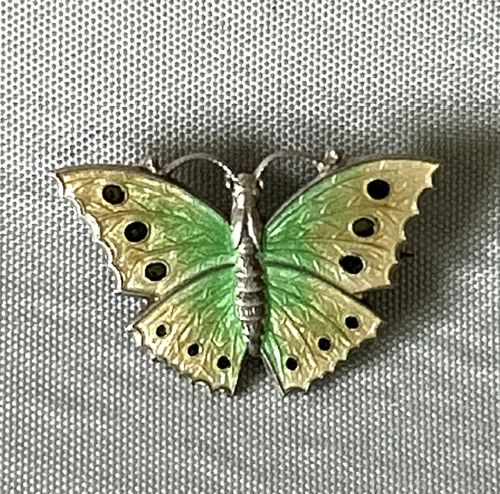
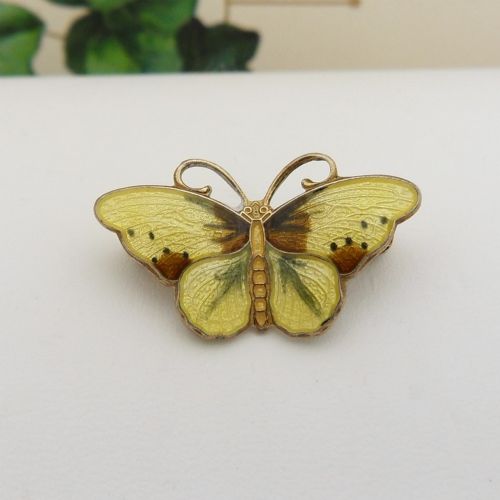
Silver insect jewellery takes many forms across the selection, with brooches and pendants representing the vast majority of pieces encountered by a buyer. These items range from delicate Victorian bar brooches featuring genuine gemstones to bold Art Deco butterfly wing designs and colourful enamelled creations from the mid-century period.
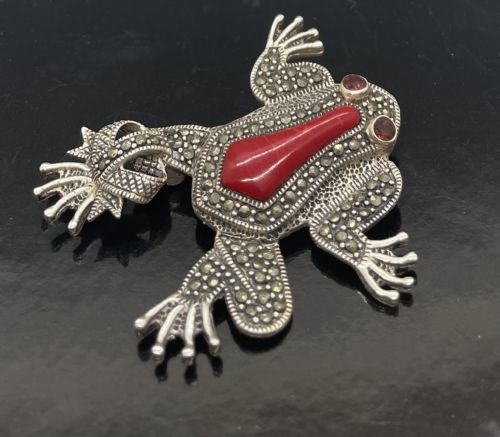
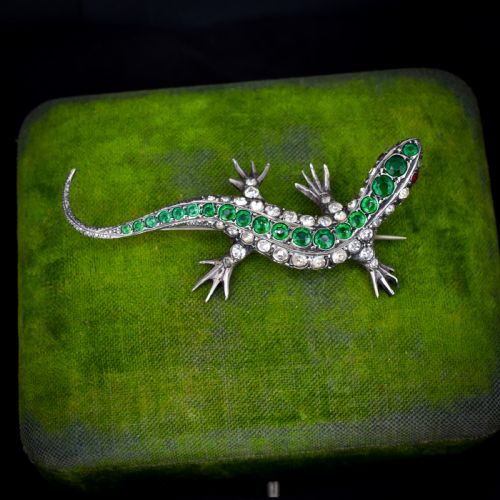
The aesthetic shifts visibly across different eras, moving from the organic whiplash curves of Art Nouveau to the geometric precision of Art Deco and the clean lines of mid-century Scandinavian workshops. Butterflies dominate the available forms, though lizards, frogs, scorpions, and flies also appear with regularity.
Materials and construction methods
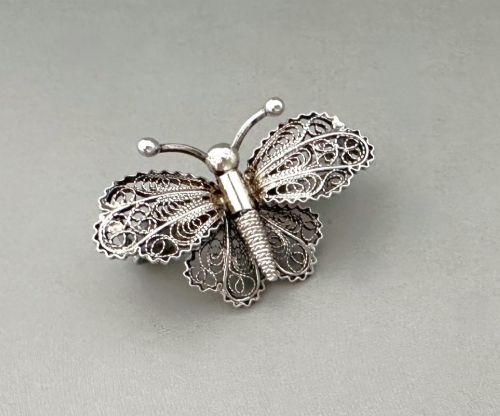
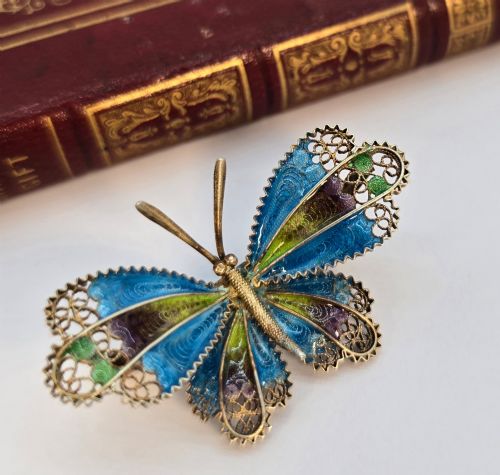
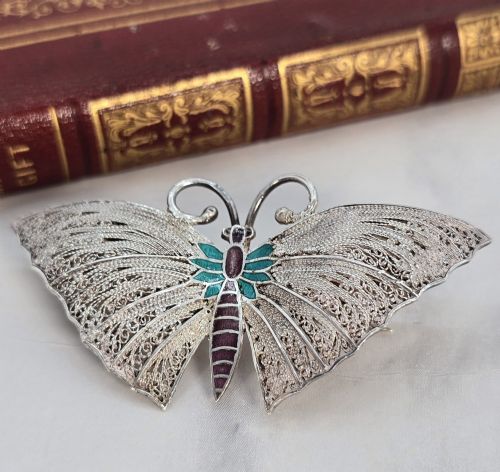
Silversmiths utilised sterling and silver gilt alongside fine wirework techniques like filigree to build lightweight yet intricate insect bodies and wings. Plique-à-jour and guilloché enamel added translucent patches of colour that catch the light, mimicking the fragile iridescence of real insect wings.
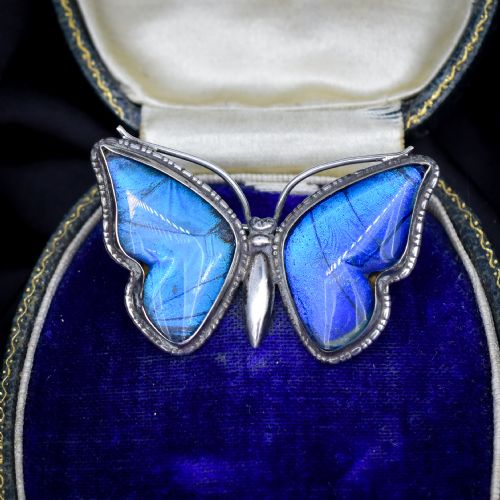
Gemstones such as diamonds, rubies, moonstones, pastes, and green glass were flush or prong set into the metal frames to provide sparkle and colour. Butterfly wing panels, sealed beneath protective glass doming, capture intense natural blues and greens typical of tropical specimens.
Listings feature pieces spanning from the Victorian era through the 1960s, incorporating materials like butterfly wing, plique-à-jour enamel, and moonstone.
Distinguishing quality in these pieces
Quality rests heavily on the crispness of the metalwork and the preservation of fragile elements like enamel and glass. Superior pieces display even guilloché patterns beneath undamaged enamel or precise wire soldering in filigree wings.
The choice of stones elevates a piece significantly, moving standard paste or glass into the realm of fine jewellery through the inclusion of genuine diamonds, rubies, and high-grade moonstones set in well-balanced compositions.
Hroar Prydz·Knoll and Pregizer·Martin Mayer
The Silver Insect Jewellery Glossary
- Filigree
- Fine metal wire twisted and soldered into openwork patterns. It creates lightweight, lace-like wings on many butterfly brooches.
- Guilloché
- Enamelling technique featuring a mechanical engraved background visible through translucent coloured enamel. It adds depth and shimmering pattern to silver insect wings.
- Plique-à-jour
- Enamelling technique without a backing metal, similar to stained glass. It allows light to shine directly through the coloured enamel sections of a pendant.
- Marcasite
- Small faceted pyrite stones set closely together in silver jewellery. They provide a dark, metallic sparkle popular in vintage brooches.
- Paste
- Hand-cut glass used to imitate gemstones. High-quality antique paste stones offer sharp facets and deep colour.
Silver Insect Jewellery: Frequently Asked Questions
What is silver insect jewellery?
Silver insect jewellery encompasses wearable art shaped like butterflies, beetles, flies, and other creatures fashioned primarily from silver.
These pieces span multiple decades, incorporating gemstones, enamel, and organic materials to celebrate the natural world.
How do I date these pieces?
Dating relies on stylistic clues, such as the flowing organic lines typical of Art Nouveau or the clean geometric patterns of Art Deco.
Material choices, hallmarks, and construction techniques also help place an item within periods like the Victorian era or mid-century decades.
How were butterfly wings used?
Makers placed iridescent butterfly wings beneath protective glass domes to create vibrant, shimmering wing panels in brooches.
This technique gained immense popularity during the Art Deco era, producing striking blue and green pictorial jewellery.
How do I care for enamelled pieces?
Enamelled silver jewellery requires gentle handling to prevent chipping the delicate glass coating on wings and bodies.
Keep pieces away from harsh chemicals, ultrasonic cleaners, and moisture to preserve the vibrant colours over time.