



Enamel Butterfly Badge
An enamel butterfly badge is a small, coloured insect pin combining metalwork and glass paste, prized for its bright plumage.
Enamel Butterfly Badge
An enamel butterfly badge is typically found as a brooch or pin, shaped to resemble the insect and rendered in brightly coloured hues. When you search for an enamel butterfly badge, you are looking at small wearable pieces produced across several decades of the twentieth century. These items serve primarily as decorative fasteners, pinned to lapels or garments.
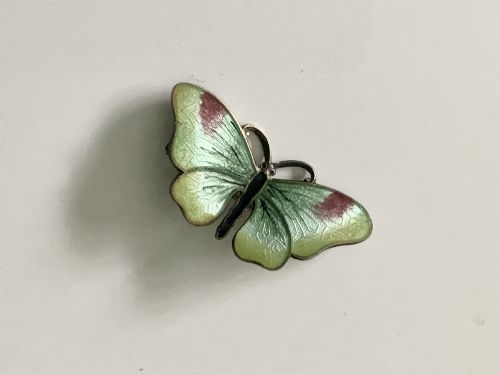
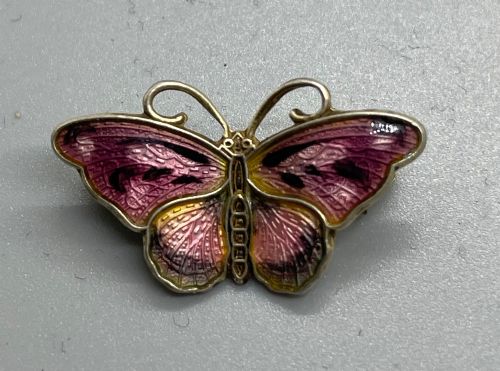
The pieces appearing on this page span several distinct periods, including the nineteen-twenties, nineteen-thirties, nineteen-fifties, and nineteen-sixties. You are most likely to meet examples styled in the Art Deco manner or influenced by Mid-Century Scandinavian design. Origins range from continental workshops to Norwegian makers working in sterling silver and silver gilt.
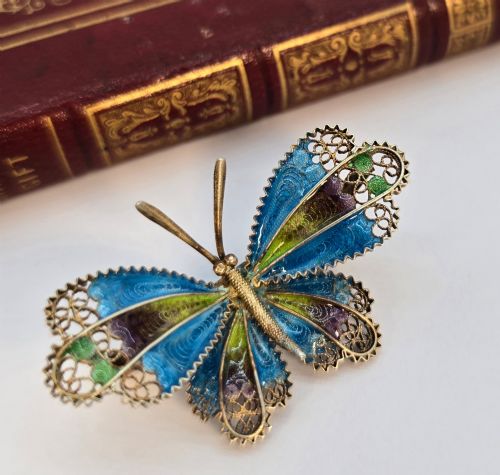
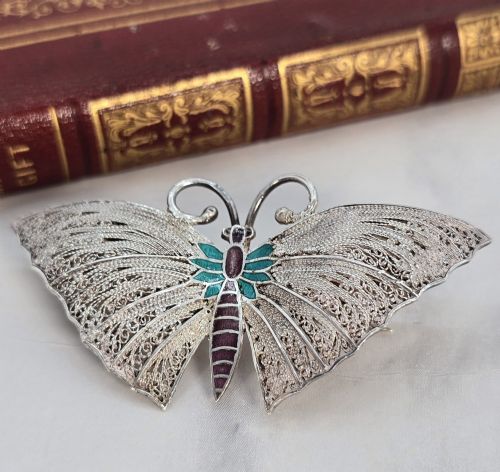
Forms vary from tiny delicate miniatures to slightly larger brooches incorporating filigree wirework. Some pieces integrate butterfly wing panels alongside glass or vitreous enamel. The underlying metal structure is consistently silver, often gilded to enhance the richness of the palette.
How they were made
Maker's workshops built these pieces using sterling silver or silver gilt as the primary structural metal, frequently shaping fine wire into delicate filigree patterns. Vitreous enamel or glass paste was then fused to the metal surface through high-temperature firing, creating smooth and glossy coloured wings. Guilloché techniques were also employed to engrave geometric patterns beneath translucent enamel layers.
Certain designs incorporated real butterfly wing material sealed beneath glass panels, a technique popular in early twentieth-century decorative items. Artisans soldered pin stems and clasps securely to the reverse of each brooch to ensure practical use as a fastener.
Styles represented on this page include Art Deco, Art Nouveau, and Mid-Century Scandinavian designs.
What varies in quality
Quality in these pieces depends on the precision of the metalwork and the depth of the enamel application. Superior examples display intricate silver filigree and evenly fused vitreous enamel without cloudiness or surface pitting. The crispness of the Guilloché engraving beneath translucent layers also distinguishes finer items from simpler production.
The refinement of the insect's anatomical shape and the integration of the pin mechanism reveal the maker's hand. Pieces retaining their original silver gilding and undamaged enamel surfaces represent the higher end of the range.
The Enamel Butterfly Badge Glossary
- Enamel
- A glassy substance fused to metal through heat to provide colour and protection. This technique creates the vibrant wings seen on these brooches.
- Silver Gilt
- Silver that has been coated with a thin layer of gold. It imparts a warm tone beneath translucent enamel.
- Filigree
- Fine twisted wire soldered into openwork patterns. Makers used this to outline the delicate veins of insect wings.
- Guilloché
- A decorative engraving technique producing precise repetitive patterns. It is frequently seen beneath transparent enamel layers.
- Brooch
- A decorative pin designed to be fastened to clothing. These pieces function primarily as wearable ornaments.
Enamel Butterfly Badge: Frequently Asked Questions
How do I wear an enamel butterfly badge?
These pieces function as brooches and pin easily onto lapels, scarves, or hats.
Ensure the safety clasp is secure before fastening to thicker fabrics.
Are these badges made of solid silver?
Many examples are constructed from sterling silver or silver gilt.
Makers often applied a gold wash over the silver to complement the coloured enamel work.
How do I date an enamel butterfly badge?
Stylistic clues such as Art Deco geometry or Mid-Century Scandinavian minimalism help indicate the period.
Materials like butterfly wing panels also point towards early twentieth-century production.
What is guilloché enamel?
Guilloché involves mechanical engraving on metal before applying translucent enamel.
This technique creates a shimmering pattern visible beneath the coloured glass surface.