


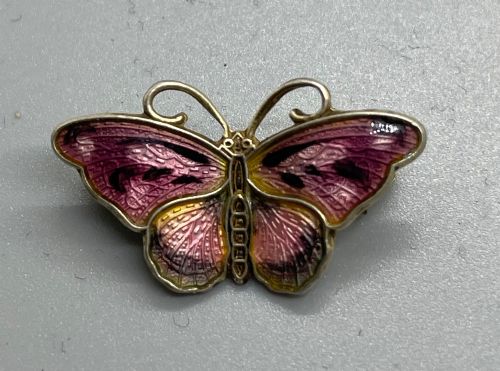
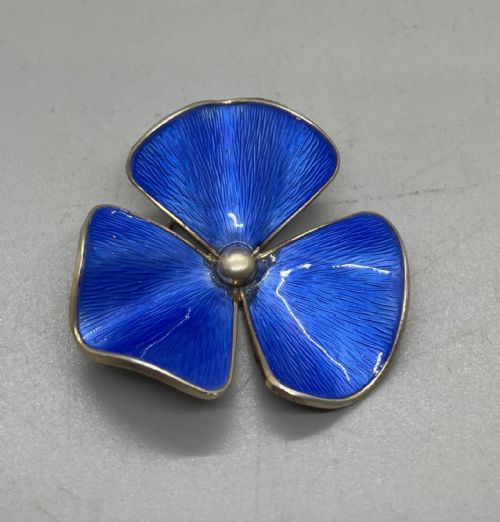
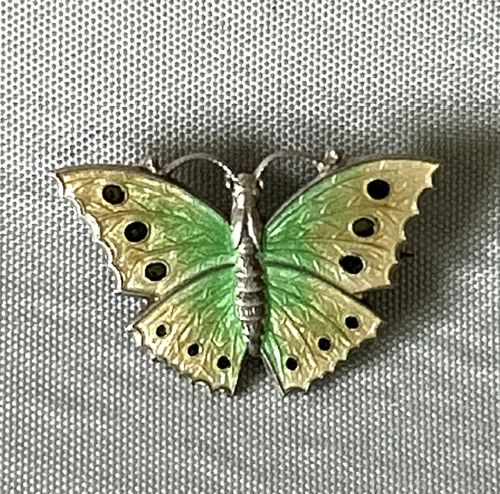
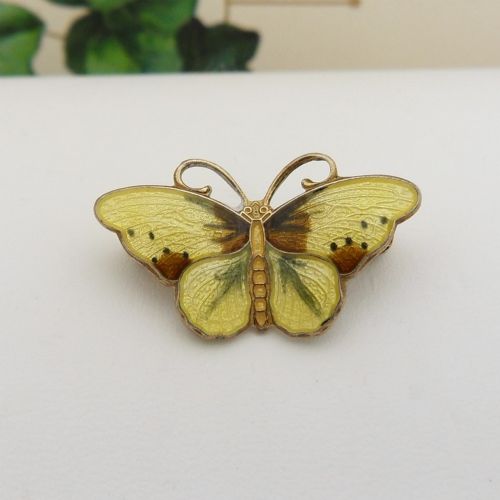
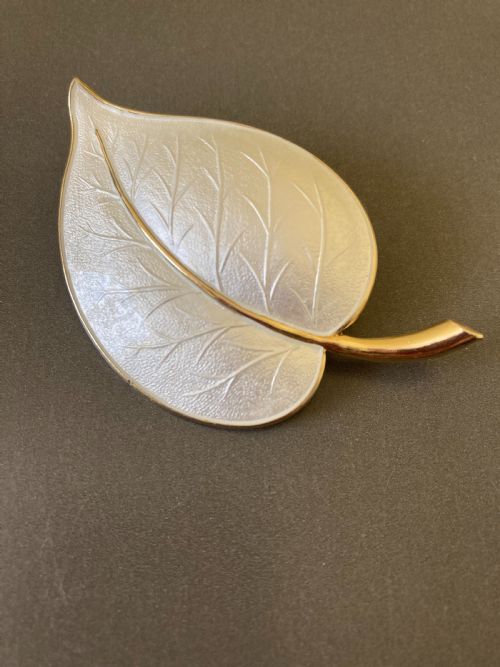
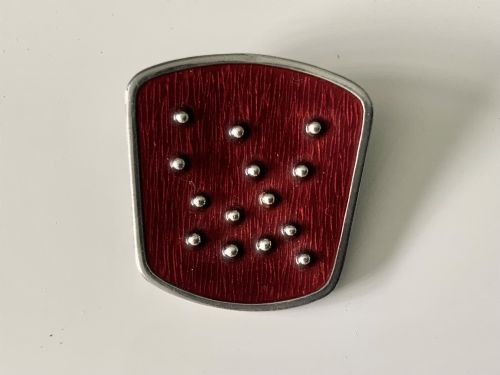
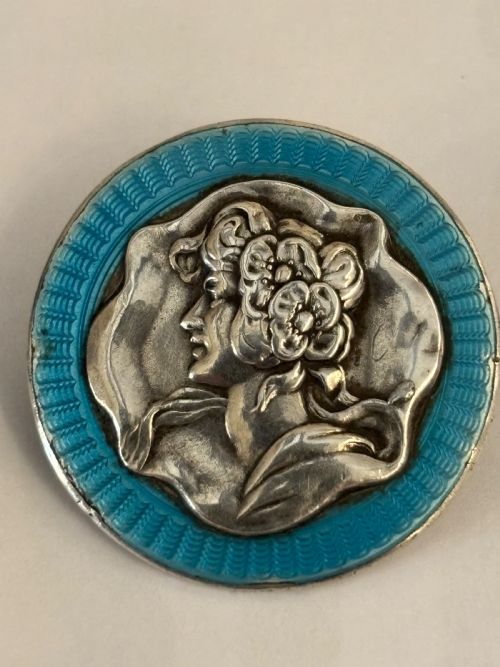


Silver Guilloche Brooch
A silver guilloche brooch combines machined metal patterns with translucent coloured glass to catch the light in miniature works of wearable art.
Silver Guilloche Brooch
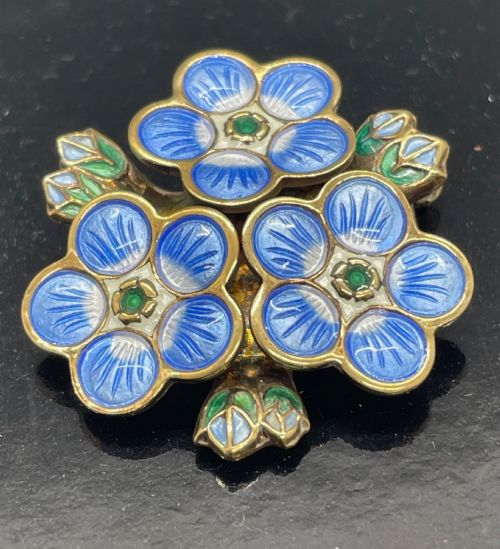
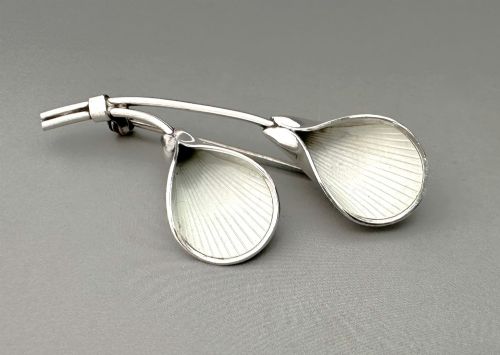
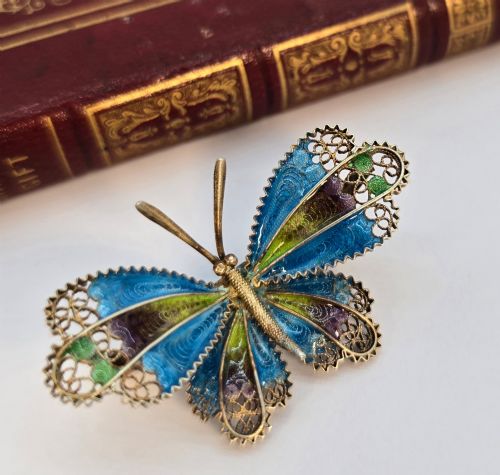
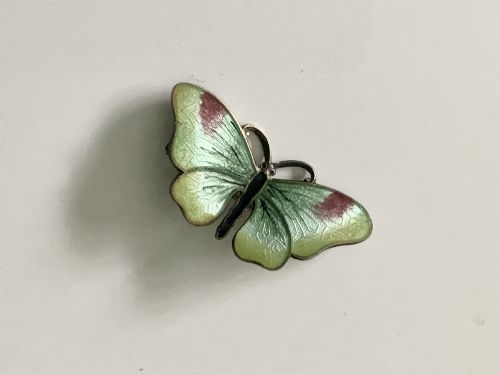
When you search for a silver guilloche brooch, you find small wearable ornaments featuring intricate engine-turned metalwork beneath translucent enamel. These pieces span from the Victorian and Edwardian eras through Art Nouveau, Art Deco, and mid-century Scandinavian design.
Origins stretch across British workshops in Birmingham alongside Scandinavian studios and makers. The surviving items display a persistent fascination with natural forms rendered in brilliant colours.
How They Were Made
Silversmiths prepared the base using sterling silver, silver gilt, or gold vermeil, often stamping or casting the metal into shapes such as butterflies, flowers, hearts, and belts. Artisans then used a mechanical lathe to engrave precise geometric patterns onto the metal surface.
Vitreous enamel was applied over the patterned metal in translucent layers and fired at high temperatures. The underlying machine-turned engraving shines through the coloured glass finish to create a distinctive shimmering depth.
Materials recorded across the archive include vitreous enamel, sterling silver, gold gilt, gold vermeil, and marcasite.
What Varies in Quality
The sophistication of the engine-turned engraving dictates much of the visual depth, with finer geometric lines creating a more luminous play of light beneath the translucent glaze. Simpler stamped textures lack the same refractive brilliance.
The clarity and even application of the vitreous enamel layer separate standard output from finer studio work. Smooth surfaces free from cloudiness or heavy bubbling show superior heat control during the firing process.
Aksel Holmsen·A H Darby And Son·Hroar Prydz·Gustav Gaudernack·Thomas Lyster Mott·John Atkin And Sons·Ivar T Holth·Albert Scharning
The Silver Guilloche Brooch Glossary
- Guilloche
- A decorative technique where a mechanical lathe engraves precise, repeating geometric patterns into a metal substrate. This technique creates the signature shimmering background beneath translucent enamel.
- Vitreous Enamel
- A material made by fusing powdered glass to a metal substrate through intense heat. It produces a glossy, durable coloured coating that resists fading over time.
- Silver Gilt
- Silver that has been coated with a thin layer of gold. This treatment provides a warm golden finish while retaining a silver base.
- Marcasite
- Small, polished faceted pyrite stones set into silver mountings to resemble diamonds. They supply a dark, metallic sparkle popular in period jewellery.
- Engine-Turned
- A method of mechanical engraving using a specialised lathe to cut precise, intricate patterns into metal. It forms the foundation of detailed guilloche work.
Silver Guilloche Brooch: Frequently Asked Questions
How do I date my brooch?
Look closely at the style markers, such as organic flowing lines for Art Nouveau or symmetrical geometry for Art Deco pieces. Maker marks and British silver hallmarks can also narrow down the exact decade of creation.
Scandinavian designs frequently lean towards mid-century aesthetics, while Edwardian pieces often incorporate softer pastel enamel hues with delicate floral subjects like pansies.
Are these brooches made of solid silver?
Many items feature sterling silver bases, often marked with standard purity numbers or regional assay stamps. Some variations utilise silver gilt or gold vermeil over a silver core to achieve a golden appearance.
Examining the reverse side of the mount usually reveals the metal purity stamps applied by the original workshop.
What subjects are common in these designs?
Insects and botanicals dominate the surviving inventory, with butterflies and floral sprays appearing across multiple decades. You will also find figurative subjects like birds, Viking ships, hearts, and functional shapes such as belt buckles.
Naturalist themes remained popular from the early twentieth century through the mid-century modern Scandinavian revival.
How should I clean my enamel brooch?
Enamel requires gentle handling because glass surfaces scratch easily and harsh chemicals can damage vintage metal finishes. Use a soft, dry microfiber cloth to remove surface dust without applying pressure to protruding pin stems.
Avoid soaking antique silver and enamel jewellery in liquid cleaning solutions, as moisture can seep beneath old settings and compromise the backing.