



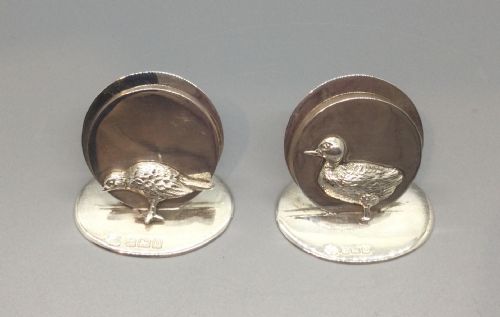


Silver Game Birds
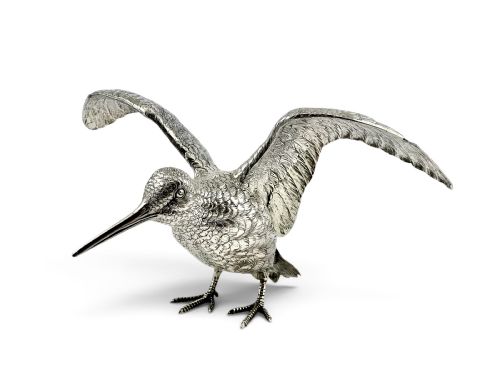
Silver game birds bring the field into the dining room as pheasants, woodcocks and grouse modelled in metal.
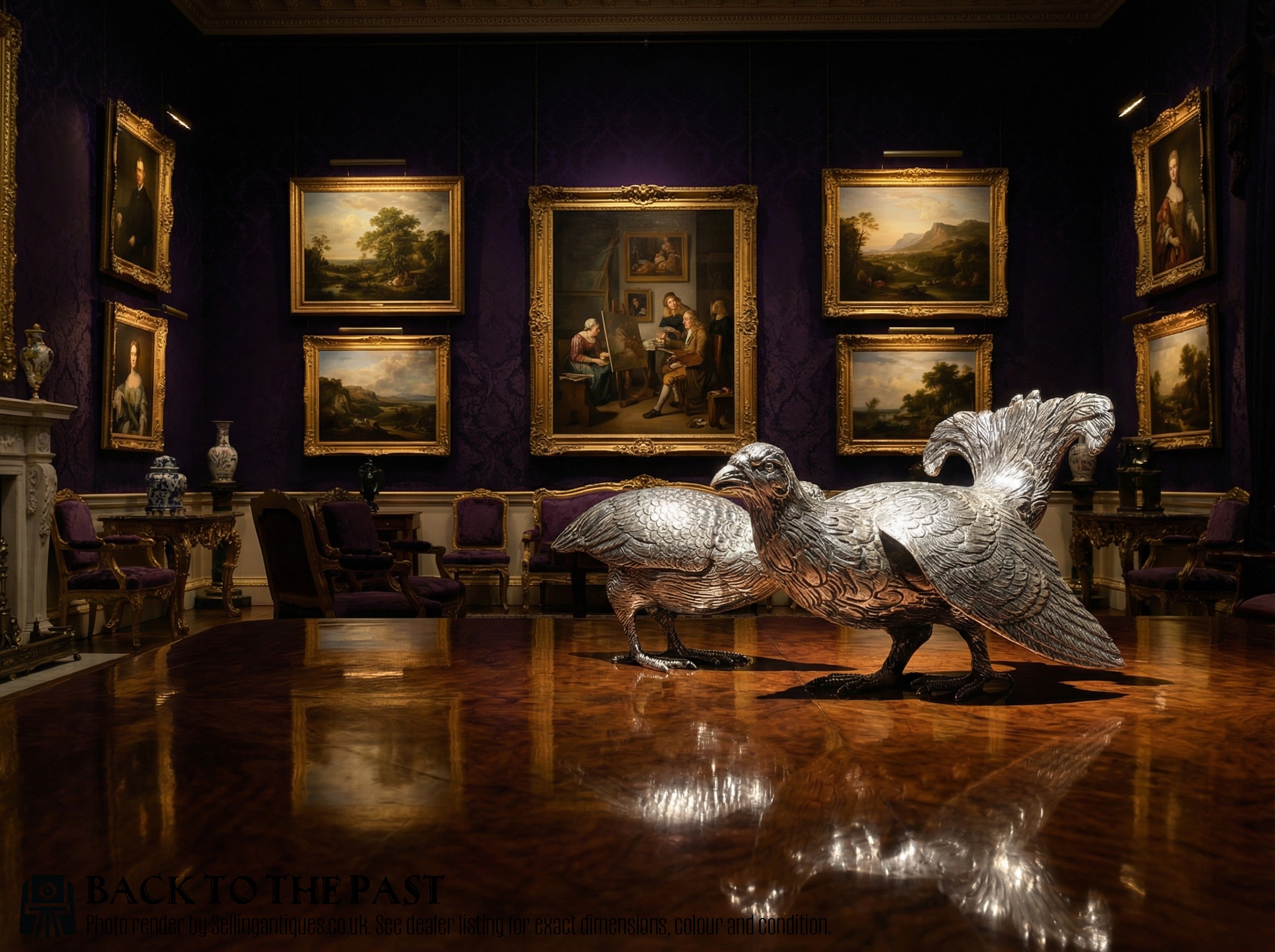
Silver Game Birds
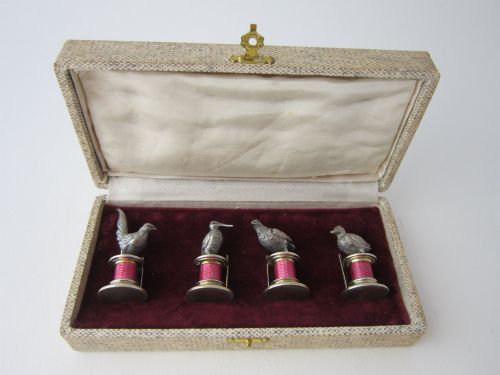
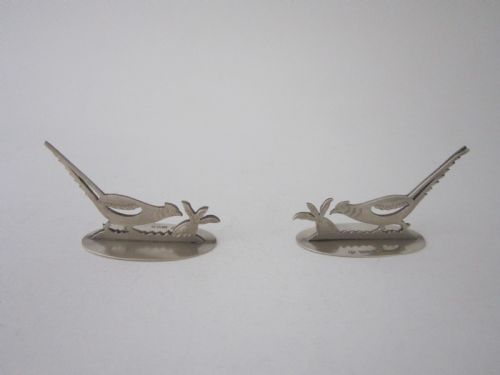
Silver game birds span decorative figures, table ornaments and practical table settings such as menu and place card holders, alongside occasional condiment pots and brooches. The selection draws primarily on pheasants, woodcocks, grouse and fighting cockerels, appearing as single figures or balanced pairs.
Originating across Victorian, Edwardian, George V and mid-century periods, these pieces reflect traditional British country pursuits alongside continental European manufacture. Makers ranged from British workshops to continental silversmiths working in sterling silver, silver plate, white metal and 830 silver.
How they were made
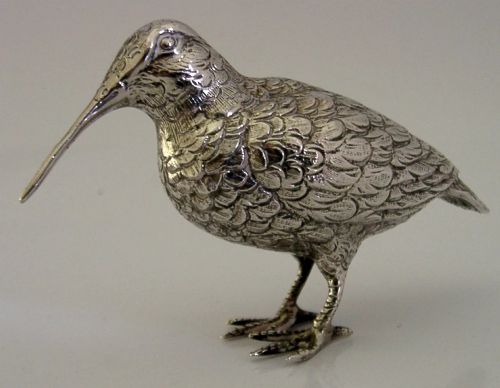
The construction of silver game birds relies upon casting and silversmithing techniques to capture detailed plumage and naturalistic postures. Metal is shaped into solid figures or hollow vessels such as pepper pots and beakers with relief bands.
Surface finish is enhanced through techniques including hand chasing to define feathers, silver plating over base metal, and the application of guilloche enamel to colour wings and bodies. Certain pieces incorporate precious metals stamped with standard assay marks.
A pair of fighting cockerels brings aggressive barnyard drama directly to the dining table.
What varies in quality
Quality in silver game birds rests upon the fidelity of the naturalistic modelling and the crispness of the feather chasing. Superior examples capture the distinct posture and plumage of the woodcock or pheasant with anatomical precision.
The choice of material and the preservation of original surface detail distinguish finer pieces, particularly where enamel work or maker marks remain intact. Pairs demonstrate greater sculptural harmony when matching proportions and casting depth are maintained across both figures.
Samson Morden
The Silver Game Birds Glossary
- Guilloche enamel
- Decorative enamel applied over a mechanically engraved metal background. This technique creates a repeating geometric pattern that shows through translucent coloured glass.
- Menu holder
- A small desk or table accessory designed to display a dinner menu upright. These pieces often feature sculptural figures attached to a weighted base.
- Place card holder
- A miniature stand that grips a small card bearing a guest's name at a formal dinner. They frequently match the theme of the table ornaments.
- Silver plate
- A thin layer of silver bonded to a base metal core such as copper or brass. This method offered the visual weight of solid silver at a lower cost.
- Sterling silver
- An alloy consisting of silver and other metals, usually copper, proportioned to ensure durability. British sterling silver typically contains a high purity standard denoted by a lion passant mark.
Silver Game Birds: Frequently Asked Questions
What were silver game birds used for?
Silver game birds served primarily as decorative table ornaments, miniature figures, and functional dining accessories such as menu and place card holders. They were displayed during formal meals to reflect country pursuits and the sporting interests of the household.
Some pieces also functioned as condiment pots like pepper shakers or personal items including brooches. Their presence on the dining table added a thematic element linked to traditional shooting and game dinners.
Are silver game birds solid sterling silver?
Silver game birds are produced in a variety of materials, including solid sterling silver, 830 silver, silver plate, and white metal. Some items combine silver with coloured guilloche enamel or feature gilt interiors in condiment pots.
Examining the metal for standard hallmarks or stamps will indicate whether the piece is solid silver or plated over a base metal. Continental and British items followed different purity standards, which are reflected in their specific assay marks.
How should I display silver game birds at home?
These pieces suit placement on dining tables, sideboards, or within glass cabinets where their fine feather chasing and form can be appreciated from multiple angles. Pairs of pheasants or grouse look particularly effective when displayed together on a flat surface.
Care should be taken to keep them away from direct heat sources and excessive moisture to protect any enamel work or delicate plated surfaces. Regular, gentle dusting is generally sufficient for routine maintenance.