





Antique Silver Table Birds
Antique silver table birds bring the natural world indoors as decorative ornaments, salt and pepper shakers, and menu holders.
Antique Silver Table Birds
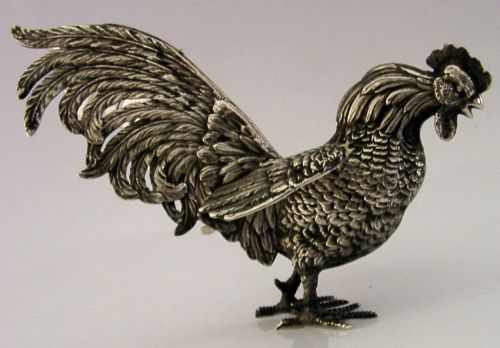
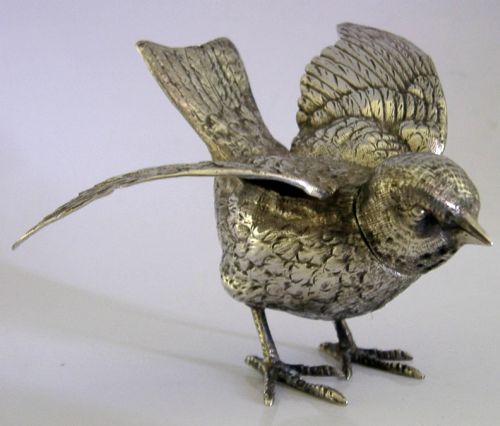
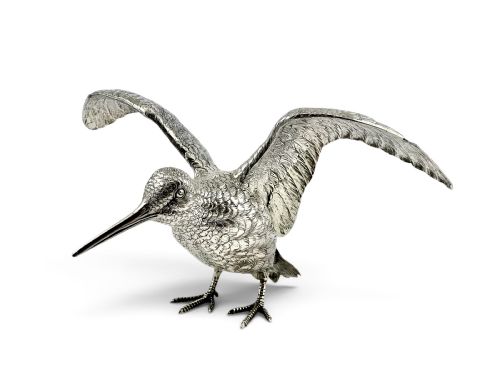
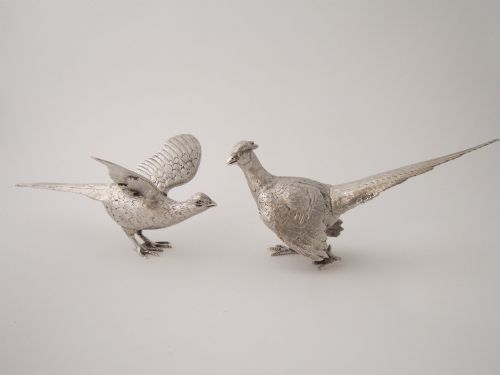
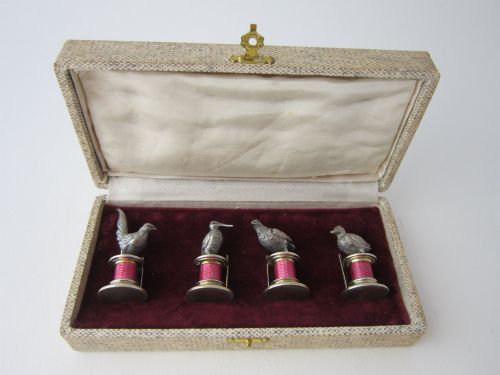
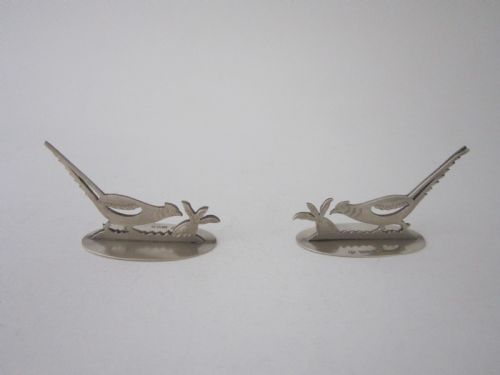
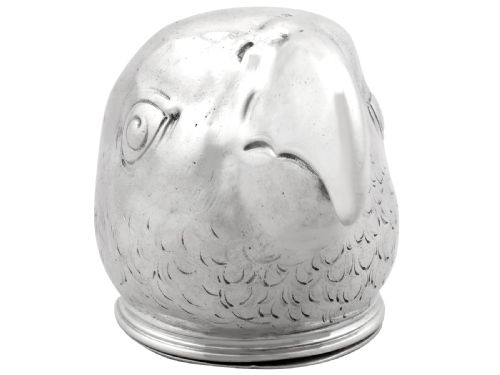
When you search for antique silver table birds, you find a collection of domestic figures cast or formed as pheasants, cockerels, grouse, woodcocks, and owls. These pieces function variously as table ornaments, decorative objects, place card holders, menu holders, pepper pots, and sugar boxes.
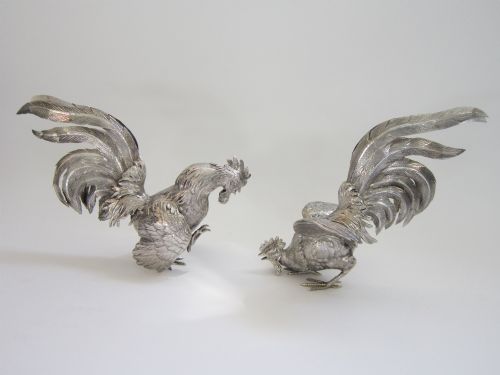
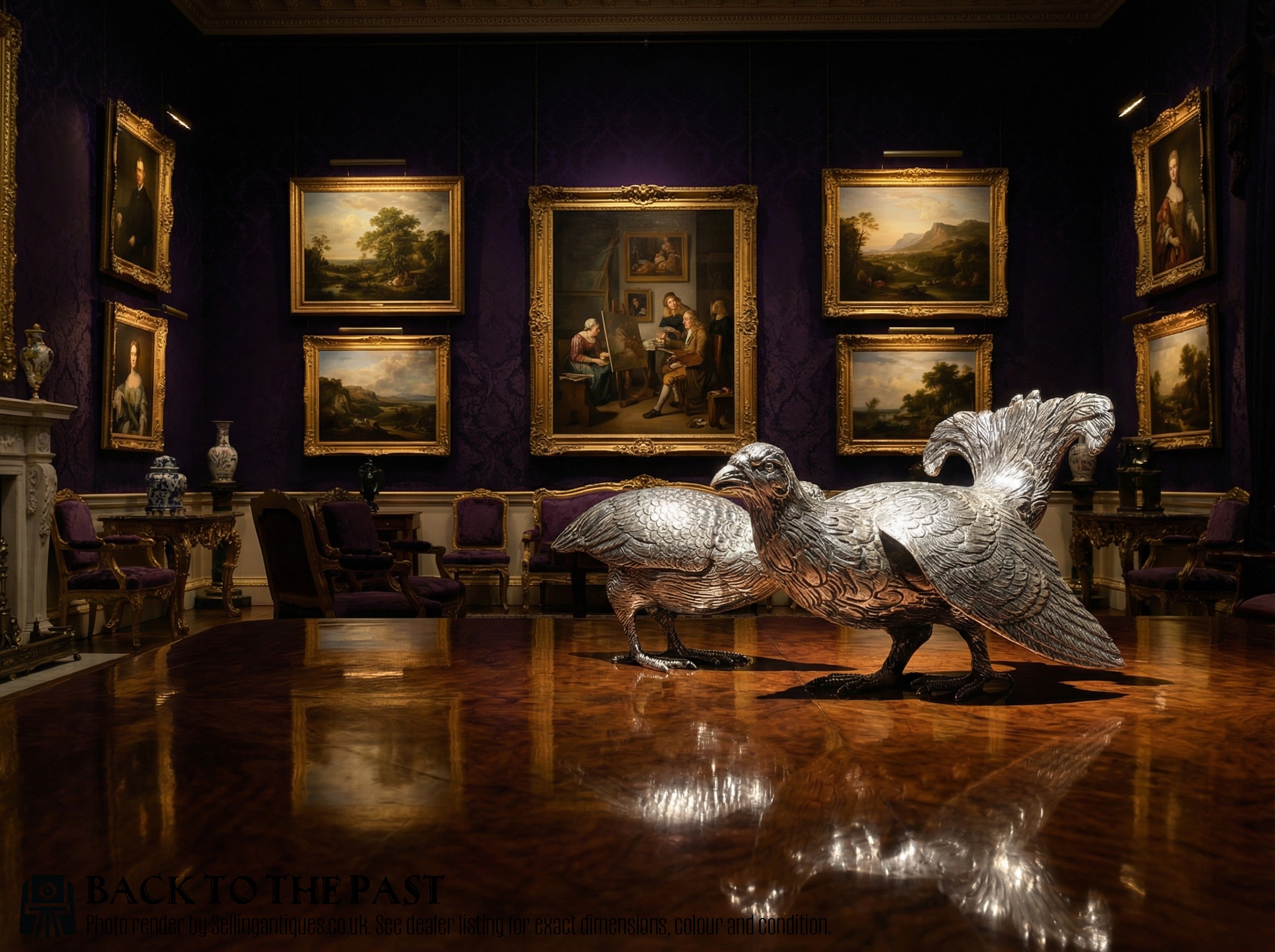
The pieces on this page span several periods, from the eighteenth century through Victorian, Edwardian, and mid-twentieth-century iterations. You will frequently encounter pairs of pheasants and individual cockerels or game birds designed to sit directly on the dining table or sideboard.
How they were made
Silversmiths utilised sterling silver, solid silver, and silver plate, alongside white metal and eighty-three-three silver, occasionally incorporating glass or guilloche enamel. Many of the naturalistic bird models are cast, capturing detailed feather texture and anatomical form.
Continental workshops, particularly in Germany and the Netherlands, produced hinged boxes and sculptural figures using traditional casting and chasing techniques. British makers created matched pairs of game birds and functional menu holders bearing hallmarks for London, Birmingham, and Chester.
Listings feature sterling silver, silver plate, and eighty-three-three silver across Victorian, Edwardian, Art Deco, and eighteenth-century periods.
What varies in quality
Quality rests upon the crispness of the casting and the naturalism of the feather work. Finer examples retain sharp detail in the plumage and possess balanced proportions that replicate the posture of the living bird.
Maker marks, clear hallmarks, and the weight of the metal distinguish superior productions from lighter plated alternatives. Well-executed mechanisms on boxes and secure fittings on pepper pots elevate the standing of a piece.
Berthold Muller·Sampson Mordan·Boaz Moses·Paul Joris
The Antique Silver Table Birds Glossary
- Hallmark
- Official stamps applied to precious metals indicating the standard of purity, the assay office, and the date of manufacture. These marks allow collectors to verify the origin and age of silver table ornaments.
- Pepperette
- A small tabletop container with a perforated lid designed for dispensing ground pepper. In bird forms, the head or body often lifts off or unscrews for filling.
- Menu holder
- A small desk or table accessory featuring a clip or slot to display the menu card during formal dining. Game birds and animal figures were frequently adapted for this purpose.
- Chasing
- A metalsmithing technique where designs are hammered into the front surface of the metal from the exterior to create relief and texture. This method defined the feather patterns on many silver birds.
- Guilloche enamel
- Decorative metalwork covered with translucent enamel over an engine-turned background. This technique occasionally adds colour to accessories associated with these table pieces.
Antique Silver Table Birds: Frequently Asked Questions
How were silver birds used on the table?
Silver table birds served practical and decorative functions during formal nineteenth and twentieth-century dining. Many functioned as pepper pots, salt cellars, or sugar boxes, while others held place cards and menus.
Heavier figures stood directly upon the tablecloth as decorative ornaments or centrepieces. Pairs of pheasants or fighting cockerels were frequently arranged symmetrically along the length of the dining table.
How do I identify the period of a silver bird?
Dating relies primarily upon the hallmarks stamped into the metal, which indicate specific assay offices and active years for the maker. Stylistic details also point to an era, such as the ornate Rococo influences of eighteenth-century pieces or the sleek lines of later designs.
British pieces carry systematic date letters, whereas continental imports and silver-plated items often require stylistic comparison with documented examples from Hanau or Dutch workshops.
Are these silver birds solid or plated?
The listings include both solid silver and silver-plated examples, alongside white metal and continental standards like eighty-three-three silver. Hallmarks usually confirm sterling or solid silver content, while plated items show a base metal beneath areas of wear.
Weight is a reliable indicator of construction, as solid cast models feel substantially heavier than hollow plated versions. Makers often utilised solid silver for finer sculptural commissions and plate for larger decorative table sets.
Where were most antique silver birds made?
Production was centred across Britain and continental Europe, with notable manufacturing hubs in London, Birmingham, Germany, and the Netherlands. German silversmiths in Hanau specialised in detailed animal figures and bird boxes for export.
British makers produced domestic game birds such as grouse, woodcocks, and pheasants to satisfy Victorian and Edwardian dining customs. Italian and French workshops also contributed distinct stylistic interpretations of avian forms.