

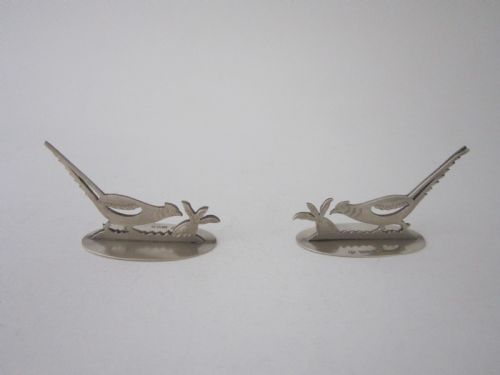


Antique Silver Pheasants
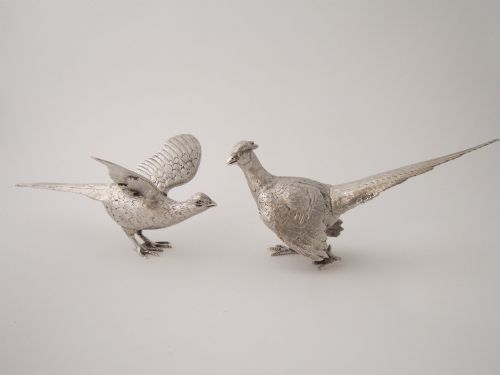
Antique silver pheasants bring the traditional British country pursuit directly to the dining table as decorative ornaments, menu holders, and pepper shakers.
Antique Silver Pheasants
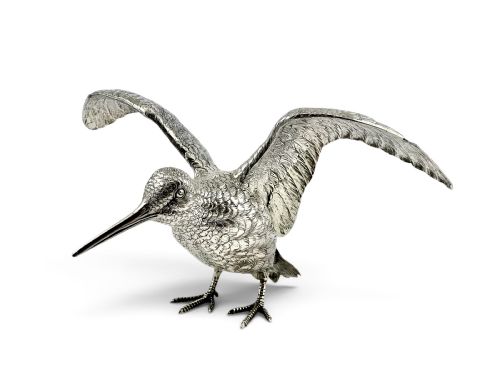
When you search for antique silver pheasants, you encounter a specialised category of decorative metalwork shaped as game birds. These pieces primarily function as table ornaments, place card holders, and novelty pepper shakers for formal dining settings.
The selections span various eras, appearing frequently in Edwardian, Victorian, and mid-century British designs alongside continental European productions. Most examples emerge as matching pairs designed to flank a dining table centrepiece or display cabinet.
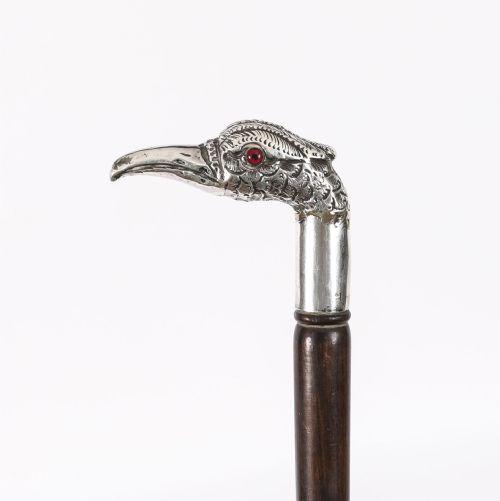
Beyond standard tabletop figures, the form extends into smaller accessories such as pin cushions, letter openers, and walking cane handles. These items translate the familiar avian silhouette into functional domestic objects characteristic of the nineteenth and twentieth centuries.
How they were made
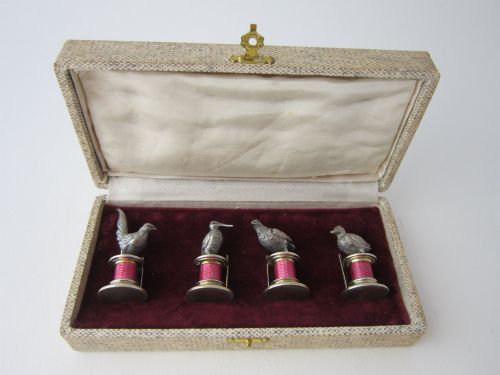
Makers primarily utilised sterling silver, standard continental silver alloys, and silver plate over a base metal core. Enamel work occasionally appears in guilloche patterns, adding colour to wings and tail feathers.
Techniques combine casting for the main body of the bird with chased surface details that render individual feathers and plumage. Artisans frequently mounted hollow silver figures onto weighted bases or integrated them into functional frames for menu cards.
Several pheasants double as functional pepper pots, dispensing spice directly from their tail feathers.
What varies in quality
The realism of the plumage engraving dictates much of the visual merit, separating finely chased models from simpler cast examples. Crisp detail around the crest, beak, and wing feathers indicates skilled hand-finishing by the silversmith.
Proportion and stance significantly influence desirability, with balanced pairs displaying naturalistic postures rather than stiff symmetry. The weight of the metal and the clarity of hallmarks similarly mark the standard of execution.
Edward Barnard And Sons·Nathaniel Mills
The Antique Silver Pheasants Glossary
- Hallmark
- Official stamps applied to precious metals indicating the standard of purity, the assay office, and the date of manufacture. These markings provide the primary evidence for dating continental and British silver.
- Chasing
- A metalworking technique where the silversmith depresses the front surface with punches to create raised patterns. This method defines individual feathers on bird ornaments without removing metal.
- Guilloche Enamel
- Decorative technique involving precise mechanical engraving beneath a translucent layer of coloured glass. This treatment provides vibrant surface colour to wings and decorative accessories.
- Place Card Holder
- Small desk or dining accessory designed to grip a name card at a formal dinner party. These objects often take the form of miniature animals or game birds.
- Table Ornament
- Freestanding decorative object intended for display on furniture or dining tables. Pheasant models in this category serve purely aesthetic functions.
Antique Silver Pheasants: Frequently Asked Questions
How were antique silver pheasants used?
These silver figures served primarily as decorative table ornaments during formal Victorian and Edwardian dinner parties. Many were engineered specifically to hold place cards or menus between courses.
Smaller examples functioned as practical desk accessories, pin cushions, or pepper shakers. Their presence reflected traditional country pursuits within domestic interior design.
How do I clean silver pheasants safely?
Maintenance requires a soft cloth and mild silver polish applied gently to avoid wearing down fine feather engravings. Avoid abrasive brushes that can damage chased details or delicate enamel surfaces.
Store pieces away from direct sunlight and damp environments to prevent tarnishing and preserve the underlying metal finish.
How do I identify continental silver pheasants?
Continental pieces frequently display standard numerical fineness marks such as 800 or 830 rather than traditional British assay office symbols. Maker marks and city stamps, such as those from Hanau, often appear on the underside or base.
Stylistic differences in posture and casting weight also help distinguish European workshop output from British manufacturing traditions.
What periods do these silver birds span?
The available selection spans from the nineteenth century through the Edwardian era and into the mid-twentieth century. Victorian and Edwardian examples represent the height of formal dining table decoration.
Later pieces from the 1920s, 1930s, and 1960s demonstrate evolving tastes in domestic metalwork and novelty tableware.