


Silver Bird Statue
A silver bird statue brings the tension and detail of the natural world directly onto a dining table or shelf.
Silver Bird Statue
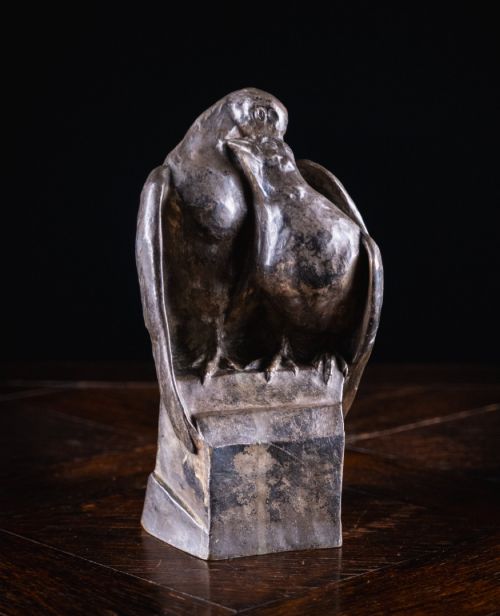
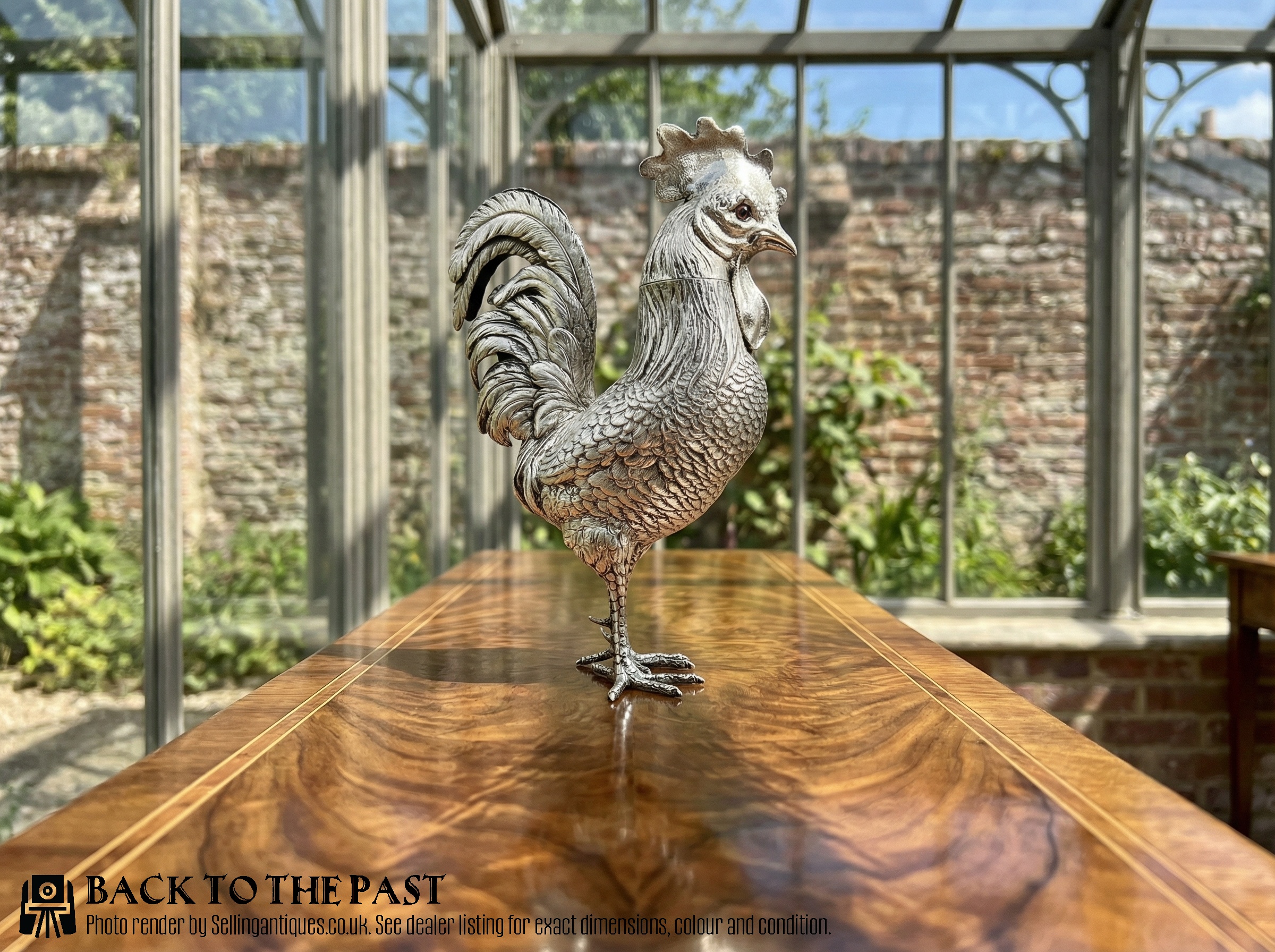
A silver bird statue spans several decades of craftsmanship, ranging from Edwardian and Victorian creations to later Art Deco designs. When searching this phrase, a buyer encounters figures such as pheasants, cockerels, pigeons, woodcocks, and goshawks rendered in solid metal or plated forms.
The objects take various functional and decorative shapes, including table ornaments, standing pairs, bookends, and sculptural centrepieces. Continental workshops and British makers both contributed significantly to this category through the late nineteenth and twentieth centuries.
Most examples originate from specific European centres of silverwork like Hanau, or emerge from international traditions such as Japanese Meiji metalwork and Italian studio design. Buyers frequently meet paired specimens designed to face one another across a sideboard or mantelpiece.
Materials and construction methods
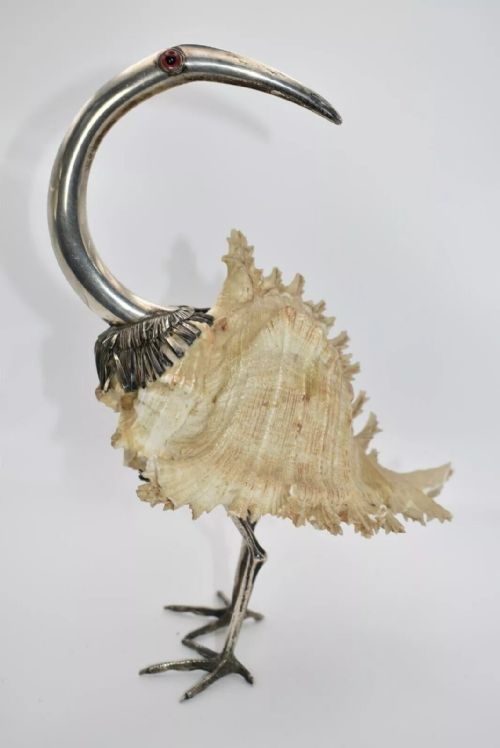
These figures rely on a foundation of solid silver, sterling silver, silver plate, or nickel bronze, sometimes incorporating white metal, marble, or natural materials like sea shell. Metal casting allows for intricate feather texturing and realistic anatomical proportions in species like fighting cockerels and pheasants.
Many Continental and British pieces utilise traditional casting and chasing techniques, where details are hand-worked onto the surface after the metal cools. Gilt highlights, oxidised finishes, and layered plating provide depth and contrast to the plumage of birds such as woodcocks and goshawks.
Even frozen in sterling silver or bronze, a pair of fighting cockerels still manages to look thoroughly indignant about their spot on the sideboard.
Assessing quality and finish
Quality in a silver bird statue rests upon the crispness of the feather chasing and the anatomical accuracy of the bird's posture. Superior examples capture musculature, tension, and texture without softening the fine lines during the casting or plating process.
Signatures from established metalworkers or recognizable town marks and hallmarks elevate certain pieces above anonymous decorative objects. The stability of the stance and the weight of the metal distinguish substantial table ornaments from lighter, hollow specimens.
Frederique Cederlund Ozanne·Paul Joris·Herzig·Gabriella Binazzi
The Silver Bird Statue Glossary
- Silver plate
- A thin layer of silver bonded to a base metal core such as copper or brass. This technique allowed makers to produce large decorative figures at a lower cost.
- Chasing
- A goldsmithing technique where metal is worked from the front with hammers and punches to sink the surface and create fine surface textures like plumage.
- Hanau silver
- Refers to items produced by silversmiths in the German town of Hanau, known historically for creating detailed antique animal figures and revivalist table ornaments.
- Nickel bronze
- An alloy containing copper, nickel, and zinc that provides a durable, corrosion-resistant base for sculptural casting with a dark metallic lustre.
- Sterling silver
- An alloy consisting of silver and other metals, usually copper, maintaining a standard purity of a specific high proportion for durability and shine.
Silver Bird Statue: Frequently Asked Questions
What birds are depicted most often?
Pheasants and cockerels appear frequently, often fashioned as standing pairs for table decoration.
Other species like woodcocks, pigeons, and goshawks also emerge in various nineteenth and twentieth-centuries styles.
How were these statues used originally?
Many served as decorative ornaments placed upon dining tables, sideboards, or desks.
Some heavier pieces functioned practically as bookends or structural sculptural focal points within a room.
How do I identify the period?
Makers marks, hallmarks, and town stamps provide the most reliable indicators of age and origin.
Stylistic shifts, such as the geometric lines of Art Deco or the naturalism of Edwardian pieces, also help date the work.
Are pairs common in this category?
Pairs of birds, particularly fighting cockerels or standing pheasants, appear frequently in historical listings.
These were designed to balance symmetrical arrangements on large furniture or dining surfaces.