


Oriental Metalwork Bird
These oriental metalwork bird pieces bring together bronze, cloisonne and fine avian subjects from Japanese and Chinese workshops.
Oriental Metalwork Bird
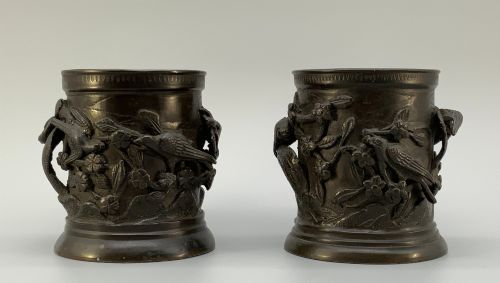
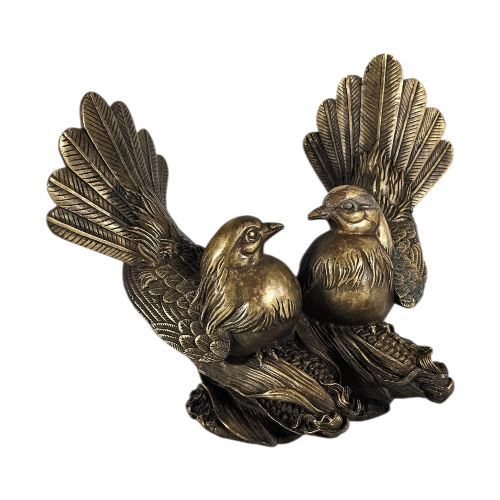
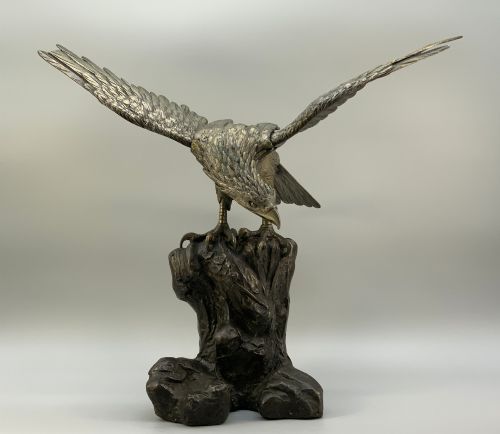
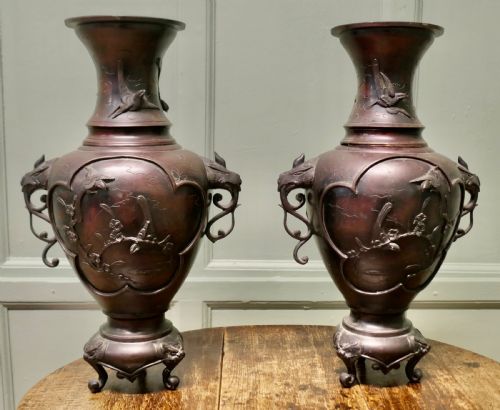
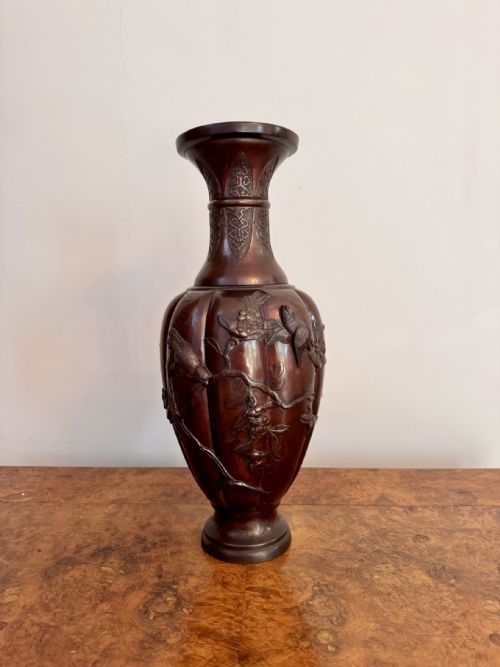
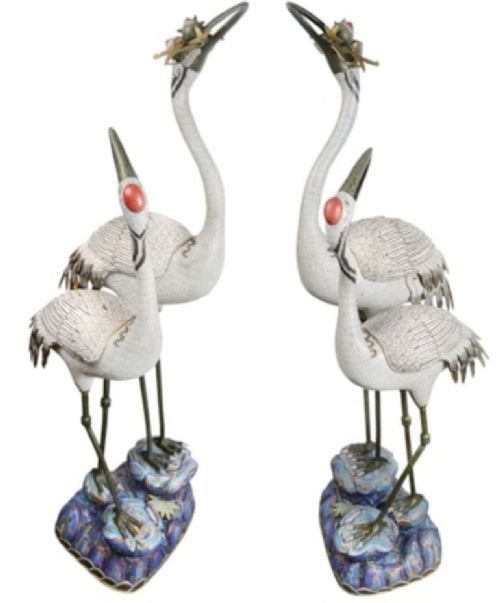
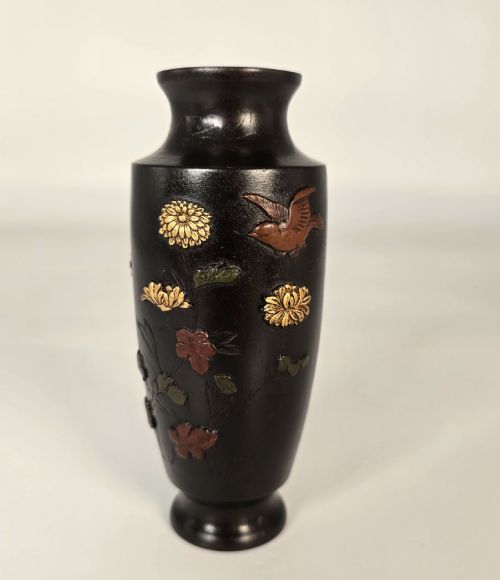
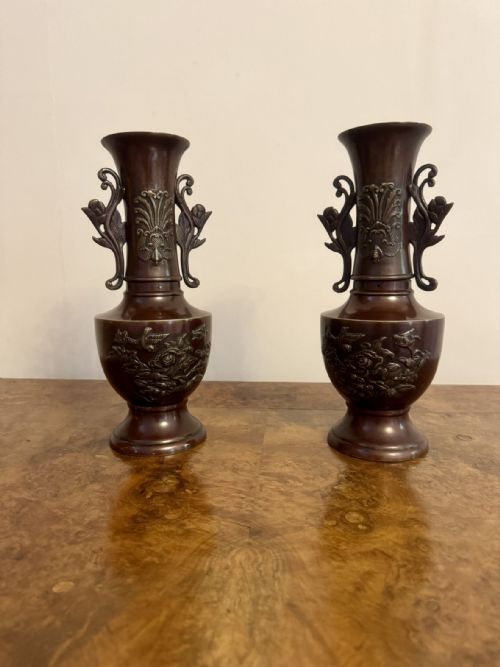
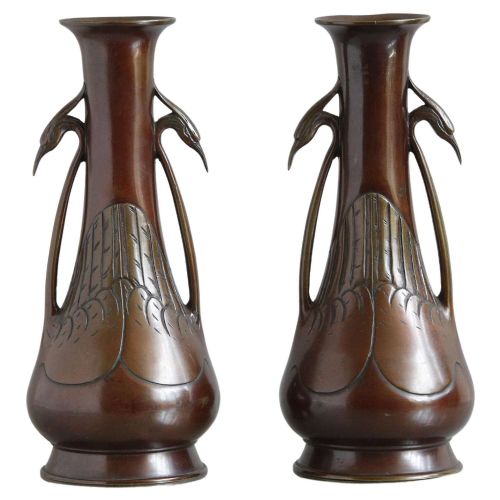
Oriental metalwork bird objects span bronze vases, patinated sculptures and cloisonne enamel chargers created in China and Japan during the nineteenth and early twentieth centuries. The pieces depict eagles, hawks, cranes, owls, phoenixes and smaller garden birds cast in bronze, brass or copper, or worked in coloured enamels.
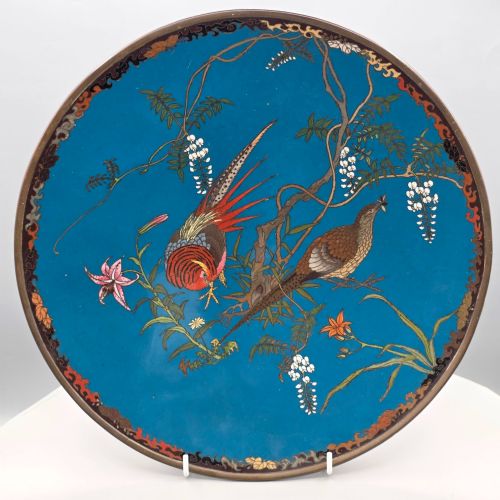
Vases and pairs of baluster urns dominate the selection, often decorated with birds amongst blossom or lotus motifs. Chargers and bowls provide wide surfaces for cloisonne enamel scenes of birds set against natural backgrounds.
Japanese Meiji period and Chinese Qing dynasty pieces form the core of the selection, reflecting distinct regional casting traditions and surface treatments. Sculptures range from small okimono to large scale figures of geese and cranes.
Materials and Techniques
Casting bronze, brass and copper forms the foundation of many pieces, often followed by patination to achieve deep brown or dark green tones. Mixed metal detailing introduces contrasting silver and gold inlay to highlight plumage and foliage.
Cloisonne enamel technique utilises thin metal wires soldered to a base to create cells, which are then filled with coloured vitreous pastes and fired multiple times. Ginbari and basse-taille methods incorporate textured foils beneath translucent red enamels for added depth.
Watch for the exact tilt of a bronze owl head, which often reveals the precise temperament of the artisan behind the casting.
Assessing Quality
The distinction between ordinary production and superior work rests on the crispness of the chasing and the control of the metal patination. Fine bronze castings show sharp feather definition and secure joins on applied elements like handles and feet.
In cloisonne pieces, the regularity of the wirework and the smoothness of the polished enamel surface indicate the maker's skill. Balanced compositions and careful attention to the posture of the bird elevate the standing of an object.
Ando Jubei
The Oriental Metalwork Bird Glossary
- Okimono
- A Japanese freestanding sculpture intended for display on a shelf or in a tokonoma alcove. These carvings and metal castings portray animals, figures and natural subjects.
- Cloisonne
- A decorative metalwork technique where thin wires form compartments on a vessel surface to hold enamel paste. The object is fired and polished until the wires and enamel form a smooth plane.
- Patinated Bronze
- Metal treated with chemical solutions to produce a controlled surface colour and aged appearance. This finish protects the underlying alloy and accentuates sculptural detail.
- Chasing
- The manual method of refining a metal surface with hammers and punches after casting. Artisans use this technique to add texture and intricate lines to plumage.
- Ginbari
- A Japanese enamelling process featuring a textured or foiled background beneath a translucent enamel layer. This method creates a patterned depth visible through the coloured glass.
Oriental Metalwork Bird: Frequently Asked Questions
What is an okimono sculpture?
An okimono is a decorative Japanese display object designed for placement within a room rather than for formal ritual use. These metal or ivory figures typically depict animals, birds or historical scenes with careful attention to naturalistic detail.
Craftsmen produced these sculptures in varying scales, from small cabinet pieces to substantial figures of eagles and hawks. They reflect the high standards of nineteenth-century metalwork workshops.
How do I care for antique bronze?
Antique bronze requires minimal intervention to preserve its original patination and protective surface layer. Regular dusting with a soft, dry cloth prevents the accumulation of grime without disturbing the metal.
Avoid using liquid cleaners, polishes or abrasive cloths, which strip away historical patination and damage the underlying alloy. Stable indoor humidity helps prevent corrosion on both bronze and enamel surfaces.
What is cloisonne enamel?
Cloisonne is an enamelling technique where metal wire is bent and soldered to a metal base to form partitioned cells. Artisans fill these individual compartments with coloured glass paste before firing the piece in a kiln.
After firing, the surface is ground down and polished until the metal wires and the hardened enamel lie flush. This creates durable, colourful depictions of birds, flowers and landscapes.
How do I distinguish Meiji period pieces?
Meiji period metalwork dates from the reign of the Meiji Emperor between 1868 and 1912, a time of opening international trade for Japan. Pieces from this era often combine traditional casting skills with advanced chemical patination and mixed metal inlay.
Many works incorporate naturalistic themes such as birds amongst blossom, reflecting a deep engagement with flora and fauna. Signature panels or factory marks frequently appear on the underside of these vessels.