



Silver Fruit Serving Cutlery
Silver fruit serving cutlery comprises specialised implements crafted for the dining table, uniting sterling silver with fitted presentation cases to elevate the service of fruit.
Silver Fruit Serving Cutlery
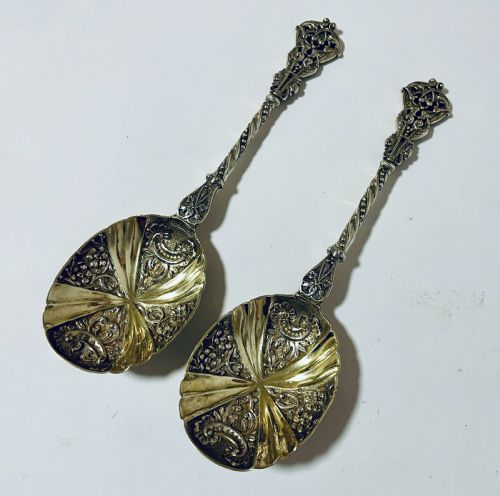
Silver fruit serving cutlery encompasses specialist implements designed for the dining table, including berry spoons, grape shears, serving knives, and complete cased sets intended for dessert and fruit courses. When you examine silver fruit serving cutlery on this page, you will encounter forms spanning the Georgian, Victorian, and Edwardian periods.
Originating largely from English workshops and spanning the eighteenth, nineteenth, and early twentieth centuries, these items reflect the formal dining habits of past eras. Collectors typically find items from George III, the Victorian naturalistic movement, and the Art Nouveau style represented among the available stock.
Materials and methods of construction
Silversmiths utilised sterling silver and silver plate as the primary structural metals, frequently applying gold gilt or silver-gilt finishes to the bowls and blades. Many items display cast silver blades or formed spoon bowls paired with intricately engraved handles.
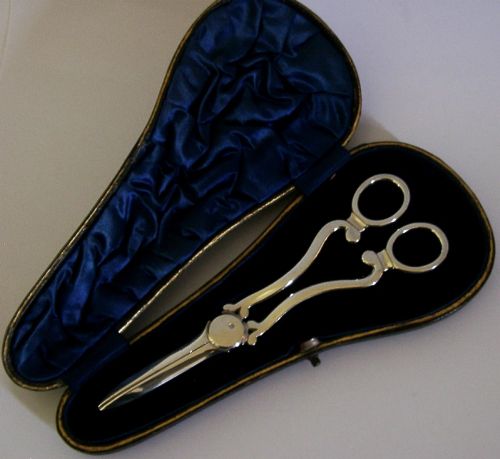
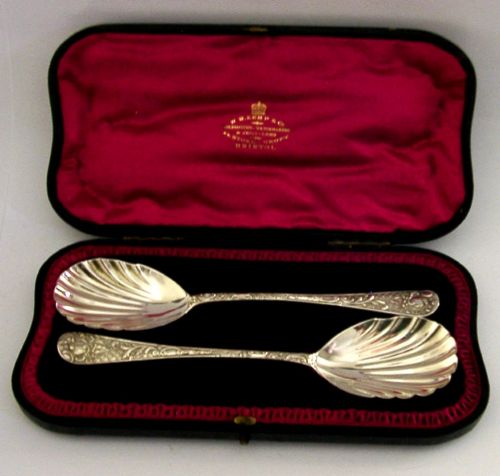
Makers housed these implements in custom presentation cases lined with soft textiles such as velvet, satin, and silk to protect the polished metal surfaces. Details on handles and stems often incorporate ornate chasing, crest engraving, and naturalistic leaf motifs.
Listings feature sterling silver and silver plate items originating from the Georgian, Victorian, and Edwardian eras, presented with velvet, satin, and silk lined cases.
Distinctions in quality and execution
Quality in these implements rests upon the crispness of the chasing, the depth of any engraved crests or naturalistic leaf detailing, and the structural integrity of hinged or cast elements like grape shears. Superior examples maintain the original gilding on silver-gilt surfaces and show minimal wear to the detailed ornamentation on handles.
The integrity of the accompanying presentation case significantly influences the desirability of a set, particularly when the velvet, satin, or silk lining remains intact and fitted to the specific cutlery pieces. Fully matched sets bearing clear hallmarks across every component demonstrate higher coherence than assembled groupings.
peter & Anne Bateman·William Chawner II·Sebastian Crespell·Hukin & Heath
The Silver Fruit Serving Cutlery Glossary
- Berry spoon
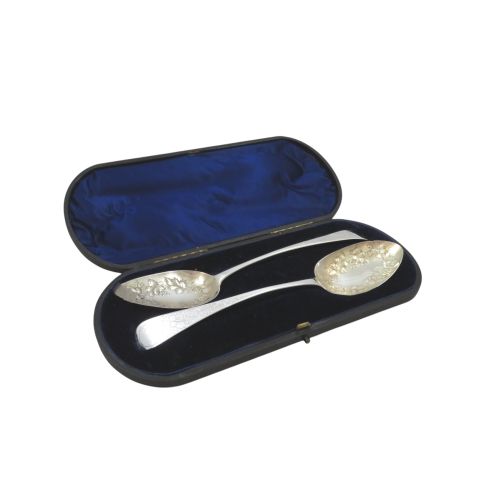
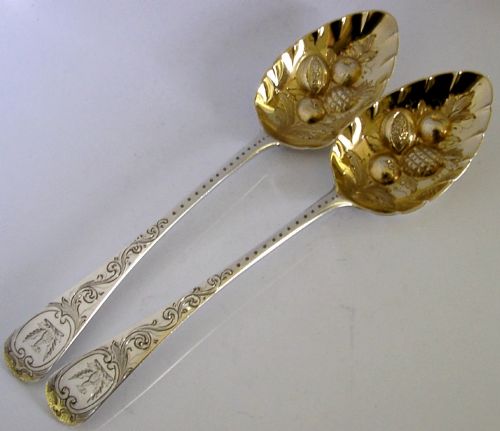
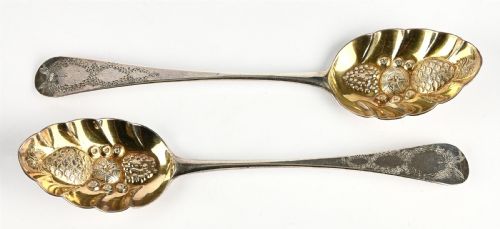
- A large serving spoon, often dating from the Georgian period, featuring fruit and foliage repoussé work added to the bowl. These pieces were frequently retrofitted or newly created to serve fresh berries at the table.
- Grape shears
- Specialist scissors designed specifically for cutting clusters of grapes at the dining table without crushing the fruit. They often feature decorative cast handles matching accompanying fruit service cutlery.
- Silver-gilt
- Sterling silver that has been coated with a thin layer of gold, providing a rich yellow lustre. This technique was frequently applied to the interior bowls of serving spoons and fruit service knives.
- Hallmark
- An official stamp applied by an assay office to indicate the purity of the metal, the maker, and the year of manufacture. British silver bears distinct marks that allow collectors to date pieces precisely.
- Repoussé
- A metalworking technique where the artisan hammers the design from the reverse side to form a raised pattern on the front. This method creates the ornate fruit and leaf motifs seen on many serving spoons.
Silver Fruit Serving Cutlery: Frequently Asked Questions
What are berry spoons used for?
Berry spoons are large serving implements designed specifically for portioning soft fruits and berries at the dining table. Their deep bowls and decorated surfaces allowed diners to serve fruit cleanly from central bowls.
Many examples feature embossed fruit and leaf motifs added to the bowl long after the initial manufacture of the spoon. They remain practical and decorative additions to modern table settings.
Are cased fruit sets original?
Most fitted presentation boxes lined with silk or satin were custom-made to house specific sets of cutlery and serving utensils. The fitted interiors correspond directly to the shapes of the knives, spoons, and shears.
Checking for maker marks inside the case lining and ensuring the implements fit securely helps confirm the association between the cutlery and its box.
How should I care for silver fruit cutlery?
Silver fruit serving pieces require gentle cleaning with a specialist silver cloth to preserve the polished surface and any applied gold gilt. Avoiding harsh abrasive dips protects engraved crests and delicate chasing.
Storing pieces within their original lined cases keeps the metal safe from tarnishing agents in the air when not in use on the dining table.