
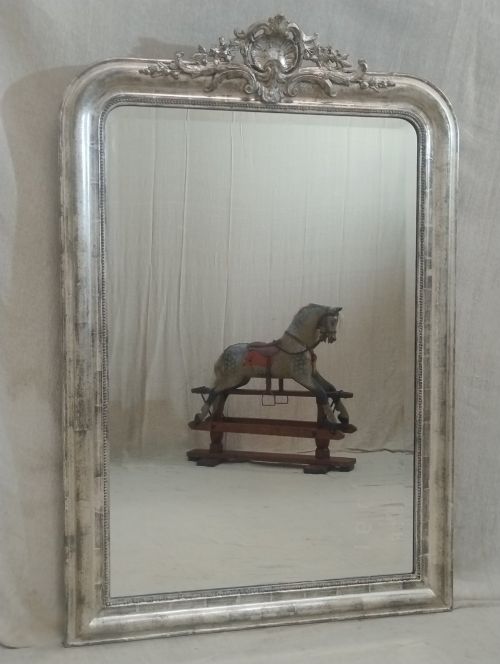
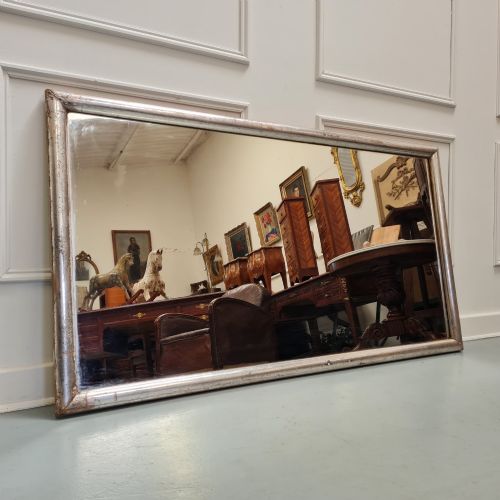
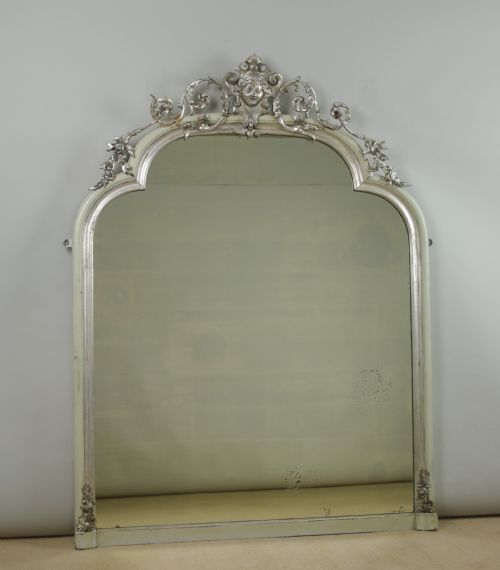
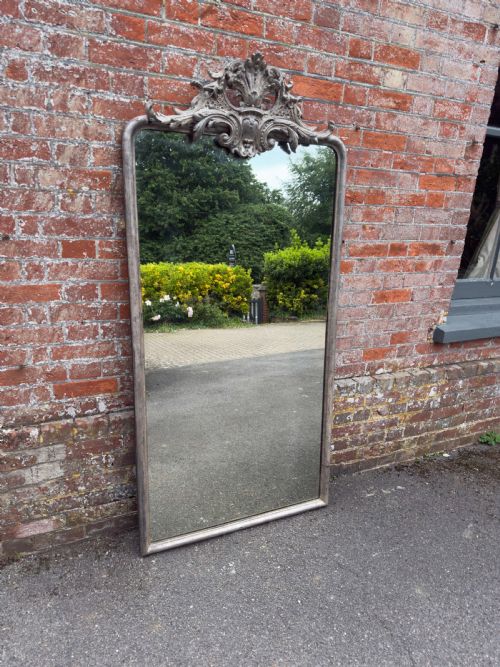
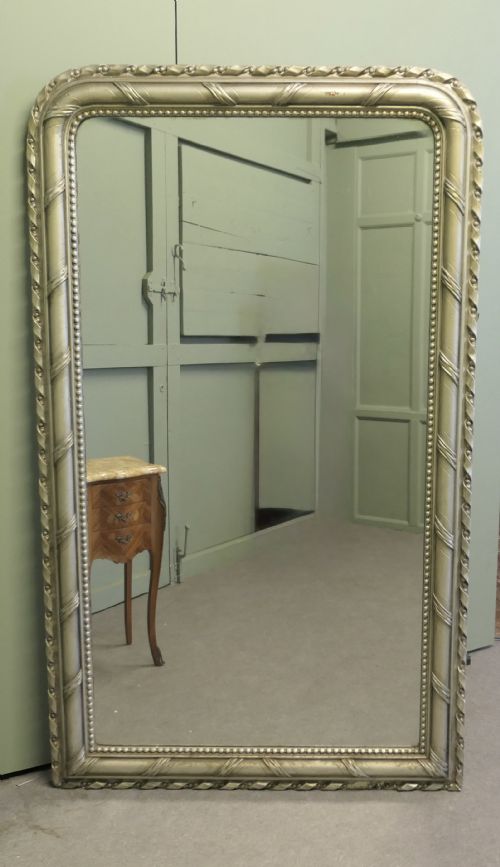

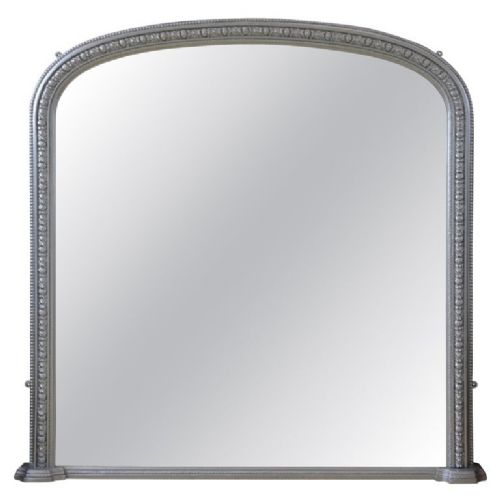

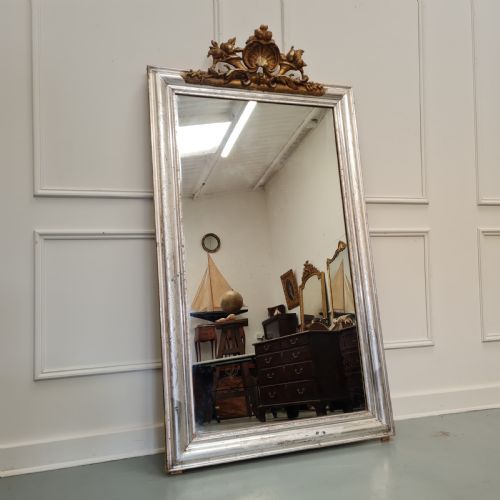


Silver French Overmantel Mirror
A silver french overmantel mirror brings unmistakable width and reflection to a chimney breast, shaped by nineteenth-century French and Victorian hands.
How they were made
Carved wood and gesso form the structural base for the decorative ornament on these frames. Artisans applied layers of gesso over carved wooden foundations to build up high-relief scrolls, crests, and classical motifs before gilding or silvering. Mirror glass sits within these heavy wooden carcasses, secured at the back with traditional pegging.
Silver leaf, gold leaf, and silver gilt finishes give these surfaces their distinctive metallic sheen. Many examples combine silver and gilt treatments, sometimes paired with ebonised sections to create high contrast. Distressing occurs naturally through age or deliberate historic finishing on the metallic leaf.
What varies in quality
The crispness of the carved wood and gesso ornamentation dictates visual distinction at the upper end of the scale. Superior pieces retain sharp definition in their moulded details without softness in the scrolling or floral elements. The integration of the silver leaf and gilt layers also separates finer examples from simpler provincial work.
Proportion and scale influence the architectural presence of the frame on a wall. Mirrors retaining their original mirror glass and primary silvered surfaces command greater visual coherence. The depth of the wooden rebate and the integrity of the arched or shaped top frame structure anchor the overall standard.
Listings feature pieces spanning the eighteenth century, the nineteenth century, and into the 1920s and 1930s.
The Silver French Overmantel Mirror Glossary
- Overmantel mirror
- A wide mirror specifically designed to hang on the wall directly above a fireplace mantelpiece. These pieces often feature low horizontal proportions to suit the width of the hearth below.
- Gesso
- A plaster-like mixture applied to a wooden frame to create a smooth surface for gilding. Artisans carve and mould this material into intricate decorative reliefs before applying metallic leaf.
- Silver gilt
- A surface finish where silver leaf is applied to an object and subsequently treated or glazed to resemble or blend with gold. This dual tone appears frequently on nineteenth-century French frames.
- Louis Philippe
- A nineteenth-century French architectural and decorative style characterised by restrained classical lines and generous proportions. Mirrors from this period typically feature simple arched crests.
- Ebonised
- Wood treated with a dark stain or finish to imitate ebony. This dark contrasting treatment frames the silvered and gilt surfaces on selected Victorian and French pieces.
Silver French Overmantel Mirror: Frequently Asked Questions
Where should an overmantel mirror hang?
These mirrors hang traditionally centered directly above a fireplace mantelpiece, resting low to capture and reflect the room's light.
They also function effectively on large expanse walls in reception rooms where their broad proportions anchor surrounding furniture.
How do I identify a French overmantel mirror?
French examples often display characteristic arched tops, carved wood and gesso crests, and Louis Philippe or Rococo styling influences.
Construction details on the reverse, such as heavy wooden panel backing and early fixings, further indicate continental origins.
What is the difference between silver gilt and silver leaf?
Silver leaf consists of fine hammered sheets of silver applied directly to the prepared gesso surface of the frame.
Silver gilt incorporates additional gold or warm toning applied over or alongside the silver to create a softer, multi-hued metallic finish.
Can these mirrors stand on the floor?
Certain large formats are built as floor or overmantel mirrors, allowing them to rest safely against a wall without wall-hanging fixings.
Checking the weight and base structure ensures stable placement if you choose to position one directly on the floor.
How do I care for antique mirror glass?
Dust the carved wood and gesso frame gently with a soft dry brush to protect the delicate silver leaf surface from moisture damage.
Clean the mirror glass sparingly using a mild glass cleaner applied to a cloth rather than sprayed directly onto the frame.