

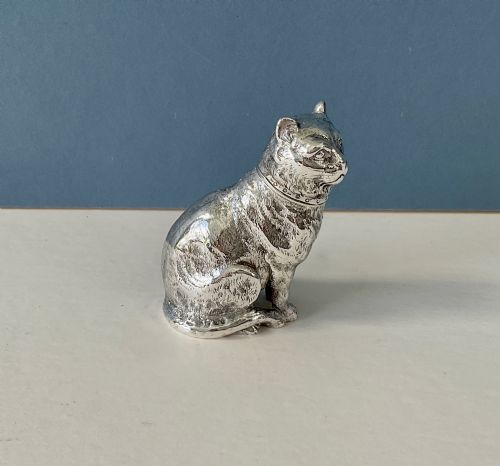
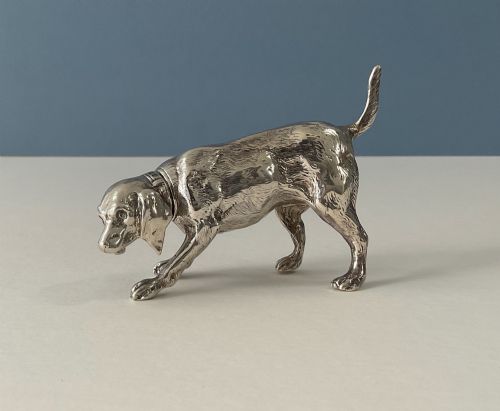
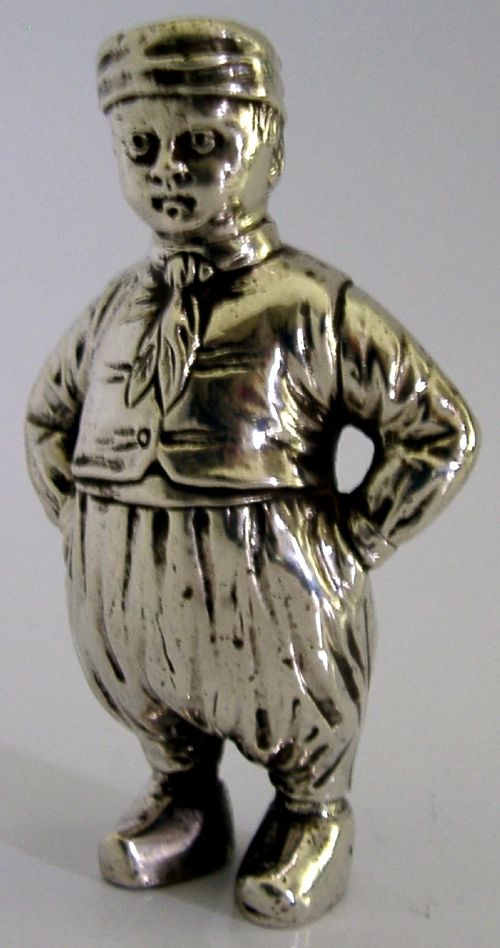


Silver Figurine Pepper Caster
These silver figurine pepper casters are characterful animal and figure condiments that bring charm to any table.
Silver Figurine Pepper Caster
A silver figurine pepper caster takes the form of an animal or human figure, serving as both a functional table condiment and a decorative novelty. When you search for silver figurine pepper caster, you encounter whimsical designs shaped as birds, cats, dogs, owls, and human figures.
The pieces listed on this page span the Victorian, Edwardian, and Art Deco eras, with notable examples ranging from the late nineteenth century through to the 1930s. Most items take the form of individual pepper pots or matched pairs intended for domestic dining tables.
Makers utilised various scales, from small pepperettes to life-size bird models and substantial solid silver boy pepper pots. These functional vessels combine domestic utility with sculptural form, reflecting period tastes for naturalistic and novelty tableware.
Materials and construction
These items are constructed primarily from sterling silver, solid silver, and 800 silver, occasionally featuring silver gilt finishes, glass elements, or ebonised wood details alongside alternative metals like pewter. Silversmiths shaped the metal to capture detailed feathers, fur textures, and facial expressions on each creature or figure.
Construction techniques involve casting and chasing the silver body, with removable heads or base plugs designed for refilling the spice inside. Artisans engineered these closures to fit seamlessly into the sculptural contours without disrupting the realistic appearance of the animal or subject.
Silver Figurine Pepper Caster Retail Price Guide 2026
Typical asking prices for silver figurine pepper caster among the pieces listed under this phrase on Sellingantiques today, from the lower quarter to the upper quarter. They describe what is for sale here now, not the wider market.
A life-size bird chick stands ready to season your meal.
Distinguishing quality in silver figures
Quality in these items rests upon the crispness of the chasing and the anatomical fidelity of the animal or human subject. Superior examples display finely rendered plumage or fur and balanced proportions that maintain stability as a tabletop vessel.
The cleverness of the mechanism for refilling also marks the better pieces, ensuring the functional opening remains hidden within the design. Heavier gauge metal and clear hallmarks denoting maker and period further separate standard production from superior work.
Thomas Johnson
The Silver Figurine Pepper Caster Glossary
- Novelty pepper
- A condiment pot shaped to resemble an animal, human figure, or inanimate object rather than a traditional urn or shaker form.
- Silver gilt
- Sterling silver that has been coated with a thin layer of gold on the surface. This technique provides a rich two-tone effect inside or outside the vessel.
- 800 silver
- An alloy containing eight hundred parts of pure silver per thousand. This standard is frequently found on continental European silver pieces.
- Chasing
- A silversmithing technique used to ornament metal from the exterior by sinking the material with punches to create raised surface details and textures.
Silver Figurine Pepper Caster: Frequently Asked Questions
How do you fill a silver figurine pepper caster?
Most of these novelty pieces feature a removable head, a threaded base plug, or a secure bottom panel that lifts or unscrews for refilling the ground pepper.
Care must be taken when handling older mechanisms to avoid damaging the silver threads or distortion over years of use.
Are these silver pepper pots safe to use daily?
While originally created for functional dining use, many collectors prefer to display them as decorative art objects due to their age and delicate chased details.
If utilised for dining, standard silver maintenance applies to prevent tarnish accumulation and protect the metal from corrosive spices.
How can you tell Victorian pepper casters apart from later pieces?
Victorian examples often display heavier ornamentation and distinct hallmarks relating to nineteenth-century assay offices, frequently featuring naturalistic animal forms like owls, dogs, and birds.
Twentieth-century pieces, such as those from the Art Deco period or the 1930s, tend to show cleaner stylistic lines or different silver standards like 800 silver.
Why are some silver condiment figures found in pairs?
Matching pairs were produced to balance the formal table setting, allowing both salt and pepper or dual pepper options to sit symmetrically at opposite ends of the dining arrangement.
Finding an original matched pair increases the desirability for collectors of antique cruet sets.