


Antique Silver Novelty Pot
An antique silver novelty pot brings clever design and fine craftsmanship to the dining table.
Antique Silver Novelty Pot
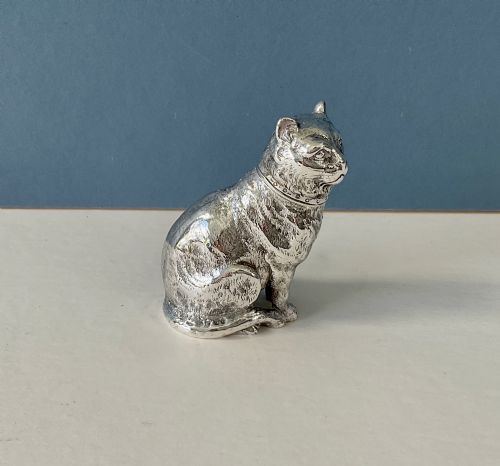
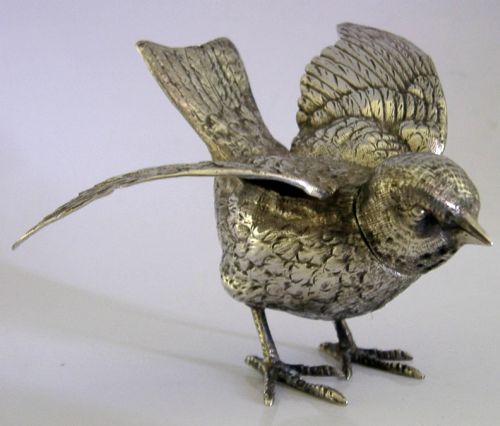
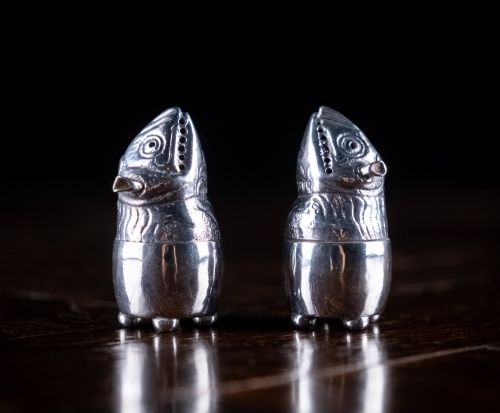
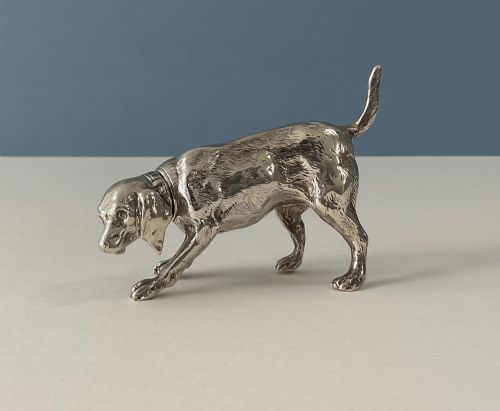
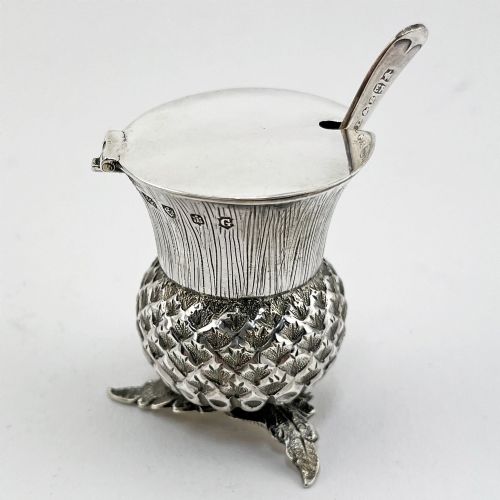
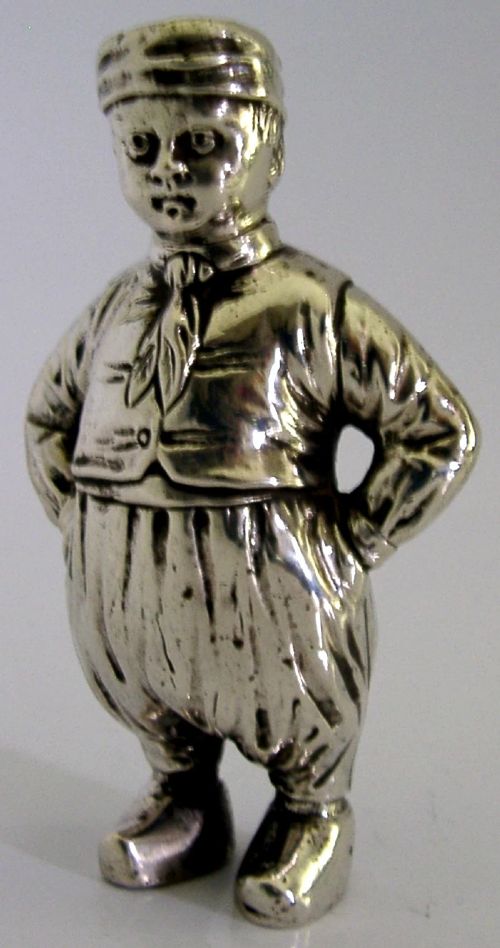
An antique silver novelty pot comprises functional tableware items shaped into playful figures, animals, and everyday objects, ranging from pepper pots and mustard pots to inkwells and cruet sets. When searching for an antique silver novelty pot, buyers encounter pieces fashioned after owls, dogs, birds, and botanical or architectural forms. These items reflect the Victorian, Edwardian, and early twentieth century passion for wit and charm in domestic silver.
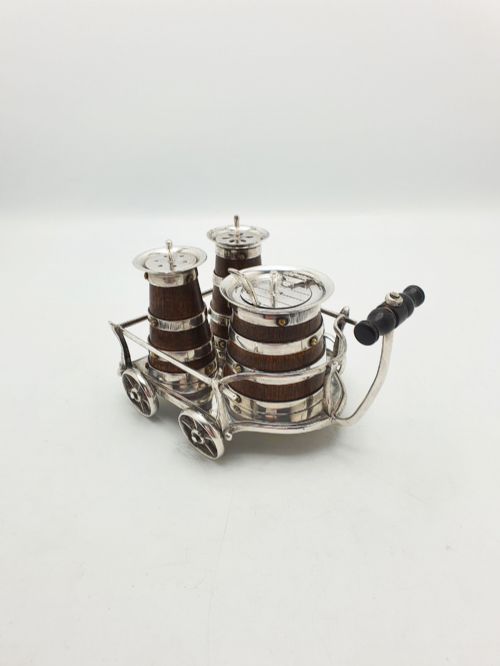
The versions most frequently met on this page span the Victorian and Edwardian periods, alongside Continental and 1930s imports. Animal forms such as chicks, owls, and bears appear regularly alongside mechanical and architectural shapes like watering cans, barrels, and castle towers. Many of these pieces function as individual shakers or form part of larger matched condiment and cruet sets.
How They Were Made
Silversmiths constructed these pieces primarily using sterling silver or silver plate, frequently incorporating cut glass liners, wooden elements like oak and walnut, and occasionally velvet or horn accents. Casting allowed makers to shape complex figural bodies such as birds, cats, and human characters with anatomical precision. Hand-chasing and engraving added fine feather, fur, and surface details to the cast metal.
Many figural pots utilised hinged heads or threaded bases to allow access for refilling condiments or ink. Silver plating on a base metal offered a durable alternative to solid sterling silver, while Continental pieces frequently utilised distinct silver standards such as 800 or 833 grade.
What Varies in Quality
Quality in these pieces rests upon the crispness of the casting and the realism of the modelling, particularly in figural animal and human subjects. Finer examples display meticulous hand-chased surface work where individual feathers, fur, and facial expressions remain sharp and defined. Lesser examples exhibit softer details and simpler construction methods with minimal surface engraving.
Makers' marks and registration numbers heavily influence distinction, with pieces bearing the stamps of renowned silversmiths commanding greater recognition. The retention of original glass liners, working hinges, and secure stoppers or screw fittings further separates superior survivals from altered or incomplete items.
Frederick Brasted·Hukin and Heath·Sampson Mordan·Berthold Muller·Mappin and Webb
The Antique Silver Novelty Pot Glossary
- Pepperette
- A small shaker designed specifically for dispensing ground pepper, often shaped as a standing animal or figure.
- Cruet set
- A matched assembly of small pots and bottles holding condiments such as salt, pepper, mustard, and oil for the dining table.
- Pounce pot
- A small perforated shaker used to sprinkle fine sand over handwritten ink to speed up drying, historically shaped into decorative forms.
- Hallmark
- A series of official marks stamped onto precious metal items indicating the maker, assay office, purity standard, and date of assay.
- Cast silver
- Metal poured into a mould to create three-dimensional figural shapes before undergoing hand-finishing and chasing.
Antique Silver Novelty Pot: Frequently Asked Questions
What were novelty silver pots used for?
These pieces served practical functions on the dining table or desk while doubling as decorative conversation pieces. They held condiments like salt, pepper, and mustard, or served as inkwells and pounce pots for writing.
Victorian and Edwardian hosts used them to add a touch of amusement and elegance to formal dinners and domestic interiors.
How can I tell the period of a novelty silver pot?
Dating relies primarily on the hallmarks stamped into the metal, which indicate the assay office and the specific year letter. Stylistic cues also help, as Victorian pieces often feature heavy cast figural work while Edwardian and 1930s items introduce different manufacturing techniques and foreign import marks.
Examining the construction methods, such as hinge types and fastening mechanisms, provides further clues regarding the date of manufacture.
Are these pots made of solid silver?
The listings include both solid sterling silver and silver-plated examples over a base metal. Continental pieces often utilise different silver purity standards such as 800 grade.
Examining the metal for hallmarks indicating sterling standards or maker marks helps determine the exact material composition of each piece.
How do I care for antique silver novelty pots?
Cleaning requires a soft microfibre cloth and gentle silver polish formulated specifically for antique metals to preserve fine hand-chased details. Avoiding harsh chemical dips protects any original patina, highlights, and delicate soldered joints.
Keeping the pieces away from excessive moisture and storing glass liners separately prevents potential damage to fitted components.