



Antique Novelty Cruet
These antique novelty cruet sets bring humour to the dining table through miniature figures and mechanical designs.
Antique Novelty Cruet
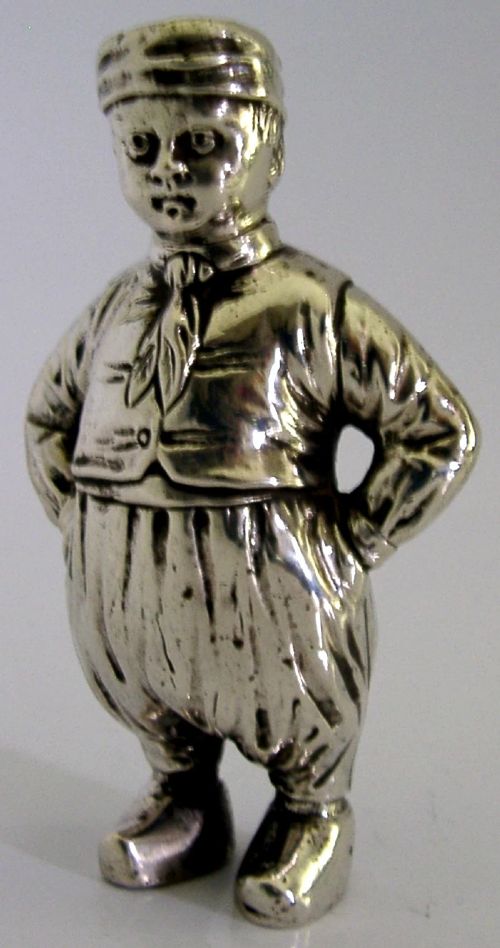
An antique novelty cruet takes the form of animals, vehicles, and everyday objects designed to hold salt, pepper, and mustard on the dining table. The most frequent versions on this page are Victorian and Edwardian silver plated pieces shaped as farmyard animals, dogs, and transport.
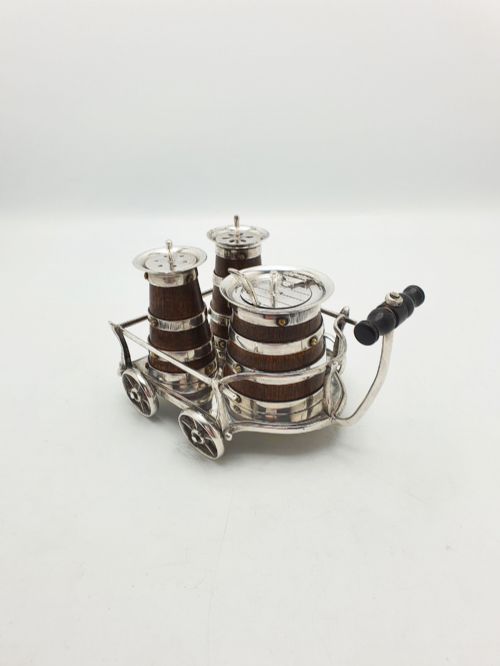
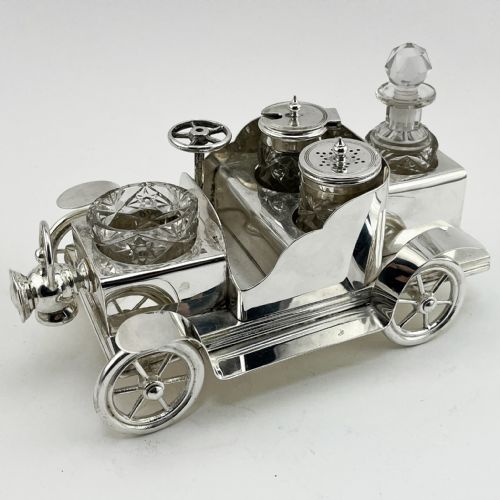
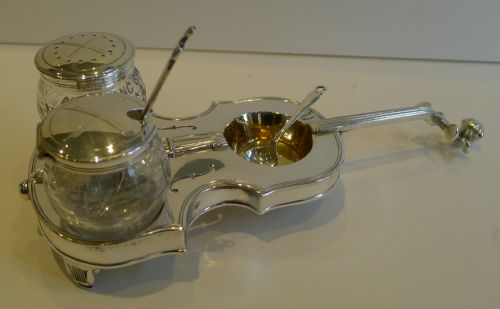
Makers fashioned these condiment containers as birds, cars, carts, and butler trays, integrating glass bottles and shakers into whimsical miniature scenes. Collectors also find mid-century modern British variations alongside solid silver and 800 silver examples.
The objects serve both a practical function for dining and a decorative purpose, often incorporating hinged elements or fitted trays. These sets reflect nineteenth and twentieth-century humour and silver-smithing skill.
Materials and construction
Techniques combined casting for figural elements such as birds, dogs, and human figures with detailed chasing and engraving to define feathers, fur, and harness details. Makers fitted these metal housings with removable glass bottles and shakers.
A bird building a nest on the dining table holds your pepper.
Distinctions in quality
Quality rests upon the crispness of the casting in figural pieces, where finer examples preserve the distinct texture of fur, feathers, and mechanical components. Better pieces retain intact silver plating without heavy wear exposing the base metal beneath.
The integrity of the glass inserts and the precision of the fit within the metal frame distinguish superior sets from standard productions. Maker marks and registration numbers also denote workshop standards.
Sampson Mordan·William Briggs·Elkington
The Antique Novelty Cruet Glossary
- Cruet set
- A matched collection of small containers for holding condiments like salt, pepper, mustard, and vinegar at the table. These sets sit in fitted frames or trays for transport.
- Silver plate
- A layer of silver fused to a base metal substrate, commonly utilised in nineteenth-century tableware to achieve the appearance of solid silver at a lower cost.
- Condiment set
- A group of vessels designed for table seasonings, encompassing salt cellars, pepper pots, and mustard pots. They appear in matching frames or trays.
- Solid silver
- Metal objects composed of silver throughout rather than plated over a base metal, carrying hallmarks to designate purity. Sterling and 800 silver fall into this category.
Antique Novelty Cruet: Frequently Asked Questions
How were these cruet sets used?
These sets served salt, pepper, mustard, and other condiments during formal and family dining. Guests or servants lifted individual shakers and pots from their frames during meals.
Many designs incorporated miniature scenes, such as a dog beside a kennel or birds building a nest, adding a conversational element to the table setting.
How do I date a novelty cruet?
Dating relies on style, registration numbers, and hallmarks stamped onto the metal components. Victorian and Edwardian pieces often feature registration lozenges or date letters specific to assay offices.
Materials also offer clues, as silver plating dominated nineteenth-century production while mid-century modern British examples emerged later.
Are the glass inserts original?
Many sets retain their original cut glass or clear glass shakers and bottles, shaped to fit the specific contours of the metal frame. Replacements occur frequently due to the fragile nature of glass over time.
Matching glass liners that sit snugly within the figural mounts indicate a complete and original set.