


Silver Enamel Glass Jar
A silver enamel glass jar brings together polished precious metal, bright vitreous colour and heavy cut crystal for the dressing table.
Silver Enamel Glass Jar
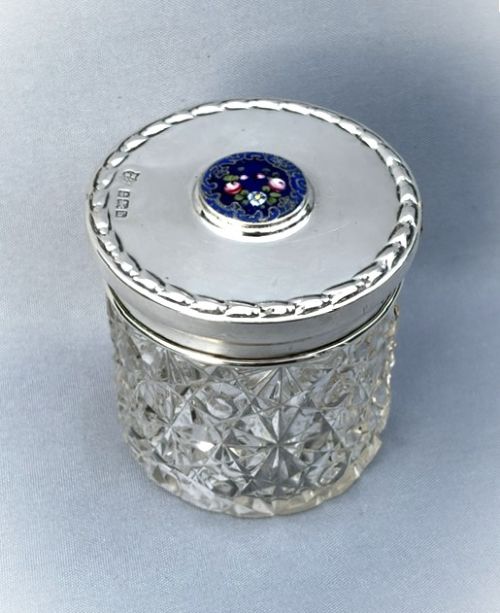
A silver enamel glass jar combines a glass body with a fitted silver lid embellished in coloured enamel. These objects served utilitarian roles on dressing tables and mantelpieces, holding powders, creams, scents and small trinkets. The form spans dressing table jars, vanity jars, lidded bowls, scent bottles and small trinket boxes.
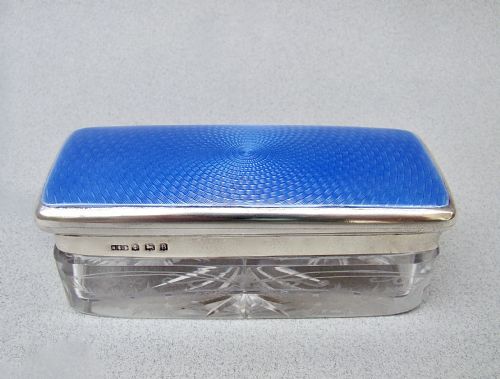
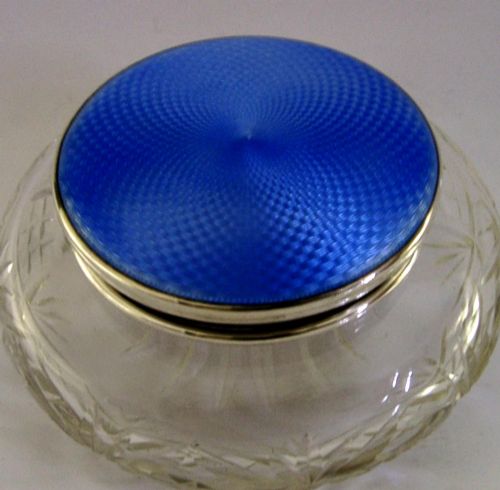
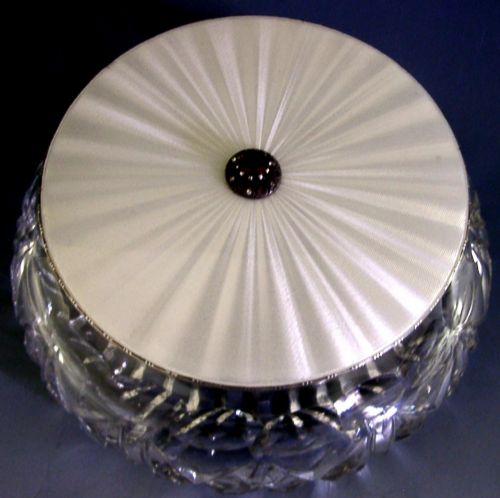
The most common examples encountered on this page date from the early twentieth century through the Art Deco period. Pieces range from modest Edwardian containers bearing simple silver mounts to substantial geometric vessels created during the nineteen twenties and thirties. Surviving items often retain their cut glass bodies paired with colourful guilloche enamel lids.
How they were made
Makers fashioned the glass bodies using heavy mould-blown techniques, frequently cutting geometric or floral patterns into the thick crystal to catch the light. Cranberry glass, clear cut crystal and etched glass provide the transparent foundation for the precious metal mounts.
Silversmiths constructed sterling silver collars and lids, often applying engine-turned guilloche engraving beneath translucent coloured enamels in shades of blue, green, pink, bronze and turquoise. This technique requires skilled hand-turning of the metal before the vitreous enamel paste is applied and fired.
Even your paperclips deserve a chic Art Deco resting place.
What varies in quality
The quality of a silver enamel glass jar rests upon the weight and clarity of the glass vessel alongside the precision of the silver smithing. Thick, deeply cut crystal bodies provide a substantial feel that separates finer items from lighter, plain-blown alternatives.
The complexity of the enamel work further distinguishes the range. Intricate guilloche patterns cut directly into the metal beneath translucent coloured glass display superior craftsmanship compared to flat, opaque enamels applied to plain surfaces.
Henry Clifford Davis·Henry Perkins·Goldsmith's and Silversmith's Co.·Georg Adam Scheid·Asprey & Co
The Silver Enamel Glass Jar Glossary
- Guilloche enamel
- A decorative technique involving precise mechanical engraving beneath translucent enamel. This creates repeating geometric patterns that shimmer under the surface colour.
- Cranberry glass
- A rich red glass produced by adding gold chloride to the molten batch. It appears frequently in dressing table items from the Edwardian era.
- Sterling silver
- An alloy consisting of silver and other metals, typically copper, standardising at a purity proportion. Most fitted lids and collars bear hallmarks confirming this standard.
- Dressing table jar
- A covered container designed to hold cosmetics or hairpins. These sit alongside scent bottles and trinket boxes on traditional vanity sets.
- Cut glass
- Glass decorated by grinding facets or patterns into the surface using a rotating wheel. This method enhances the sparkle of the vessel.
Silver Enamel Glass Jar: Frequently Asked Questions
What were silver enamel glass jars used for?
These jars held perfumes, face powders, creams and small personal items on dressing tables. They kept vanity accessories tidy while adding colourful decoration to the bedroom.
Many survived as parts of larger matching dressing table sets, though individual pieces appear frequently on their own today.
How do I date a silver enamel glass jar?
Birmingham, London and Chester assay office hallmarks stamped on the silver components provide exact assay years. Maker marks and stylistic cues like Art Deco geometry help confirm the decade of manufacture.
The style of the guilloche engraving and the font of the hallmarks also point toward specific periods such as the Edwardian era or the nineteen thirties.
How should I clean the enamel and silver?
Wipe the glass and enamel gently with a soft, damp cloth and dry immediately. Avoid submerging the entire piece in water, as moisture can seep beneath glued silver collars or loose lids.
Keep silver polish away from the enamel surface entirely to prevent scratching the vitreous glass coating.
Are these jars part of complete sets?
Some survive as matched pairs or groups of dressing table accessories originally housed in fitted leather cases. Others appear as single vessels that once belonged to larger vanity sets.
Individual jars still function well as standalone display pieces or lidded containers for modern trinkets.