
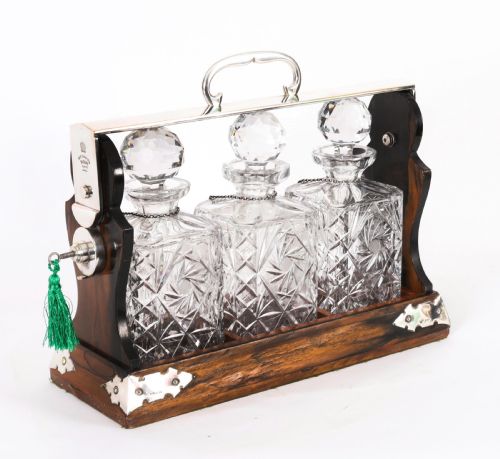


Silver Decanter Frame
A silver decanter frame secures glassware within a portable carrier, bringing order and hospitality to a sideboard.
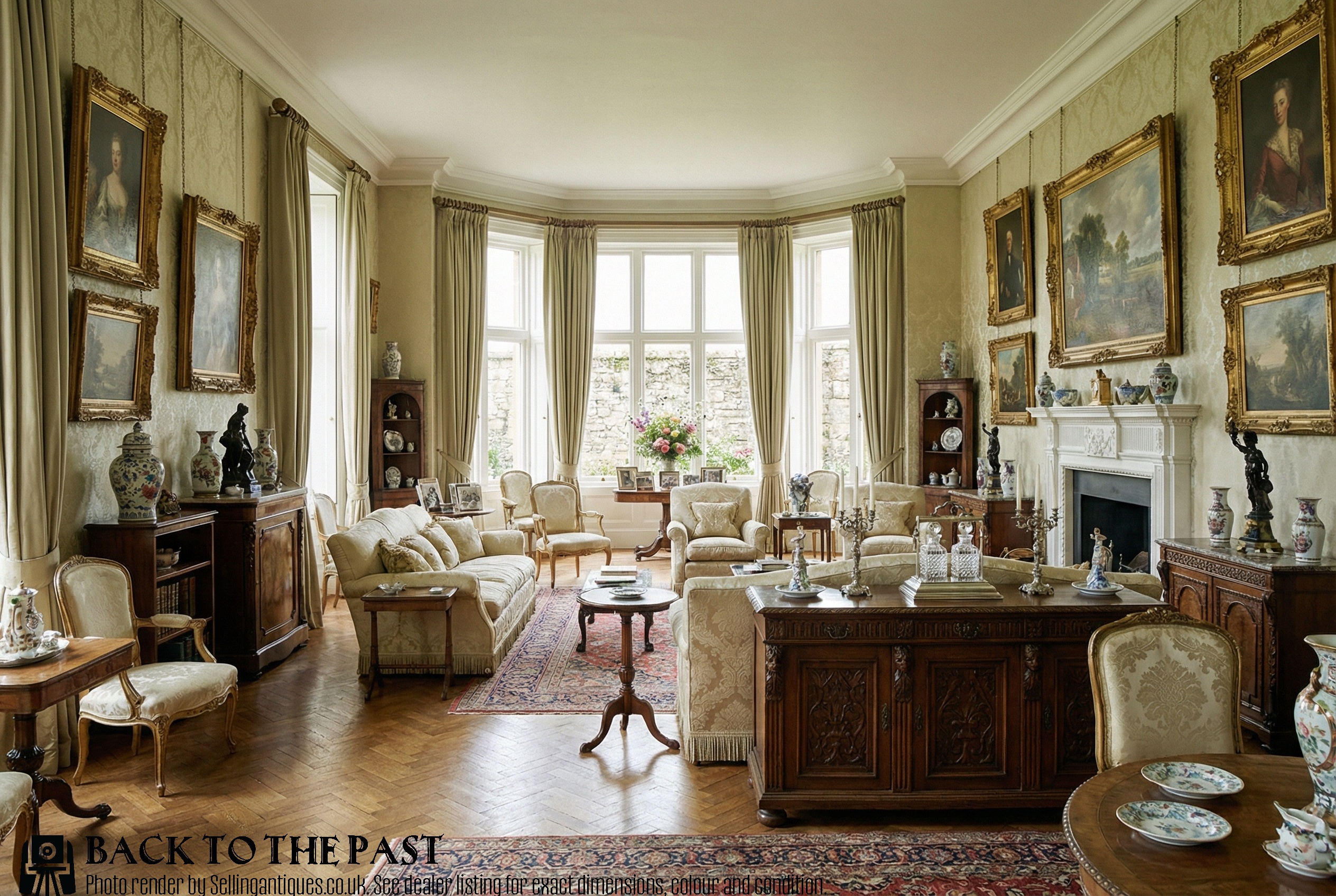
Silver Decanter Frame
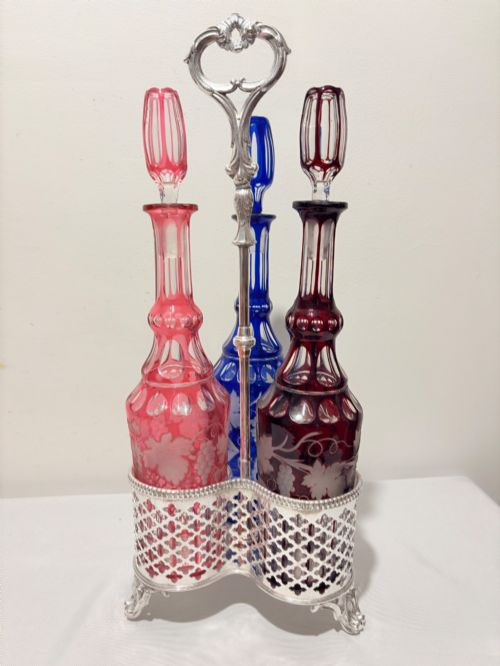
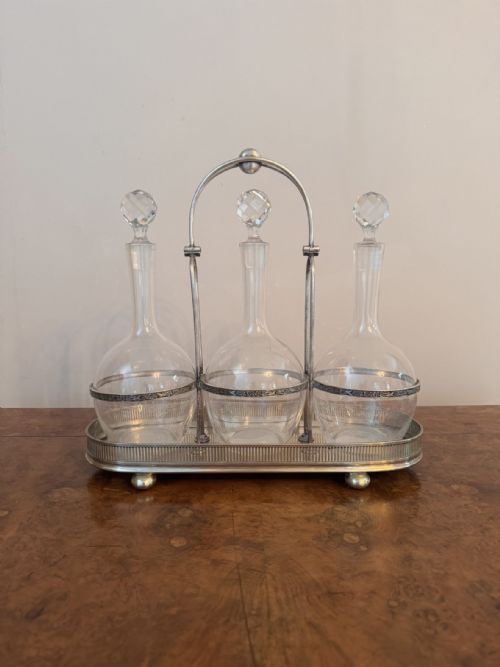
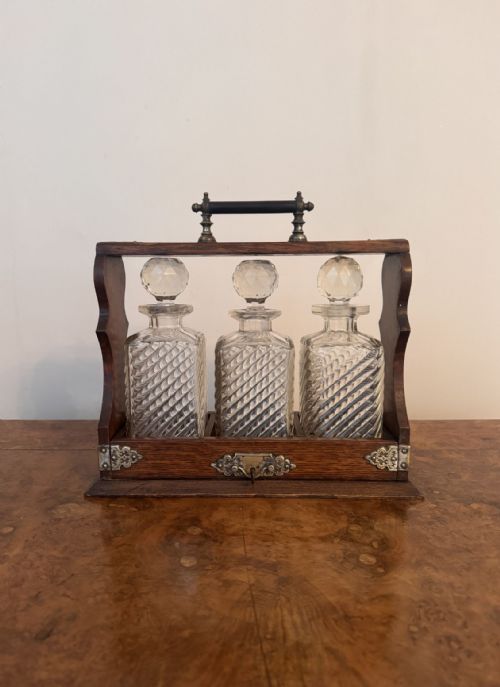
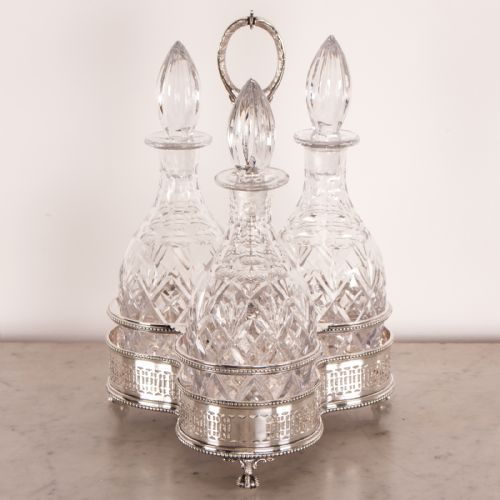
A silver decanter frame serves to hold glass vessels securely in upright positions during use and transport. These carriers range from open bottle holders to lockable tantalus boxes and multi-bottle cruet sets.
Victorian and Edwardian examples dominate the selection, alongside earlier Georgian iterations and later Art Deco designs. Oak, coromandel wood and various metals frequently form the structural bodies that house the glass bottles.
Decanter sets and stands appear alongside specialised locking frames designed to secure spirits away from unauthorized hands. The forms vary from simple two-bottle carriers to elaborate revolving and oval arrangements holding multiple decanters.
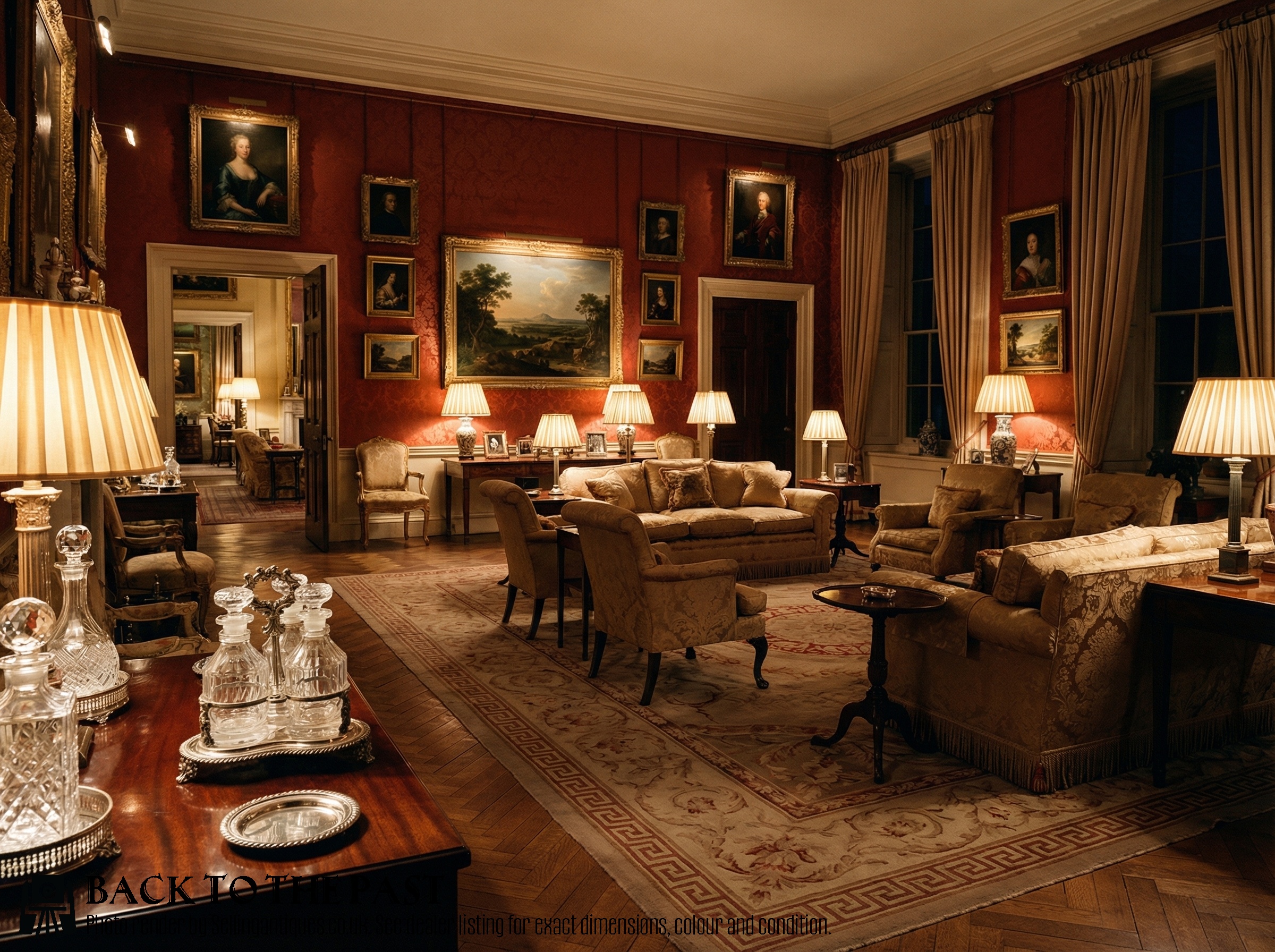
Materials and Construction
Silver plating on base metals or solid sterling silver forms the metal frameworks, often utilising Old Sheffield plate techniques on earlier pieces. Wood foundations such as oak and coromandel provide sturdy housing for locking tantalus mechanisms.
Cut glass and cut crystal create the heavy bottles fitted to each frame, occasionally supplemented by coloured glass including amber, blue, green and cranberry tones. Metal fixtures secure the glass firmly within fitted wooden or plated bases.
Silver Decanter Frame Retail Price Guide 2026
Typical asking prices for silver decanter frame among the pieces listed under this phrase on Sellingantiques today, from the lower quarter to the upper quarter. They describe what is for sale here now, not the wider market.
Listings for silver decanter frames span the Victorian and Edwardian eras, incorporating oak, coromandel wood, cut crystal and silver plate.
Factors of Distinction
The integration of the frame with its original glassware determines much of the integrity of any piece. Matching cut glass decanters that fit their exact slots without wobble denote higher original production standards.
Mechanisms such as locking bars, working keys and folding handles show the precision of the maker. Finer frames feature substantial plating thickness or solid silver components coupled with dense timber carcases like coromandel.
Walker and Hall·Charles Thomas Fox·Elkington·Hester Bateman·Jacques Adnet·Hukin and Heath·The Goldsmith Co·Philip Ashberry
The Silver Decanter Frame Glossary
- Tantalus
- A locking drink cabinet or frame that holds decanters securely while displaying their contents behind a metal bar. This keeps spirits visible yet physically locked away from domestic staff or guests.
- Cruet set
- A multi-bottle frame originally designed for condiments, oils or vinegars, frequently adapted to hold small decanters or bottles. These stands often incorporate central carrying rings.
- Old Sheffield plate
- A composite material made by fusing a thin sheet of silver to a thicker copper base before rolling and shaping. This early technique precedes modern electroplating.
- Coromandel wood
- A dense, heavily figured exotic timber imported from Asia, prized for its dark grain and used to construct luxury Victorian tantalus boxes.
- Silver plate
- A layer of silver bonded to a base metal substrate, widely utilised across Victorian and Edwardian barware frames to achieve the appearance of solid silver at lower cost.
Silver Decanter Frame: Frequently Asked Questions
What is a tantalus?
A tantalus is a specialised locking decanter frame that prevents people from pouring drinks without a key. A metal bar locks over the stoppers to keep the contents secure.
Most versions hold two or three crystal bottles inside an oak or coromandel wood housing. The name originates from the mythological figure of Tantalus, whose food and drink remained forever out of reach.
How do I clean the metal frame?
Silver plated and solid silver frames require gentle cleaning with a soft cloth and specialised silver polish. Avoid harsh abrasives that wear down thin plating over base metals.
Wooden sections like oak or coromandel benefit from occasional light waxing to nourish the grain. Keep moisture away from fitted locking mechanisms to prevent rust and sticking.
Are the decanters usually original?
Many surviving frames retain their original cut glass or crystal decanters, though replacements occur frequently over time. Matching glass forms and correct stopper sizes indicate original pairings.
Inspect the neck heights and base dimensions to see if the bottles sit naturally within the silver plated dividers. Hand-cut facets on both glass and frame often show matching period wear.
How do I date a silver frame?
Hallmarks on solid silver components provide exact assay office marks and date letters for positive identification. Plated pieces rely on maker marks, style cues and construction methods.
Victorian and Edwardian examples often feature heavy oak frames or ornate cast silver-plated mounts. Georgian pieces tend to display cleaner lines and different mounting styles.