
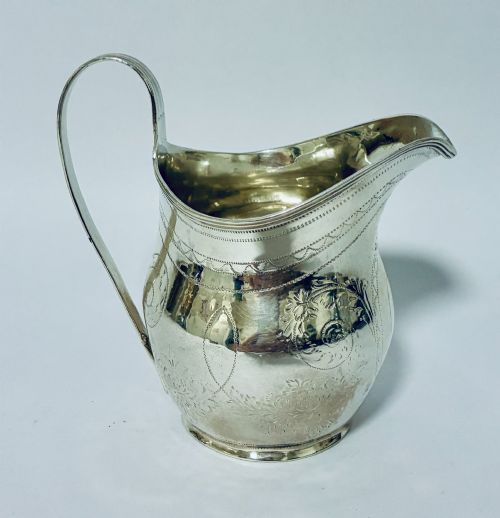
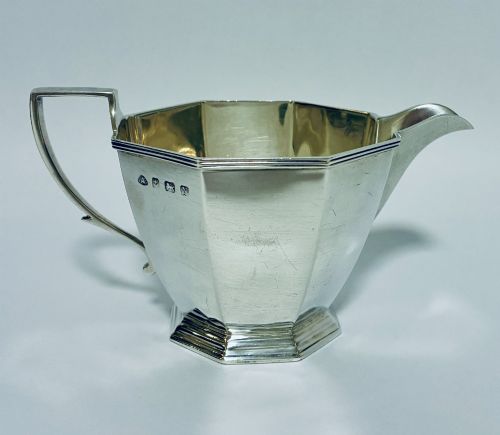
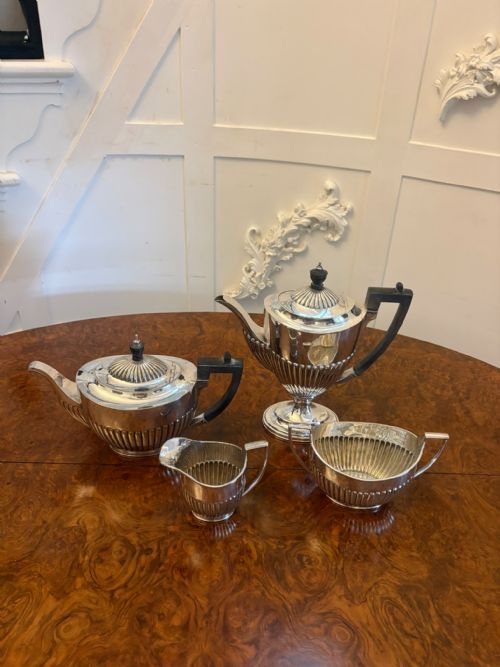
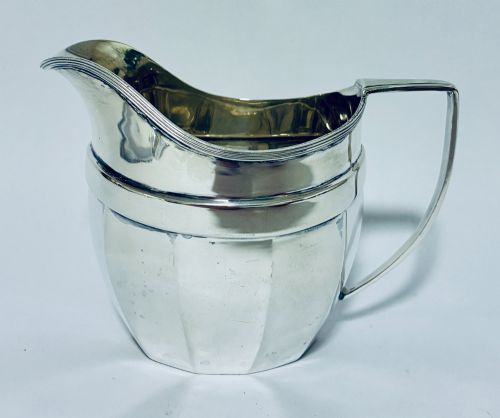


Silver Cream Jug Set
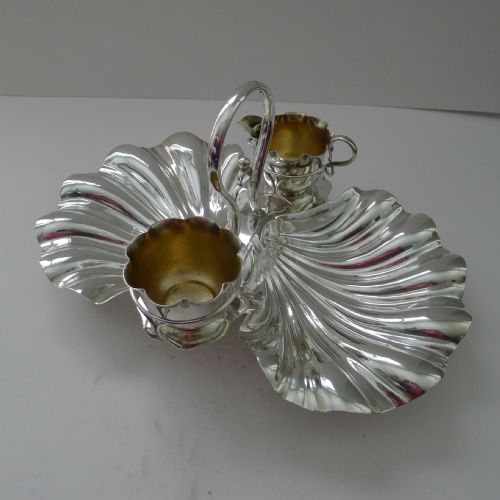
A silver cream jug set brings matching pouring and serving vessels to the table, uniting solid sterling and plated pieces from Georgian to Art Deco periods.
Silver Cream Jug Set
A silver cream jug set comprises grouped vessels designed for tea and coffee service, frequently pairing a cream jug with a matching sugar bowl, tongs, or larger tea pots. The examples found here span from the Georgian and Victorian eras through the Edwardian period and into the 1920s and 1930s.
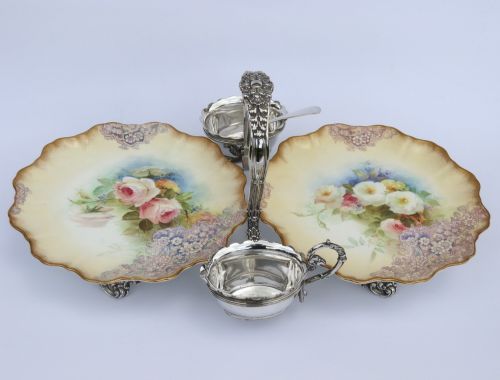
The configurations vary from simple two-piece pairings of jugs and bowls to full four and five-piece tea and coffee services. Many include specialist items such as strawberry sets featuring hand-painted plates or fitted presentation boxes.
Materials and construction
The selection encompasses both solid sterling silver and silver-plated wares, alongside electroplated nickel silver and Sheffield plating techniques. Additional decorative elements include gold wash interiors, ebonised wood handles, and intricate grapevine detailing.
Makers utilised traditional silversmithing methods to shape solid silver bodies or apply silver layers over base metals. Fitted wooden cases and ceramic integrations, such as Doulton Burslem plates, complete the construction of more elaborate sets.
Listings feature solid sterling silver alongside silver-plated and electroplated nickel silver items spanning the Georgian period to the 1930s.
What defines quality
Quality rests upon the crispness of ornamentation, such as chased grapevine motifs, and the structural integrity of handles and spouts. Maker attribution also plays a role, with established firms demonstrating superior execution in weight and balance.
The completeness of a matched set and the survival of original components, such as fitted boxes or associated sugar sifters, elevate the standing of a piece within the range.
Daniel Arter·Walker and Hall·Joseph Craddock·Benjamin Smith·Mappin and Webb·George Fox·Harry Atkin·Robert Hennell·WMF·Gorham·S Blanckensee and Co Ltd·Elkington·Hukin and Heath·James Deakin and Sons
The Silver Cream Jug Set Glossary
- Sterling silver
- A silver alloy containing 92.5 percent pure silver and 7.5 percent other metals, usually copper, ensuring durability for domestic service. This standard underpins the finest Georgian and Victorian tea pots and jugs.
- Silver plate
- A base metal substrate coated with a thin layer of pure silver, offering the visual appeal of solid metal at a different cost. Makers such as Walker and Hall utilised this method extensively.
- Silver-gilt
- Silver that has been coated with a thin layer of gold on its surface, frequently applied to the interior bowls of sugar pots and cream jugs. This technique protected the silver from discoloration by acidic contents.
- Sheffield plate
- An early form of plating produced by fusing a sheet of silver to a copper ingot before rolling them together into sheets. Pieces made this way often display characteristic copper lines where the edges meet.
- Electroplated nickel silver
- A base metal alloy of copper, nickel, and zinc coated with silver via an electrical current. This method replaced older plating techniques in the later nineteenth century.
Silver Cream Jug Set: Frequently Asked Questions
What is included in a silver cream jug set?
These sets typically pair a cream jug with a matching sugar bowl, and occasionally expand to include tea pots, coffee pots, and tongs. Some specialised strawberry sets also incorporate decorated plates.
Configurations range from simple two-piece pairings to comprehensive five-piece services housed in fitted wooden presentation cases.
How do I date an antique silver set?
Dating relies heavily on official hallmarks stamped into solid silver pieces, which indicate the assay office, year letter, and maker's mark. Stylistic indicators, such as Neoclassical lines or Art Deco geometric forms, also help place pieces within specific decades.
Silver-plated items often rely on maker marks and registry numbers rather than standard date letters for chronological placement.
Were these sets used daily?
Historically, tea and coffee services formed a central part of formal domestic hospitality in affluent households. They were brought out for afternoon tea and social gatherings rather than casual daily meals.
Over time, many complete services were preserved intact, especially those retained within their original fitted boxes.
How should I clean silver-plated and solid silver items?
Care involves gentle washing with warm soapy water and soft cloths to remove surface dirt without abrading the metal. Silver polish should be used sparingly on solid pieces and avoided on thin silver plate to prevent wearing through the coating.
Ebonised wood handles and gold wash interiors require particular caution to avoid harsh chemical exposure.