


Silver Collar Glass Bottle
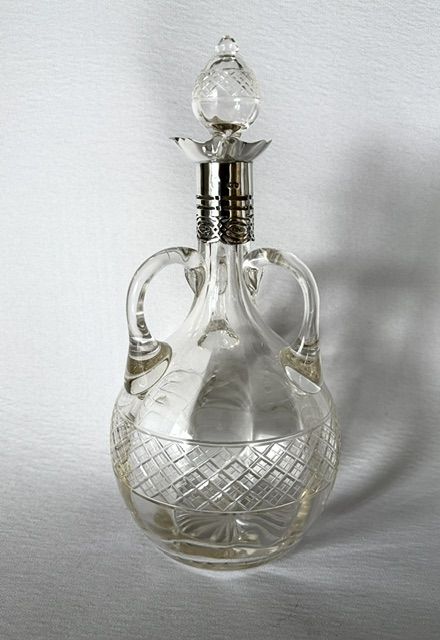
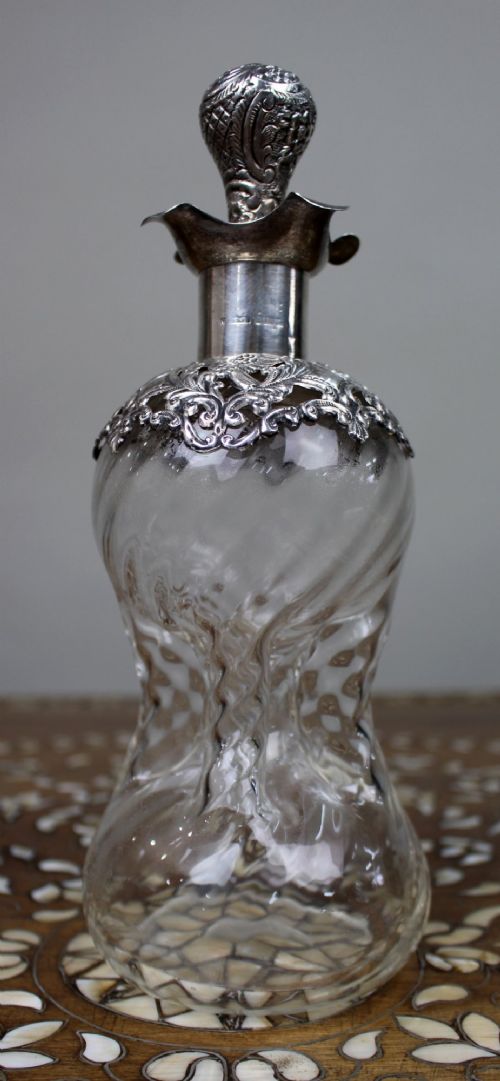
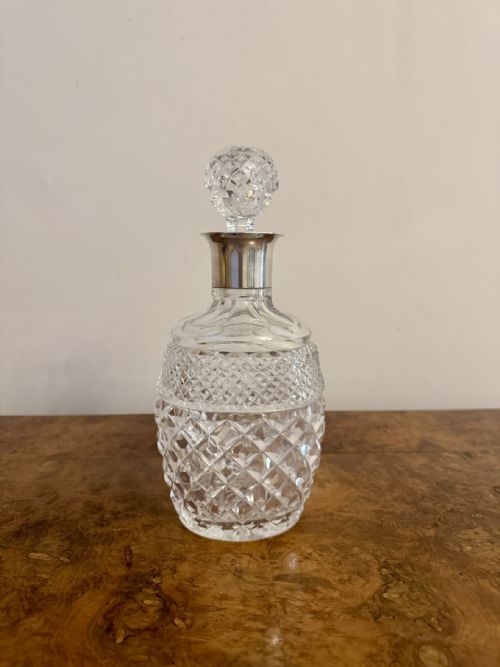
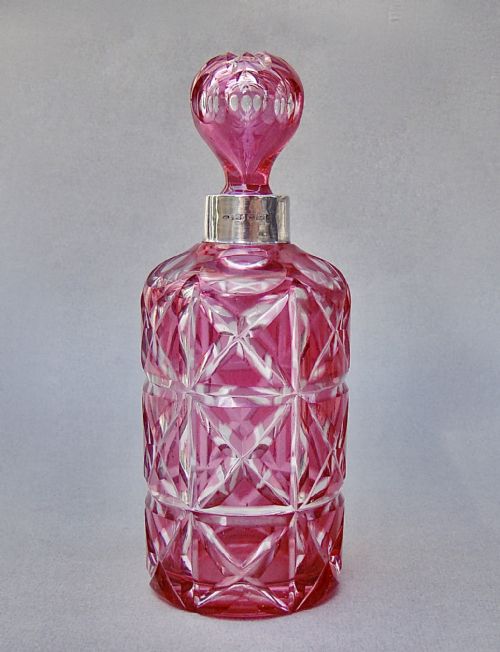
A silver collar glass bottle brings together heavy faceted crystal and gleaming hallmarked metal for your table or dressing surface.
Silver Collar Glass Bottle
A silver collar glass bottle serves primarily as a decanter for spirits like whisky, port, and brandy, or as a small vessel for perfume and scent. When you search for a silver collar glass bottle, you encounter various forms ranging from large spirit decanters and whisky noggins to globular perfume bottles and small scent phials. The pieces on this page span the Victorian, Edwardian, and Art Deco periods, alongside later mid-century examples.
The styles shift from traditional Victorian and Edwardian designs to distinct Arts and Crafts, Art Nouveau, and Art Deco movements. Makers apply sterling silver, silver gilt, and silver plate to materials such as cut glass, cut crystal, cranberry glass, and blue glass. English workshops produced many of these items, alongside pieces originating from makers in continental locations.
Materials and construction
Makers formed the vessels using blown and moulded glass, frequently enhancing them through deep cutting, floral etching, or faceted crystal patterns. Artisans then fitted these glass bodies with secure collars, mounts, and stoppers made from sterling silver, silver gilt, or silver plate.
Makers incorporated functional locking mechanisms on specific spirit decanters to secure the contents, while others attached figurine tops or matching spirit labels. Hallmarks stamped directly onto the silver metal components record the assay office, date letter, and maker's mark.
Listings feature Edwardian, Victorian, and Art Deco periods alongside materials including cut crystal, sterling silver, and silver gilt.
Judging quality in silver collar glass bottles
Quality rests in the weight and clarity of the glass, whether standard glass or heavy cut crystal, matched with the substantial thickness of the silver collar. Pieces displaying crisp wheel-cut flutes, intricate floral etching, and well-preserved hallmarks demonstrate superior workshop execution.
The integration between the glass neck and the metal mount determines structural success. Master silversmiths and established firms achieved tighter fits and cleaner joins than lesser workshops, while specialised additions like locking devices or silver gilt surfaces elevate the standard of the piece.
Harold Bushell & Co·Hukin & Heath Ltd·Archibald Knox for Liberty·Barnsley & Co·Freeman & Son Ltd·Mappin & Webb
The Silver Collar Glass Bottle Glossary
- Hallmark
- A series of official marks stamped onto silver items to indicate purity, the maker, the assay office, and the year of production. These stamps provide the primary method for dating English silver mounted bottles.
- Whisky Noggin
- A small spirit decanter designed for a single measure of whisky, frequently paired with a matching silver label. They appeared commonly during the Edwardian period.
- Silver Gilt
- Silver that has been coated with a thin layer of gold on its surface. This technique provides a warm, golden appearance while retaining a silver base.
- Cut Crystal
- Glass containing lead oxide, which increases weight, brilliance, and clarity, shaped through wheel-cutting techniques. It catches light more effectively than standard pressed glass.
Silver Collar Glass Bottle: Frequently Asked Questions
How do I date a silver collar glass bottle?
You date these items by examining the hallmarks stamped onto the metal collar. These official marks include a maker's mark, a standard purity mark, an assay office symbol, and a date letter.
Comparing the letter against standard assay office tables reveals the exact year of manufacture. Stylistic indicators like Edwardian cut patterns or Art Deco geometry offer secondary clues when hallmarks are rubbed.
What were whisky noggins used for?
Whisky noggins served as individual serving decanters during the late Victorian and Edwardian eras. A host used them to hold a single measure of spirit at the dining table.
They frequently accompanied a matching silver label and a small silver-mounted handle or pourer for ease of use.
How do I clean a silver collar glass bottle?
Clean the glass body using warm water and a mild detergent, avoiding abrasive cloths that might scratch the surface. Use a soft silver cloth specifically on the metal collar.
Take care to prevent polish from entering the interior of the bottle or lodging against the join where the silver meets the glass.
Are stoppers original to the bottle?
Many surviving decanters retain their original stoppers, often ground to fit the specific neck of that glass body. You can check originality by examining the number matching scratched on both the base and the stopper.
Replacements remain common due to breakage over the decades, so checking the fit and glass colour helps determine if a stopper is a later match.