

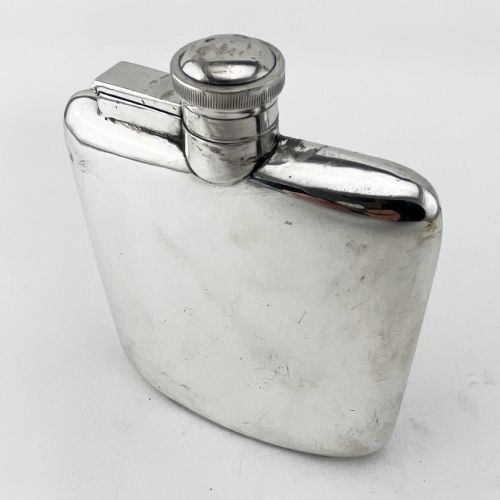


English Sterling Silver Flask
An english sterling silver flask offers a pocket-sized container for spirits or scent, combining practical metalwork with period design.
English Sterling Silver Flask
An english sterling silver flask encompasses portable vessels designed for spirits, liquor, and perfume, spanning the Victorian, Edwardian, and Art Deco eras. Collectors encounter plain silver bodies, hammered finishes, and combination pieces pairing metal with glass or exotic skins.
The primary forms on this page include curved pocket hip flasks for spirits and upright bottles for scent or liquor. These items frequently connect to traditional pursuits such as hunting, shooting, and travelling.
Makers produced these containers in various dimensions, from miniature pocket sizes to large capacity vessels. Surviving examples demonstrate the shift from ornate Victorian decoration to streamlined Art Deco geometry.
How They Were Made
Silversmiths constructed the bodies using sterling silver sheet, often shaping them to fit a pocket or coat curve. Components like flip tops, screw caps, and captive cork stoppers were soldered in place to ensure liquid containment.
Many examples combine metal with cut glass, overlay glass, or crocodile and alligator skin wrapped around a central core. Specialised decorative techniques such as hammering, chasing, and enamel work added texture and visual contrast to the metal surfaces.
Listings feature sterling silver, cut glass, crocodile skin, enamel, and overlay glass across periods from the late Victorian era through the Art Deco decade.
What Varies in Quality
Quality rests in the gauge of the silver, the crispness of maker marks, and the precision of mechanical elements like hinges and screw caps. Superior pieces maintain tight closures and retain their original interior gilding without structural thinning.
The integration of secondary materials dictates overall refinement, where fitted leather cases, unblemished cut glass, and intact animal skins elevate the piece. Maker attribution to notable firms also distinguishes standard utilitarian items from exceptional commissions.
Asprey London·William Neale·JB Chatterley and Sons·Barnsley and Co·Mappin and Webb
The English Sterling Silver Flask Glossary
- Sterling silver
- An alloy consisting of 92.5 percent silver by mass and 7.5 percent other metals, usually copper. This standard composition provides the durability required for portable containers.
- Flip top
- A hinged lid mechanism that opens quickly with a thumbpiece. This design allows rapid access to the contents during outdoor pursuits.
- Cut glass
- Glass decorated by cutting facets or patterns into the surface using a rotating wheel. It frequently forms the body of combination flasks to reveal the liquid inside.
- Overlay glass
- Glass vessels featuring an outer layer of coloured glass partially cut away to expose a contrasting interior layer. This technique creates a layered decorative motif beneath silver mounts.
- Hallmark
- A series of official marks stamped on items to indicate the metal standard, assay office, maker, and year of production. These stamps provide verifiable historical context.
English Sterling Silver Flask: Frequently Asked Questions
How do I use a pocket flask?
These vessels suit carrying spirits or liquor for outdoor pursuits like walking or shooting. Modern users should check the seal and cork before filling.
Ensure you empty and dry the interior thoroughly after use to preserve the metal and any internal soldering.
Why do some flasks have glass bodies?
Glass bodies allowed the owner to monitor the remaining volume of liquor at a glance. They also prevented metallic tastes from lingering in certain spirits over extended periods.
Makers often encased these glass inserts in silver mesh or leather to protect the fragile material during travel.
How do I date an antique flask?
Dating relies primarily on the stamped hallmarks, which record the assay office and a specific date letter for the year of manufacture. Stylistic indicators like Edwardian proportions or Art Deco geometry also help narrow the timeframe.
Matching the hallmarks against official registers yields the exact year the piece passed through the assay office.