


Silver Candle Snuffer
These silver candle snuffer examples span Georgian to Victorian eras, offering practical elegance for extinguishing flames and trimming wicks with period craftsmanship.

What silver candle snuffers are
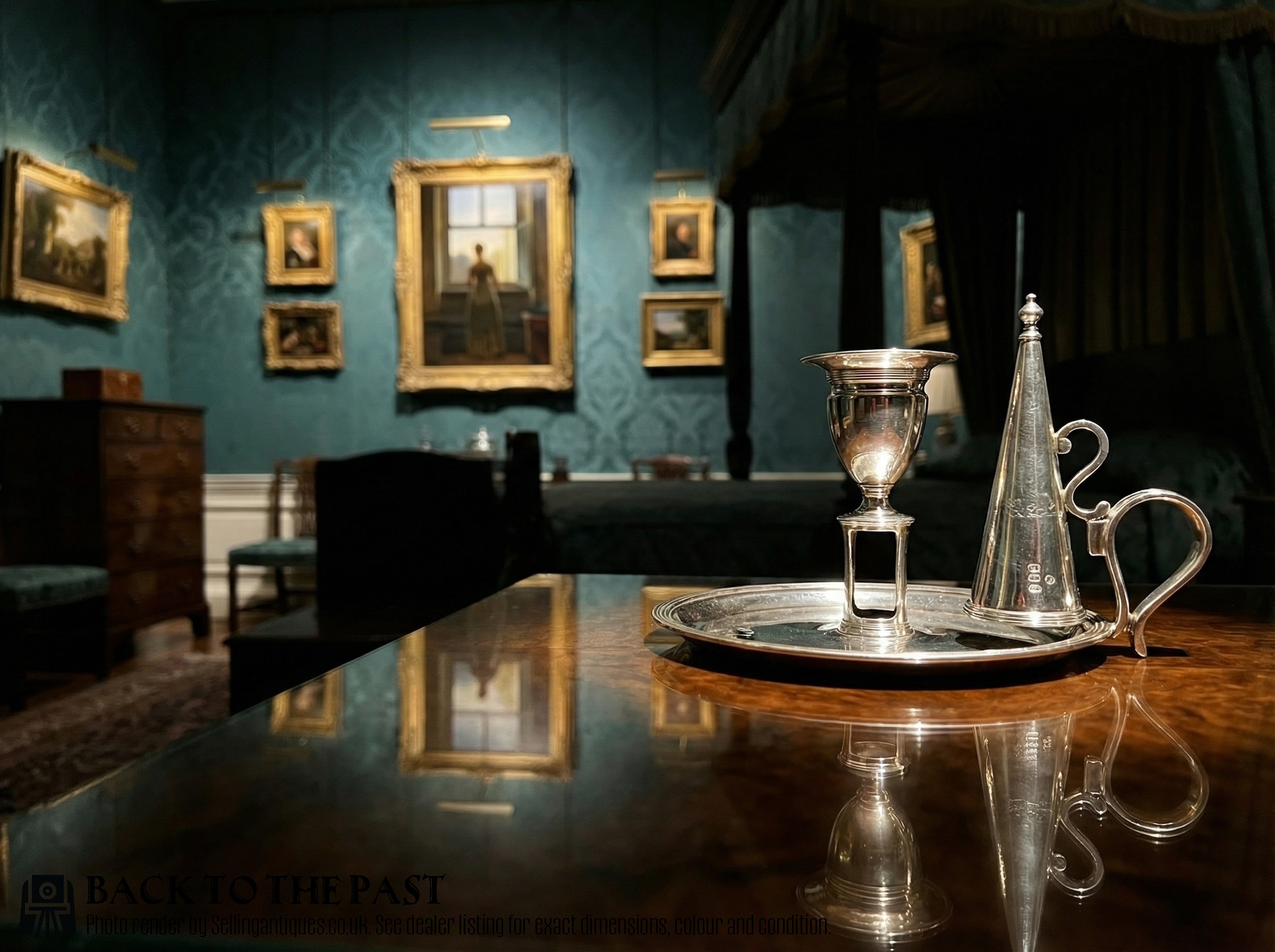
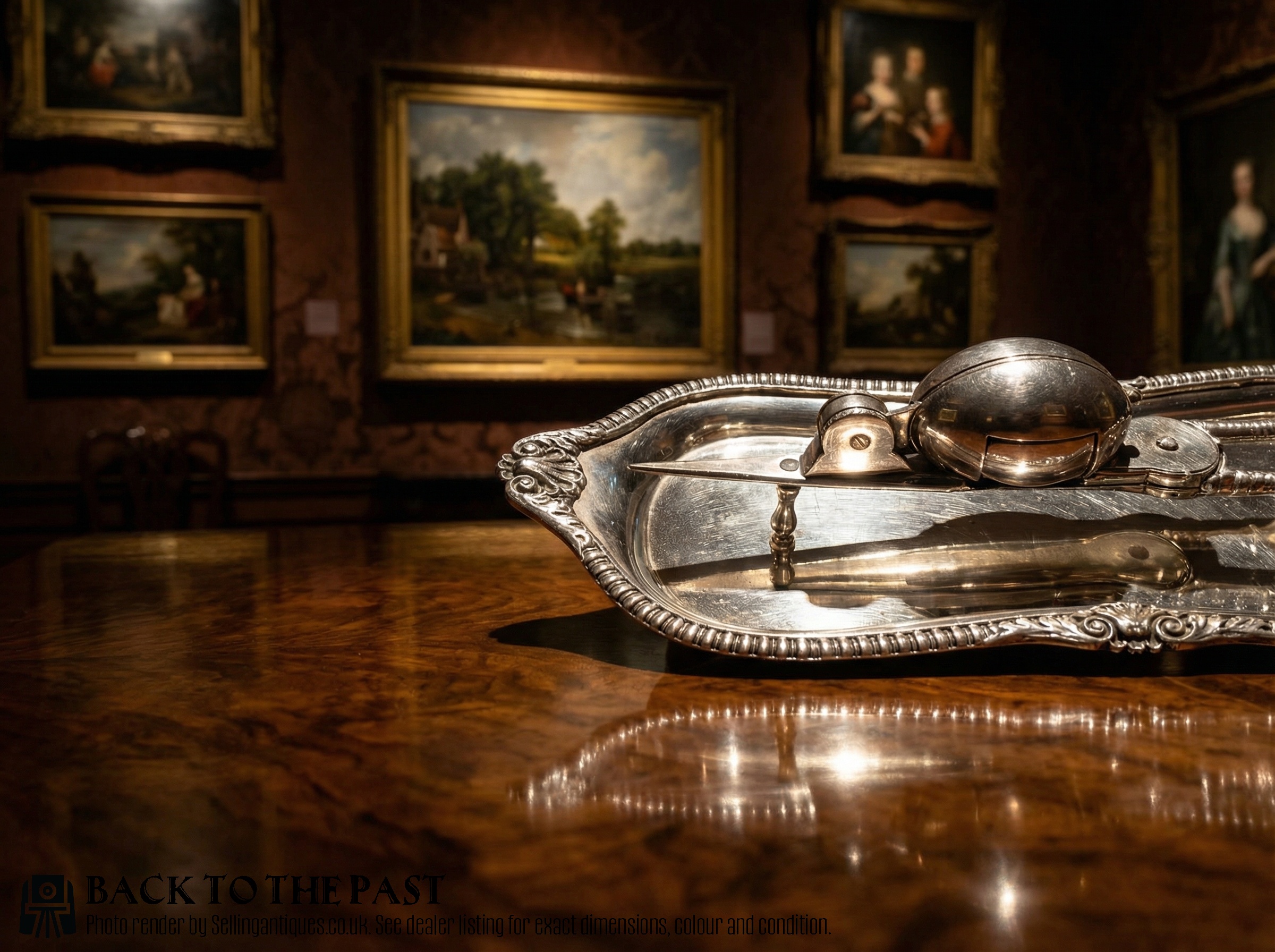
A silver candle snuffer serves the functional purpose of extinguishing flames and trimming wicks, often appearing alongside fitted trays or as part of chamberstick sets. These pieces range from simple scissor designs to mechanical spring action models, sometimes accompanied by matching stands.
The selections span the Georgian, 1800, and Victorian periods, with styles evolving from plain utility to decorative forms like hunting horns and trumpets. Sterling silver and silver plate both appear across the inventory, reflecting different tiers of historical domestic expenditure.
Buyers most frequently encounter scissor-style wick trimmers and chamberstick combinations dating through the nineteenth century. These objects demonstrate the historical necessity of maintaining cotton wicks before the invention of self-snuffing candles.
How they were made
Silversmiths constructed these tools primarily from sterling silver or silver plate, utilising techniques such as casting, hammering, and assembly for articulating scissor blades. Spring mechanisms and internal box boxes required precise metalworking skill to catch trimmed wick remnants cleanly.
Surface decoration involved chasing, engraving crests, and occasionally incorporating materials like baleen into handles. Hallmarks stamped directly onto the silver indicate assay office origins, dates, and maker marks for sterling examples.
Retail Price Guide 2026
Typical UK retail prices for silver candle snuffer, calculated from the Sellingantiques database of over a million retail prices indexed since 2003. This retail price guide relies exclusively on Sellingantiques data; no external sources or auction records are used, so the figures do not describe the wider market.
Listings feature sterling silver and silver plate materials across Georgian, 1800, and Victorian periods.
What varies in quality
Quality rests in the crispness of maker marks, the tautness of internal spring actions, and the integrity of hinges on scissor blades. Finer examples retain clear engraved crests and balanced weight in the hand.
The presence of a matching tray or an unusual form, such as a hunting horn or windmill, elevates the distinction of a piece. Silver plate items display longevity differently from solid sterling, depending on the preservation of the underlying base metal.
Sampson Mordan·John Emes·John Buckett
The Silver Candle Snuffer Glossary
- Wick trimmer
- A specialised scissor tool designed to cut cotton candle wicks cleanly before lighting or during burning. These often feature an attached box to catch the charred debris.
- Chamberstick
- A short portable candlestick fitted with a handle and a saucer base to catch melting wax. Many incorporate a small slot to hold a conical snuffer.
- Doubter
- An alternative term for a candle snuffer, traditionally used to describe a cap or extinguisher rather than scissor trimmers. They were designed to snuff the flame directly.
- Hallmark
- A series of official marks stamped on precious metal items in Britain, indicating the maker, purity of the silver, assay office, and year of testing.
- Silver plate
- A manufacturing method where a thin layer of silver is fused to a base metal core, such as copper or Britannia metal. This provided the appearance of solid silver at a lower production cost.
Frequently Asked Questions
How do you use a candle snuffer?
Scissors-style snuffers are placed over the burning wick to trim the charred top and extinguish the flame simultaneously. Conical snuffers simply place a cover over the flame to starve it of oxygen.
Using these tools prevents smoke and hot wax splatters associated with blowing out candles.
What is the difference between a snuffer and a trimmer?
Trimmers operate like scissors with a small box attached to catch the clipped wick. Snuffers generally refer to a cone on a handle that places over the flame without cutting the wick.
Many antique examples combine both functions in a single scissor mechanism.
Are these pieces made of solid silver?
Inventory pieces include both solid sterling silver and silver plate items. Sterling examples typically bear clear hallmarks indicating purity and origin.
Silver plate items utilise a base metal core covered with a thin layer of silver.
How do you clean antique silver?
Silver requires gentle cleaning with a specialised non-abrasive polish to preserve antique patinas and maker marks. Harsh scrubbing removes the delicate surface layer over time.
Regular soft dusting prevents heavy tarnish accumulation without wearing down engraved crests.