

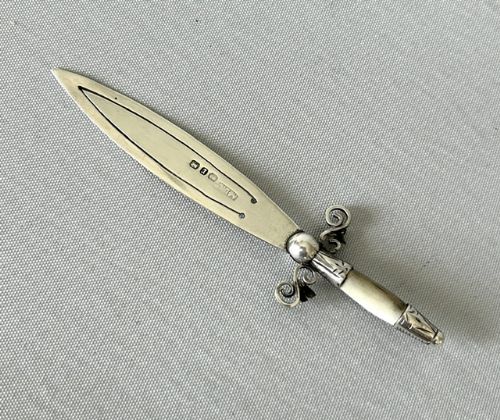


Silver Book Novelty
A silver book novelty satisfies the desk with miniatures, combining the weight of sterling silver and the wit of Victorian and Edwardian invention.
Silver Book Novelty
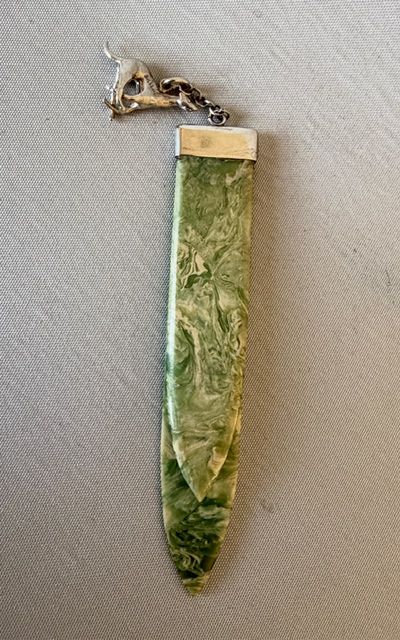
Most examples hail from the late nineteenth and early twentieth centuries, reflecting a Victorian penchant for whimsical desk furniture. Makers translated everyday objects into sterling silver, sometimes pairing the metal with leather, mother-of-pearl, agate, or bone. These items served both practical functions for readers and ornamental purposes in private libraries.
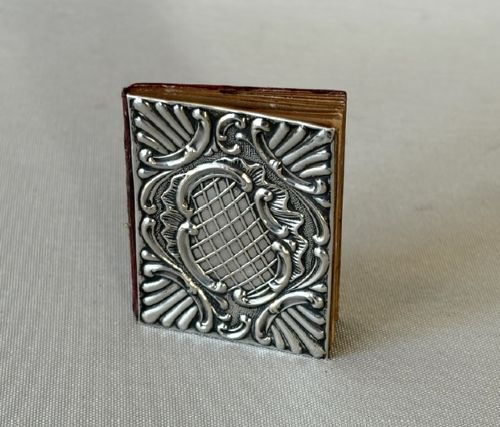
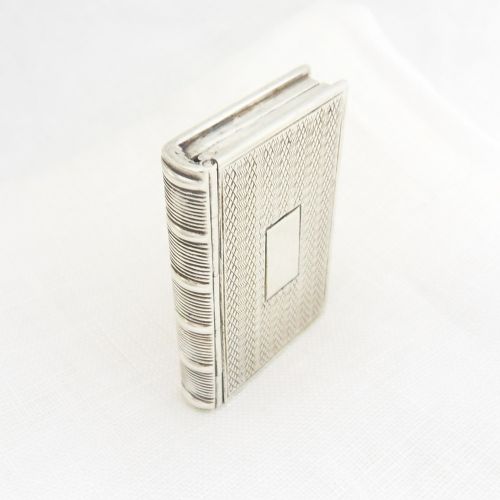
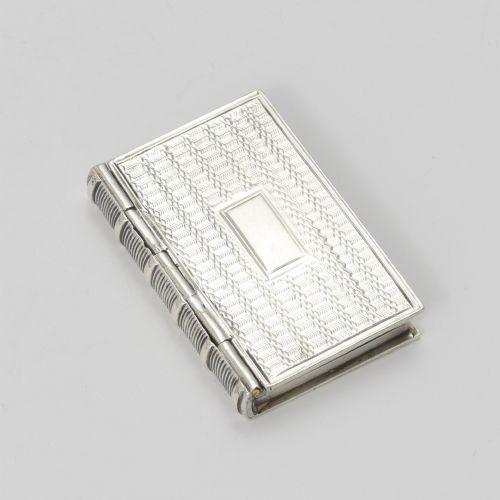
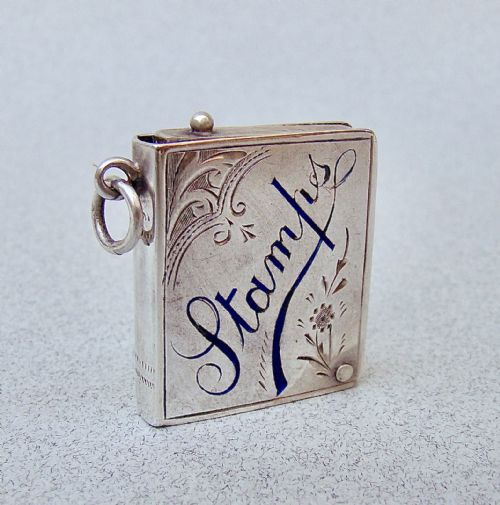
Forms extend beyond bookmarks to include vinaigrettes shaped as books and small pocket calendars mounted in silver. The grouping captures a specific British silversmithing tradition where utility met playful design. Each piece demonstrates how dense utility could be packed into a small portable format.
Materials and construction
Sterling silver forms the primary structural body of these items, often stamped or cast to mimic the covers and spines of real books. Silversmiths utilised hinges and clasps to secure internal elements like paper calendars or vinaigrette sponges. The metal was frequently marked with Birmingham hallmarks that record the year of manufacture.
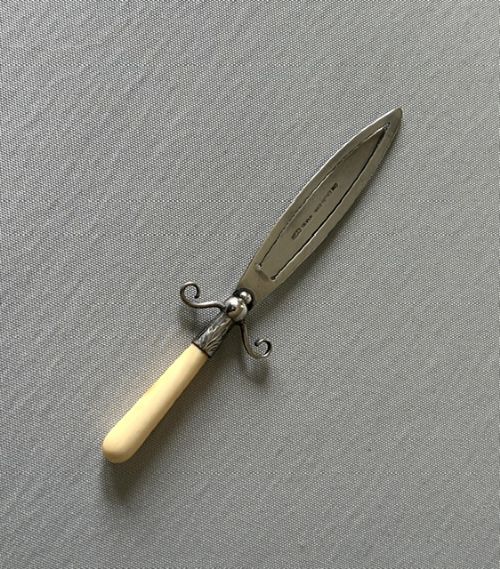
Natural materials such as mother-of-pearl, bone, agate, and ebony provide contrast to the sterling silver frames. Agate panels are polished smooth and set into silver bezels, while bone and mother-of-pearl form the flat blades of bookmarks. Leather and velvet occasionally line the interior compartments of stamp cases and pocket calendars.
Silver Book Novelty Retail Price Guide 2026
Typical asking prices for silver book novelty among the pieces listed under this phrase on Sellingantiques today, from the lower quarter to the upper quarter. They describe what is for sale here now, not the wider market.
Listings for silver book novelties span the Victorian, Edwardian, and George V periods, incorporating sterling silver, agate, and mother-of-pearl.
Judging the range
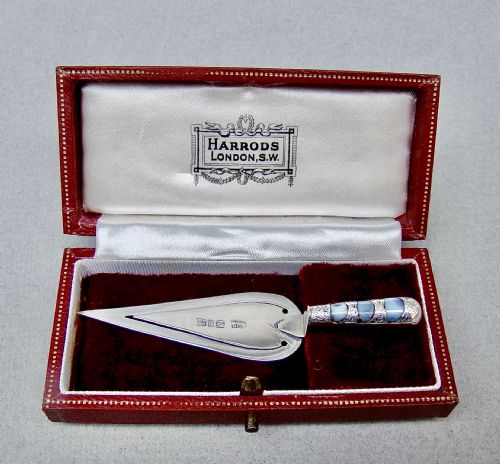
The distinction between standard production and superior work lies in the precision of the miniature detailing. Engraved lettering on book spines and crisp chasing on trowel blades indicate a higher grade of silversmithing. Simpler items rely on basic stamped sheet metal without hand-engraved embellishment.
Material selection alters the character of a piece significantly, with banded agate and mother-of-pearl elevating the visual richness above plain silver or bone. The crispness of the Birmingham assay office hallmarks and the smoothness of operating hinges separate the better workshops from mass output.
Joseph Moore·Taylor & Perry·Crisford & Norris
The Silver Book Novelty Glossary
- Vinaigrette
- A small decorative box containing a perforated grille, used to hold a sponge soaked in aromatic vinegar. These were frequently styled as miniature books during the William IV period.
- Trowel bookmark
- A specific form of page marker shaped like a garden trowel, often rendered in sterling silver with an agate or mother-of-pearl handle.
- Hallmark
- Official stamps applied to precious metals indicating the standard of silver, the assay office, and the date letter for the year of production.
- Page turner
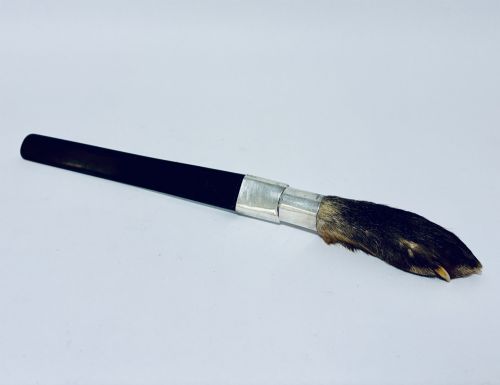
- A reading implement with a long flat blade of bone, horn, or silver mounted on a handle, designed for cutting and turning book pages.
Silver Book Novelty: Frequently Asked Questions
How were silver bookmarks used?
Silver bookmarks were slipped between the pages of a book to hold a reader's place, often featuring flat blades made of bone or mother-of-pearl to avoid damaging paper. Trowel-shaped variants allowed the user to slide the marker gently under bound leaves.
Beyond simple page marking, these items doubled as decorative desk accessories. Their miniature scale made them popular gifts among readers of the late nineteenth century.
What periods do these pieces come from?
The pieces seen here date predominantly from the nineteenth and twentieth centuries, spanning the Victorian, Edwardian, and George V periods. Hallmarks on the silver often point directly to Birmingham production years.
Earlier examples from the William IV era tend to focus on vinaigrettes shaped as tiny books. Later twentieth-century items continue the novelty tradition with animal motifs and pocket calendars.
How do I care for silver desk items?
Silver desk items require gentle cleaning with a soft cloth to maintain the polish on sterling silver surfaces without damaging inset materials like agate or velvet. Avoid harsh chemical dips that can ruin organic components such as bone and mother-of-pearl.
Store these pieces in dry environments to prevent tarnishing of the silver and degradation of internal paper or leather linings. Regular handling helps maintain a natural lustre on the metal.