
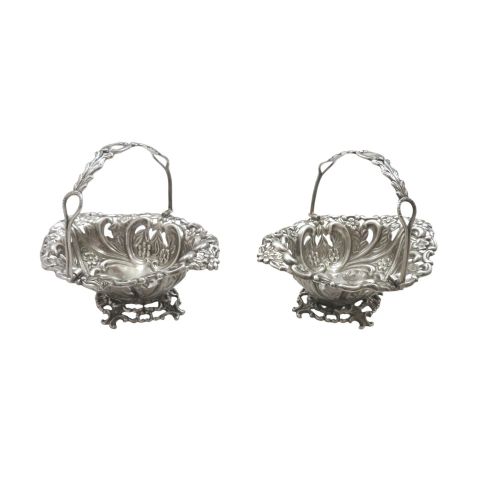
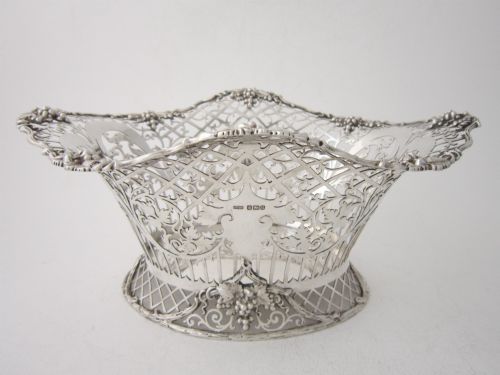
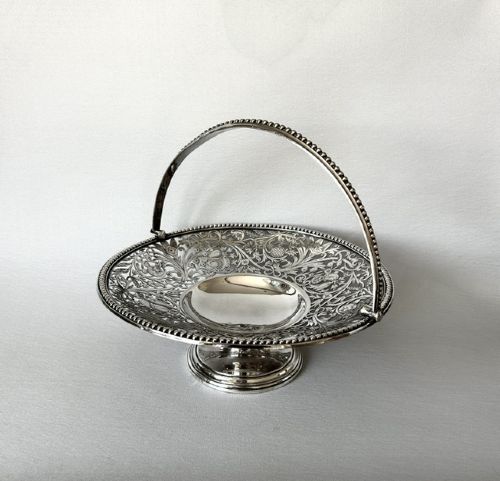
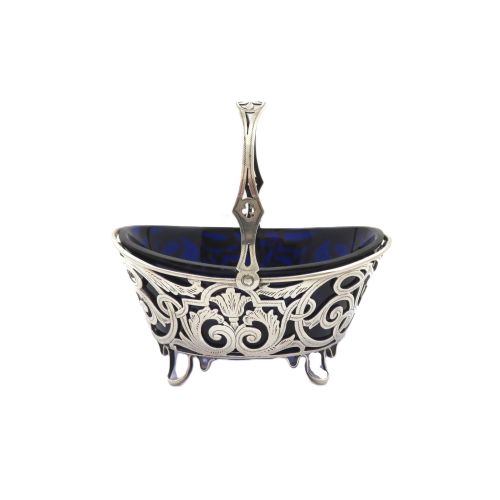
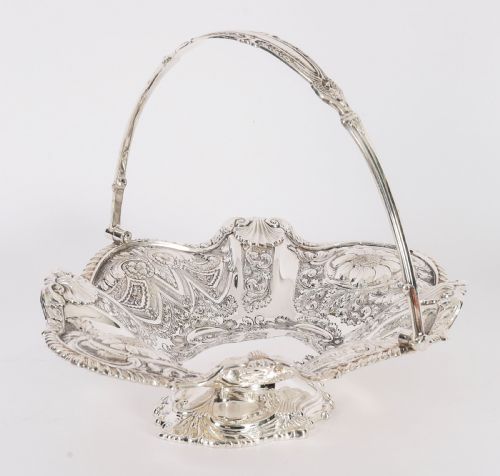
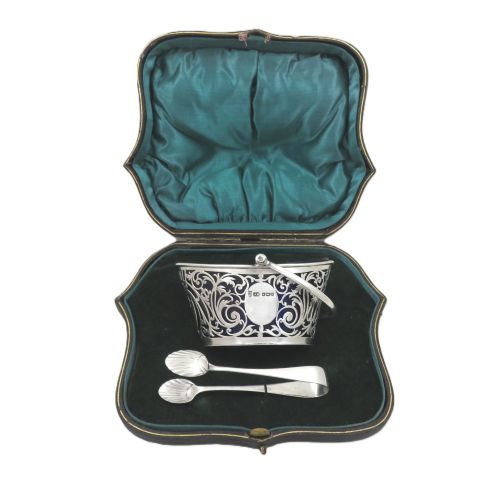
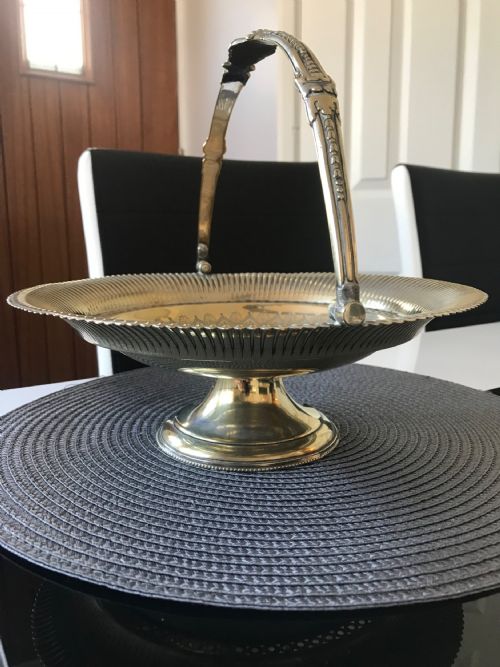
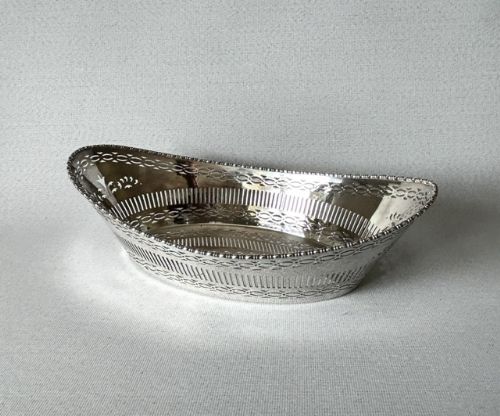
Silver Basket Dish
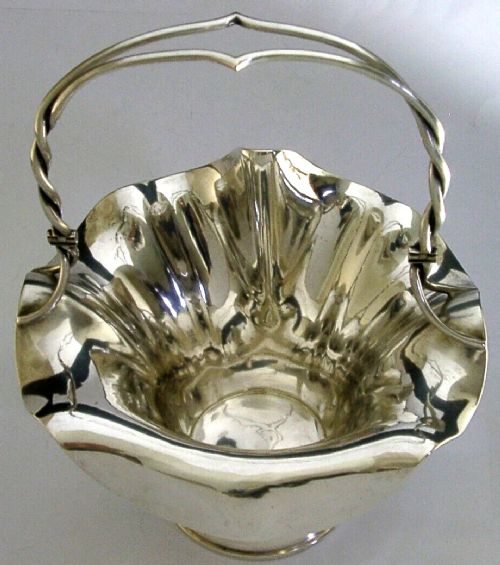
When you search for a silver basket dish, you are looking at items designed for sugar, fruit, bread, or sweets, spanning Georgian to Art Deco periods.
Silver Basket Dish
A silver basket dish is a hybrid form serving functions from sugar storage to fruit presentation, drawing on categories like sugar baskets, bonbon dishes, and bread baskets.
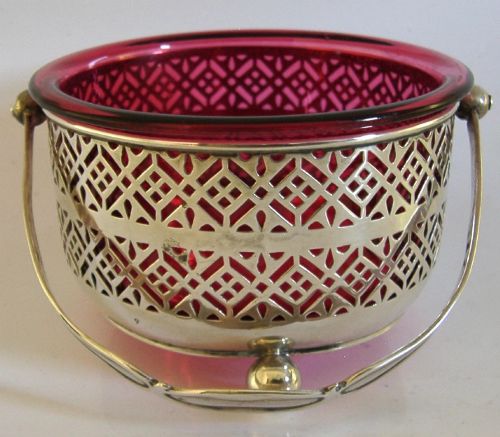
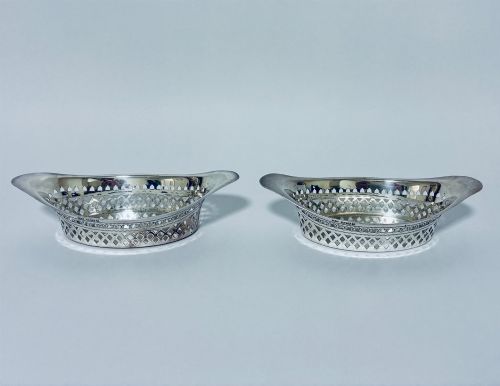
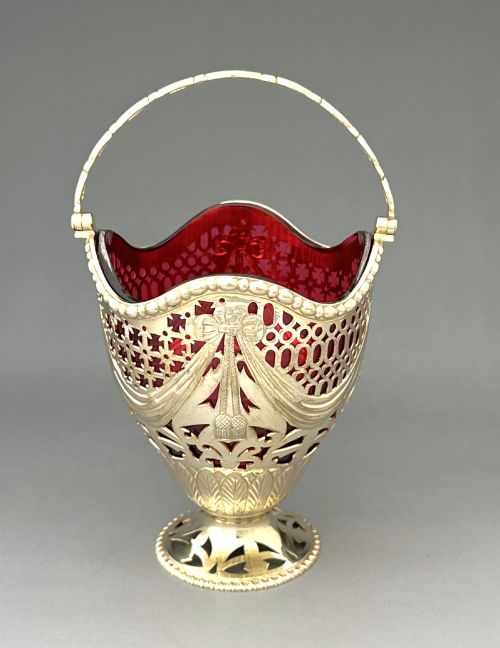
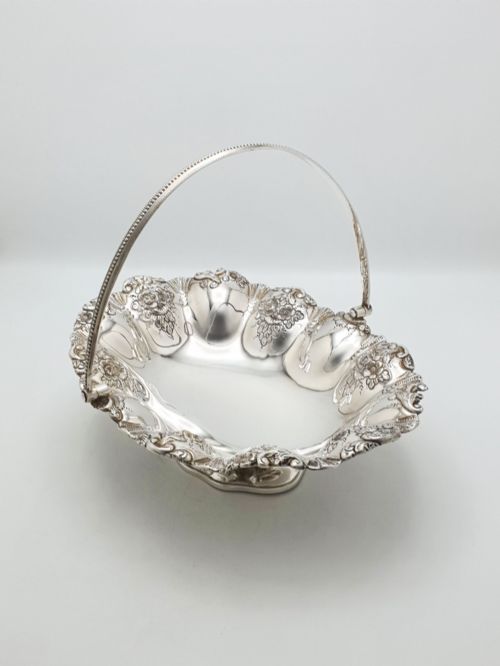
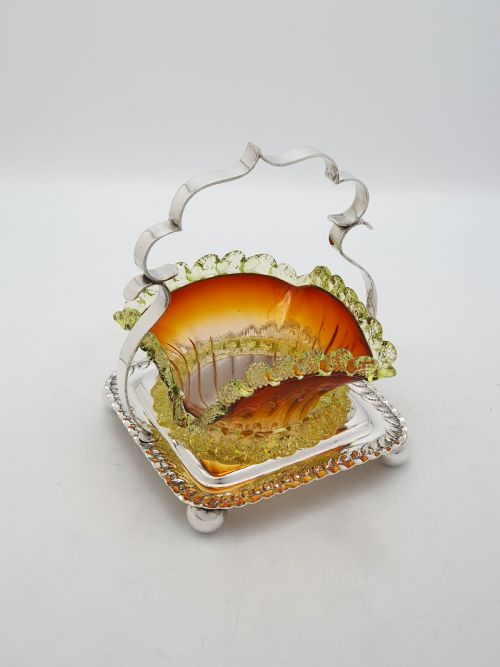
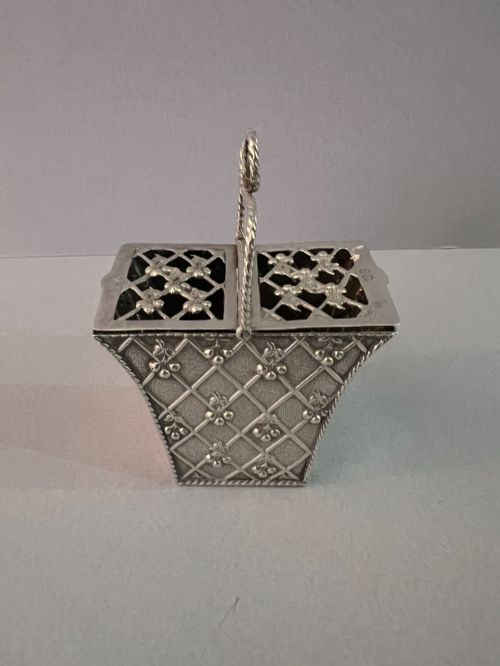
You will most frequently meet Edwardian and Victorian examples on this page, often featuring swing handles, pierced lattice work, or coloured glass liners.
The objects range from small sweetmeat vessels to large centrepieces and pedestals, crossing sterling silver, silver plate, and Old Sheffield Plate.
How they were made
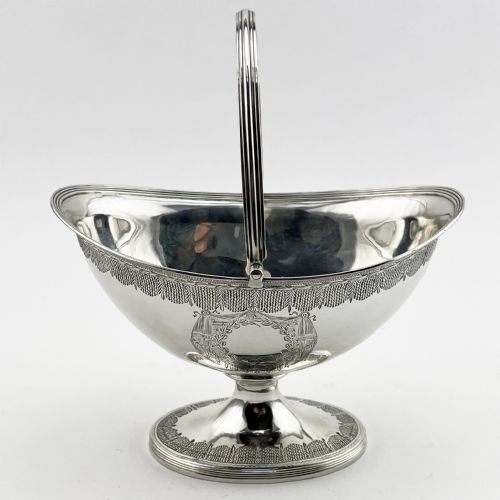
Silversmiths utilised sterling silver and silver plate, employing piercing, repoussé work, and engraving to ornament the metal walls.
Many designs incorporate removable glass liners in cranberry, ruby, amber, or vaseline glass, held within shaped wirework or pierced rims.
Swinging handles and pedestal bases were constructed with hinged joints and weighted feet to balance the shallow bowls.
Listings span from the 18th Century through the Georgian, Victorian, Edwardian, and Art Deco periods, incorporating copper, glass, and sterling silver.
What varies in quality
Quality rests on the crispness of the piercing and the weight of the metal, distinguishing heavy solid pieces from lighter plated items.
The integration of original coloured glass liners and the refinement of chased floral details elevate specific examples above standard production.
Maker attribution and structural integrity, particularly in the movement of swing handles and the balance of pedestal feet, define the upper tier.
George W. Scott And Sons Ltd·Mappin And Webb·Henry Chawner·Elkington·Walker And Hall·Thomas Bradbury·John Hunt·Fenton Brothers·Charles Stuart Harris·Leuchars·Woodside Sterling Co.
The Silver Basket Dish Glossary
- Bonbon dish
- A small vessel intended for holding sweets or small confectionery. These often appear in matched pairs.
- Pierced
- A technique where metal is cut through to create openwork patterns and lattices. This reduces weight while adding visual lightness.
- Old Sheffield plate
- A composite material made by fusing a thin sheet of silver to a thicker copper base. It is associated with 18th and early 19th-century manufacturing.
- Swing handle
- A movable arched handle attached to the rim by pivots. It allows easier access to the contents of the bowl.
- Repoussé
- Metalworking hammered from the reverse side to form raised decorative designs in relief. Floral motifs are common on these rims.
Silver Basket Dish: Frequently Asked Questions
What were silver basket dishes used for originally?
These vessels held sugar lumps, sweetmeats, bread, or fruit on formal dining tables and sideboards. Their specific depth and inclusion of handles dictated whether they served dry goods or items requiring glass liners.
Over time, changing dining customs shifted their primary usage from functional service to decorative display within the home.
How do I tell sterling silver from silver plate?
Sterling items carry hallmarks indicating the standard of silver purity, including assay office marks and date letters. Silver plate pieces typically show marks related to manufacturing firms or use alternate terms like EPNS.
Examining the wear points can also reveal the underlying base metal, such as copper showing through thin plating on older items.
Are glass liners original to the baskets?
Liners were manufactured to fit the exact contours of the pierced or wirework baskets they accompanied. An original liner sits flush within the rim without excessive movement or gaps.
Colour variations such as cranberry, vaseline, and ruby glass help date the piece to specific late Victorian and Edwardian production periods.
How should I clean my silver basket dish?
Use a soft cloth and a gentle, non-abrasive silver polish formulated to remove tarnish without harming engraved or repoussé details. Avoid harsh scrubbing that can thin silver plate or damage applied finishes.
Glass liners should be removed and washed separately in warm soapy water before being dried and placed back into the metal frame.