


Signed French Landscape Painting
A signed french landscape painting brings the light and atmosphere of rural France directly into a room through the hand of an identified artist.
Signed French Landscape Painting
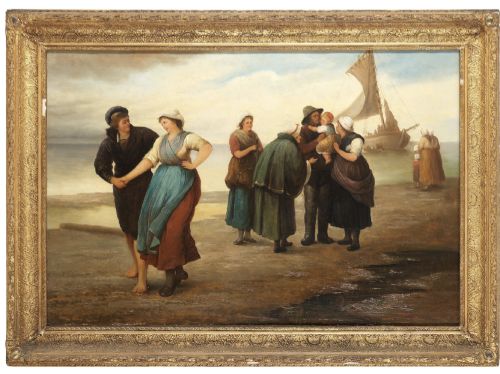
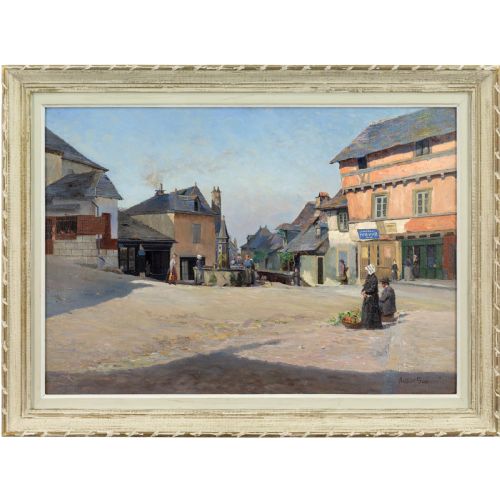
A signed french landscape painting represents rural, urban and coastal scenes executed by artists working within France across the nineteenth and twentieth centuries. Buyers seeking these works will encounter framed canvases, boards and watercolours bearing signatures from both established masters and regional painters.
The selection ranges from nineteenth century academic and Barbizon School compositions to impressionist, post-impressionist and mid-century modernist interpretations. Most pieces on this page are oil on canvas or watercolour on paper, often preserved in their original giltwood frames.
Materials and construction
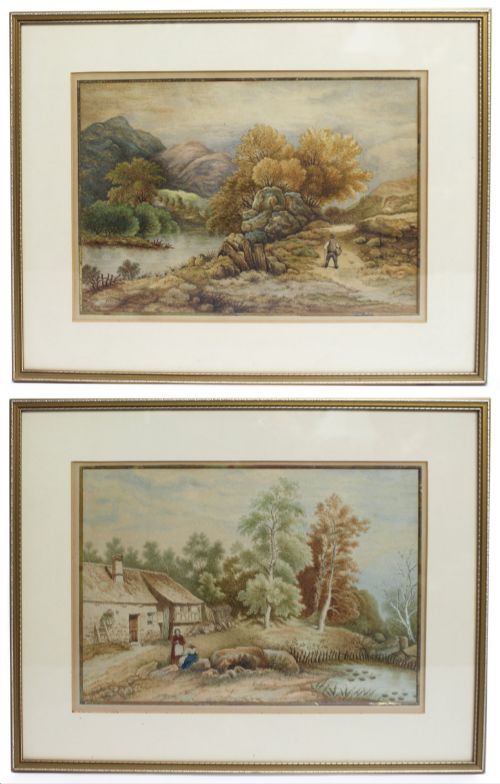
Artists painted primarily using oil paint on stretched canvas or wooden board, applying pigment with brushes or palette knives to build texture and depth. Watercolours and inks on paper also appear frequently, capturing swift plein air impressions of trees, rivers and village squares.
Many works retain their period frames constructed from wood and finished with gilt or paint, which protect the edges of the canvas and complement the composition. The support materials range from heavy woven canvas to delicate paper sheets, each requiring specific conditions for long-term preservation.
Signed French Landscape Painting Retail Price Guide 2026
Typical asking prices for signed french landscape painting among the pieces listed under this phrase on Sellingantiques today, from the lower quarter to the upper quarter. They describe what is for sale here now, not the wider market.
One wartime Parisian view captures the resilient spirit of the French resistance through the eyes of a female artist.
Distinctions in execution
Quality in a signed french landscape painting rests upon the confidence of the brushwork and the artist's command of light, tone and atmospheric perspective. Superior examples demonstrate a deliberate handling of paint that creates convincing depth and movement within the natural setting.
The distinction also lies in the condition of the painted surface and the integrity of the original support, where minimal restoration and stable pigment adhesion elevate the standing of the work. Framing choices and legible signatures that tie the piece to a documented artistic milieu further separate standard decorative works from finer collector pieces.
Arthur Gué·Mercedes Legrand·Henri Joseph Harpignies·Paul Viry·Antoine Bouvard·Charles Jean Agard
The Signed French Landscape Painting Glossary
- Plein air
- Painting outdoors directly from nature to capture transient effects of light and weather. This practice was central to impressionist and post-impressionist landscape work.
- Barbizon School
- A mid-nineteenth century art movement centred around a French village that emphasised realistic, moody depictions of forest and rural landscapes.
- Giltwood
- Wood carved and coated with gold leaf or gold paint, commonly used for traditional picture frames during the nineteenth century.
- Post-Impressionism
- An artistic development following impressionism where painters explored emotional resonance and geometric structure rather than purely optical effects.
- Provenance
- The documented history of ownership of a work of art, which helps confirm authenticity and origin.
Signed French Landscape Painting: Frequently Asked Questions
How do I identify the signature?
Signatures typically appear in one of the lower corners of the canvas or paper, rendered in paint or ink. Comparing the handwriting and style to known examples helps confirm the artist's identity.
Faded signatures sometimes require raking light to read clearly. Consulting artist dictionaries and exhibition records assists in placing obscure names.
What periods are represented?
The available works span from the nineteenth century through the mid-twentieth century. This includes academic nineteenth-century pieces alongside modernist and impressionist interpretations.
Dates often derive from signatures, exhibition labels, or stylistic analysis. Mid-century modernist and wartime compositions also appear in the record.
How should I hang these paintings?
Keep paintings away from direct sunlight and strong heat sources to protect the canvas and pigments. Stable indoor humidity prevents the wooden stretcher bars and panels from warping.
Secure picture hooks rated for the weight of the frame should be fixed into solid wall anchors. Ensure the hanging height places the centre of the canvas at average eye level.
Are watercolours as durable as oils?
Watercolours on paper are more sensitive to light and moisture than oil paintings on canvas. They require framing under glass with acid-free mounts to prevent fading and paper degradation.
Oil paint forms a durable, flexible film that resists environmental shifts better than paper supports. Both mediums benefit from stable indoor conditions and careful handling.