
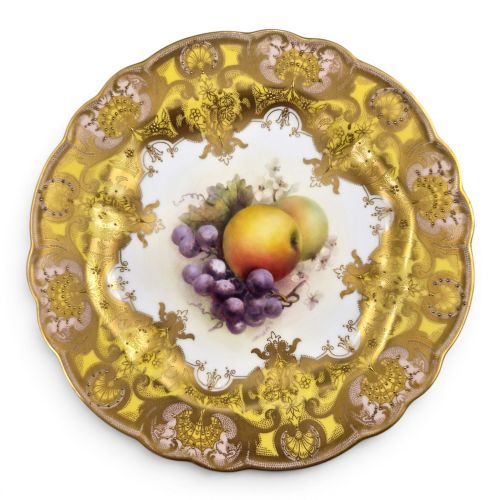
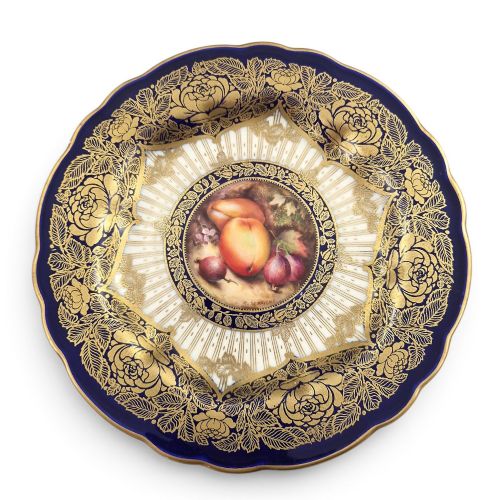
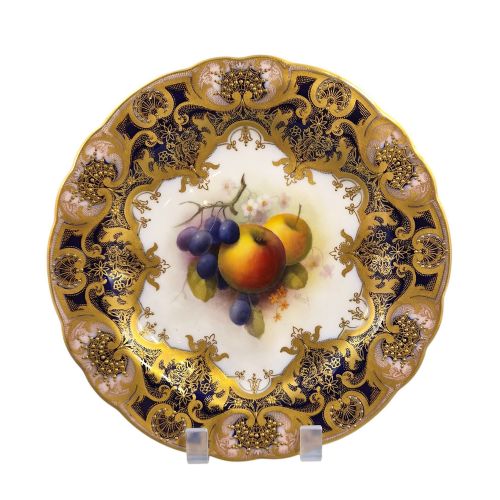
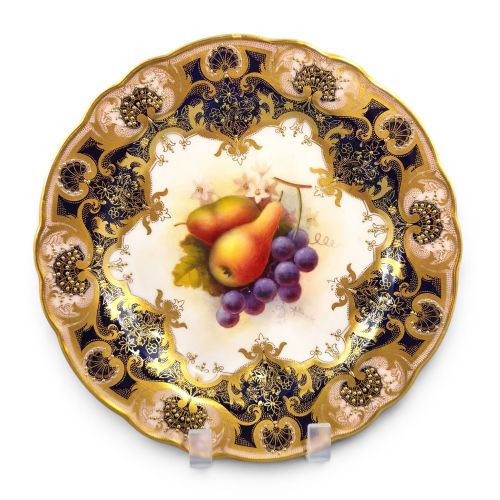
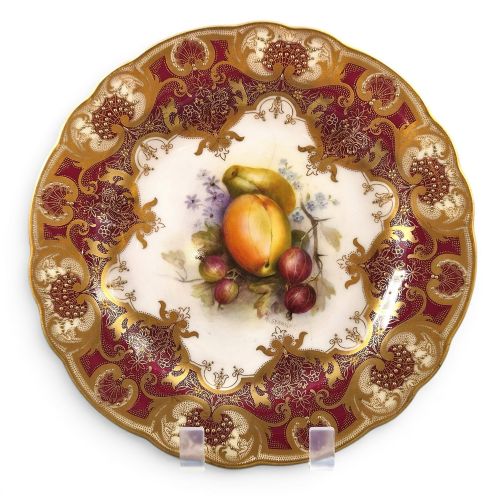
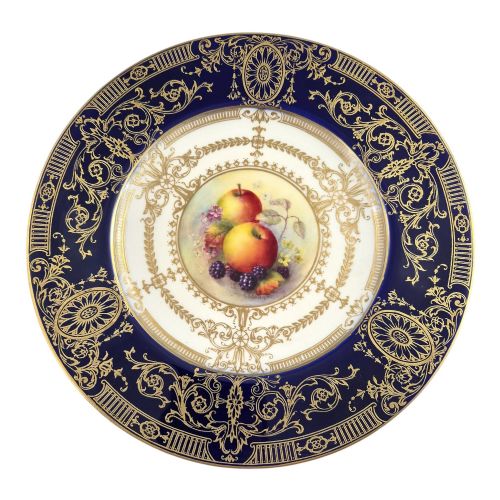
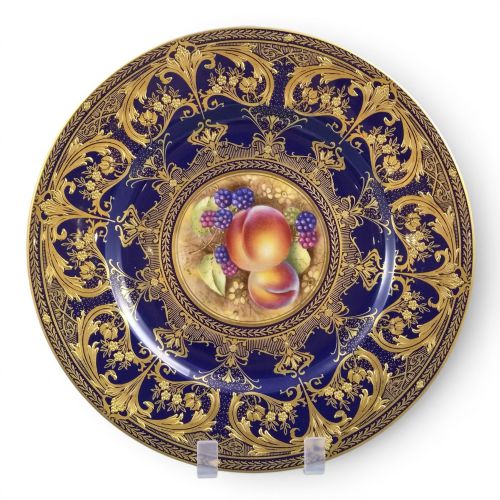
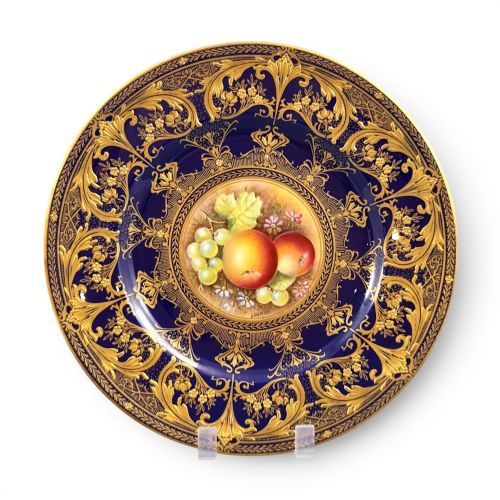


Signed English Porcelain Plate
These signed english porcelain plate examples bring hand painted artistry to the table, offering a glimpse into early twentieth century studio work.
Signed English Porcelain Plate
A signed english porcelain plate is a decorative or cabinet piece featuring hand painted fruit or floral motifs by named artists. You will most frequently encounter cabinet plates and decorative dishes originating from the Edwardian era through the mid twentieth century.
The pieces on this page span several decades, including George V and Art Deco styles alongside Edwardian and traditional English designs. Makers such as Royal Worcester dominate the selection, accompanied by Royal Crown Derby and Royal Doulton productions.
How They Were Made
Artisans formed these objects from porcelain and bone china, applying detailed enamel paint by hand across the surface. Many examples incorporate gold leaf, gilding, or gold leaf glaze to accent the borders and edges.
Individual artists painted the central fruit and floral scenes directly onto the ceramic body before a final glaze firing fixed the pigment. Some plates feature specialised moulding such as rope edge details around the rim.
The listings here feature porcelain and bone china decorated with enamel, gold leaf, and gilding across Edwardian and Art Deco styles.
What Varies in Quality
The distinction between standard production and superior work rests entirely on the skill of the painter and the complexity of the design. Plates attributed to renowned studio artists command greater interest due to the intricacy and realism of the fruit or floral composition.
The application of gold leaf and gilding also differentiates the range, with heavier, more burnished metallic accents indicating finer execution. The depth of the enamel palette and the crispness of moulding like rope edges contribute further to the distinction.
Royal Worcester·Royal Crown Derby·Royal Doulton
The Signed English Porcelain Plate Glossary
- Cabinet plate
- A decorative ceramic dish intended for display in a cabinet rather than for dining use. These often feature elaborate painted scenes.
- Bone china
- A type of porcelain incorporating animal bone ash, producing a durable ceramic body with a bright white colour. It allows for thinner walls while maintaining strength.
- Gilding
- The application of gold leaf or gold powder to the surface of a ceramic object. This technique highlights rims and decorative borders.
- Enamel
- A glass based pigment fused to the ceramic body during firing to create permanent coloured decoration. It provides rich hues for floral and fruit motifs.
Signed English Porcelain Plate: Frequently Asked Questions
What is a signed english porcelain plate?
A signed english porcelain plate is a decorative ceramic dish bearing the signature or mark of the artist who painted the central motif. These items focus on hand painted fruit and floral designs.
Most examples date from the Edwardian period onwards, representing traditional British ceramic production techniques.
How were these plates used?
These pieces served primarily as cabinet plates or decorative dishes for display within homes rather than for everyday dining. Their intricate painted surfaces required careful handling to preserve the enamel and gilding.
Collectors historically showcased them in dining rooms and parlours on specialised stands or wall mounts.
Who painted these porcelain plates?
Specialist studio artists working for major factories decorated these ceramics by hand. Names such as Richard Sebright, Albert Shuck, and Brian Leaman appear frequently on the pieces.
Each artist brought a distinct hand to the botanical and fruit studies that adorn the centre of the ceramic body.
How do I care for signed plates?
Display these items away from direct sunlight to prevent the enamel colours and gold leaf accents from fading over time. Dust them gently with a soft, dry cloth without using liquid cleaners.
Avoid washing them in dishwashers or submerging them in water, as moisture can damage the antique glaze and gilding.