





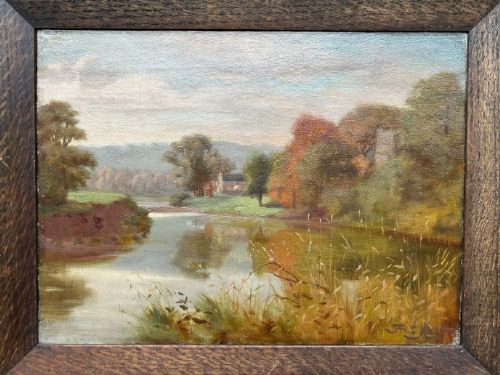
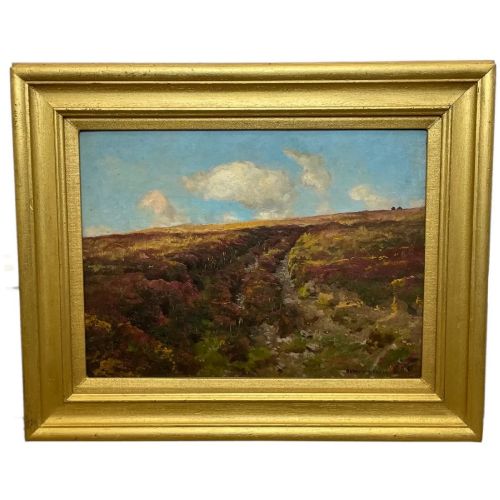
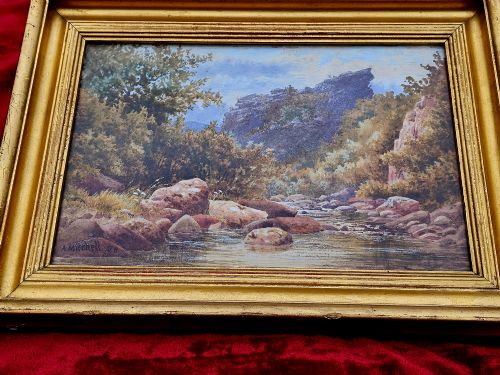
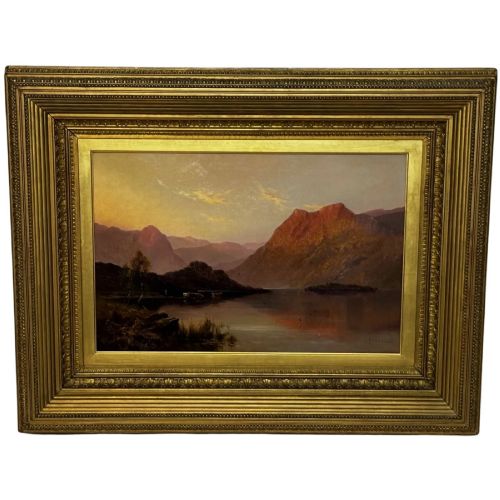

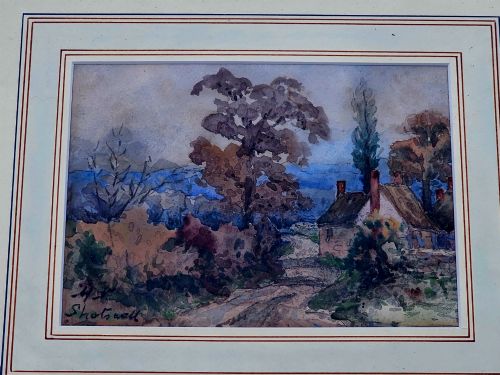
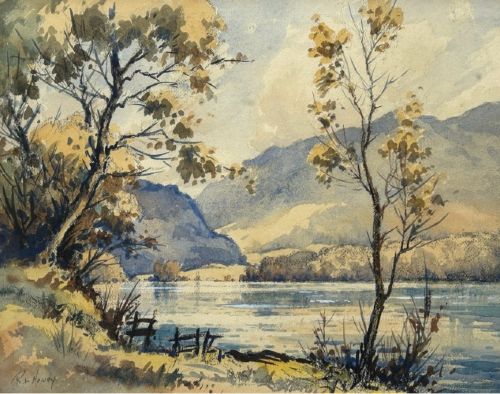
Signed British Landscape Art
Signed British landscape art captures regional topography, coastal harbours and pastoral scenes through the individual hand of known artists.
Signed British Landscape Art
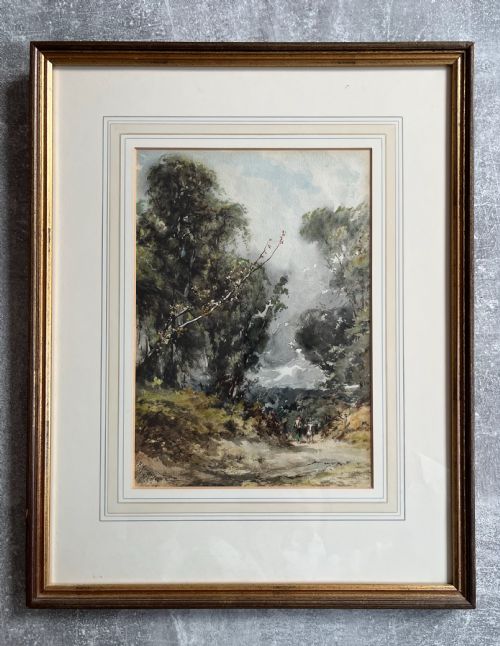
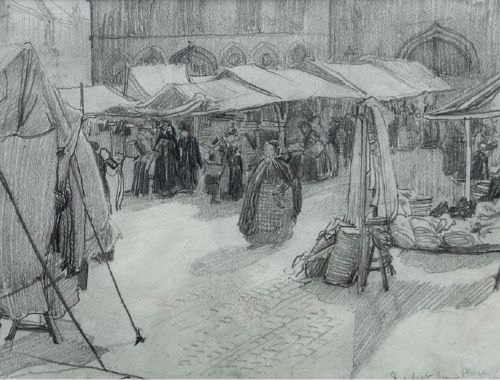
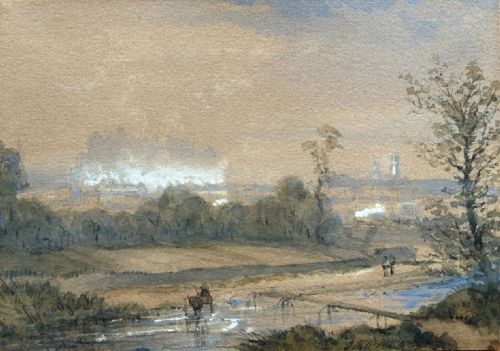
When searching for signed british landscape art, a buyer encounters original watercolours, oils and pencil drawings created across the nineteenth and twentieth centuries. The selection spans Victorian and Edwardian pastoral views through to early twentieth-century impressionism and mid-century regional watercolours.
Most pieces represent specific geographical locations across Britain, including Scottish highlands, Welsh river valleys, Cumbrian lakes and Cornish coastal harbours. These works range from intimate en plein air watercolours to substantial framed oil paintings on canvas and wood panel.
How They Were Made
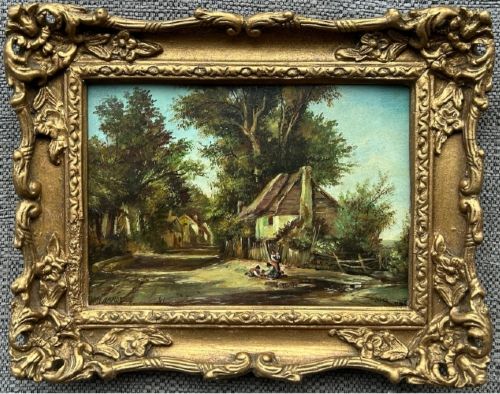
The works utilise traditional media including oil paint applied to canvas, wood panel or board, alongside watercolour pigment and gouache on paper. Artists employed varied brushwork, from smooth academic blending to energetic impasto techniques that build physical texture on the surface.
Support materials reflect the period of creation, with works framed under glass for watercolours and drawings, or presented in traditional gilt frames for oil paintings on canvas or board.
Listings feature paper, wood, canvas, glass and watercolour pigment across Victorian, Edwardian and Modern British styles.
What Varies in Quality
Quality separates through the artist's command of light, atmospheric perspective and spatial depth within the composition. Stronger examples demonstrate confident handling of medium, whether through fluid watercolour washes or decisive oil impasto.
Condition of the physical support and pigment stability also define the standard, alongside the presence of clear signatures, dates and identifiable regional subject matter.
George Fotherly Hargitt·James Orrock·Henry Percy Huggill·Tom Campbell·Arthur Wardle·Alfred Fontville de Breanski Jr·Sidney A Court·Robert Leslie Howey·William Banks Fortescue·Robert Morson Hughes·Thomas W Lascelles·William Joseph Boyes·Lucy Pratt·Bernard Benedict Hemy·John Bond·Alfred G Morgan·Russell Sidney Reeves·Vernon DeBeauvoir Ward·Herbert Dicksee·John Emms·H Stuart·Margaret Bernard·Horace Augustus Mummery·John Dobby Walker·John Arthur Dees
The Signed British Landscape Art Glossary
- Watercolour
- A paint consisting of colour suspended in a water-soluble vehicle, typically applied to paper supports.
- Impasto
- Paint applied thickly to a canvas or panel, leaving visible brush or palette knife marks that stand proud of the surface.
- En plein air
- The practice of painting outdoors to capture direct observations of natural light and atmosphere.
- Gouache
- An opaque watercolour paint that includes a white pigment filler, producing a heavier and more solid matte finish.
- Provenance
- The documented history and ownership trail of an artwork that establishes its authenticity.
Signed British Landscape Art: Frequently Asked Questions
What periods do these paintings cover?
The works span from the nineteenth century through the Edwardian era and into the mid-twentieth century. Artists captured changing British rural and coastal views across these decades.
Most pieces date from the late nineteenth century to the nineteen-sixties, reflecting distinct shifts in painting styles from traditional realism to early impressionism.
How do I identify the artist?
Signatures typically appear in the lower corners of the painted surface or paper. Many works also include inscriptions detailing the specific location.
Researching the recorded dates and exhibiting societies associated with the signature helps confirm the creator and period of execution.
Are these works original?
The listings feature original hand-painted watercolours, oils and drawings rather than mass-produced reproductions. Each piece represents a singular creation by the artist's hand.
Limited edition signed prints also appear occasionally, bearing individual numbering and pencil signatures from the printmaker.
How should I display framed watercolours?
Works on paper require protection from direct sunlight to prevent fading of watercolour pigments over time. Acid-free mounting keeps the paper stable within the frame.
Maintaining stable indoor humidity levels prevents warping of both the paper support and the wooden frame mouldings.