
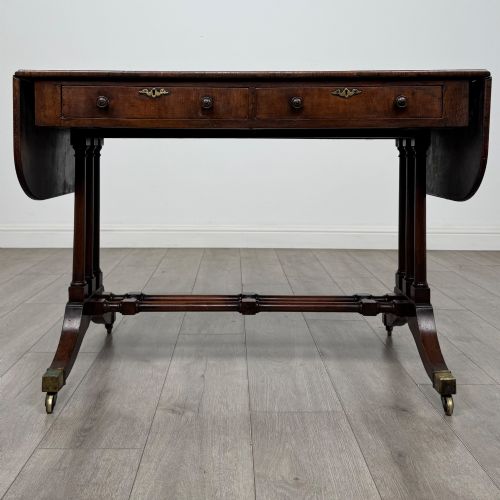
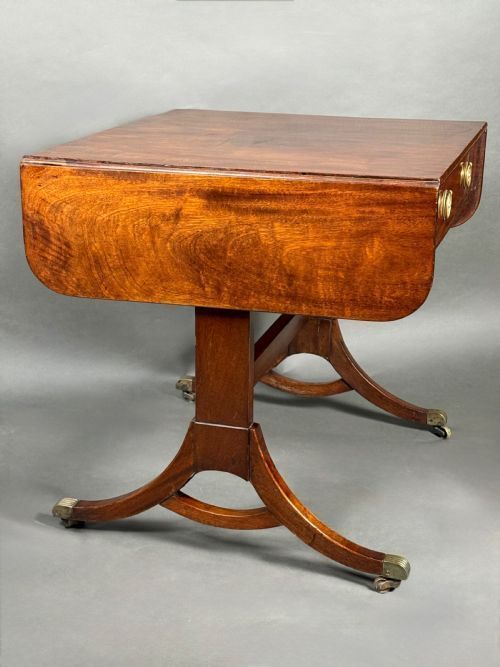
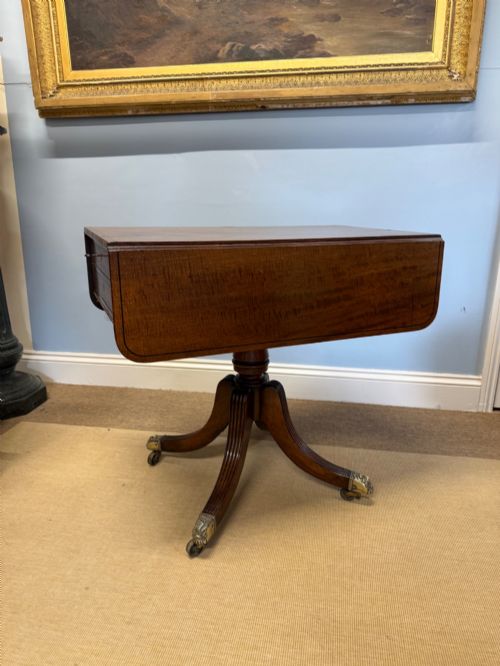
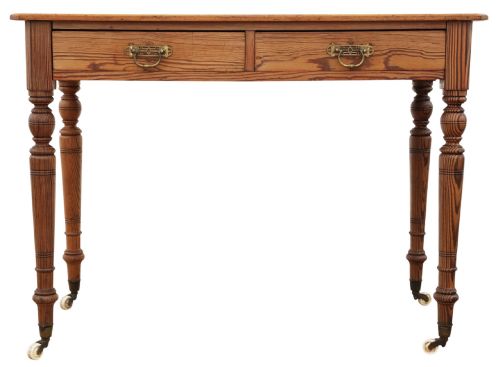
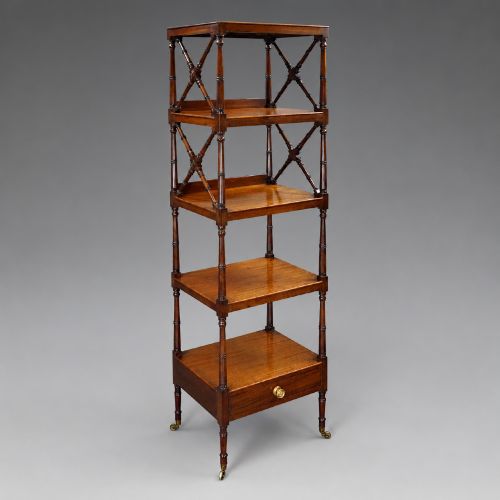
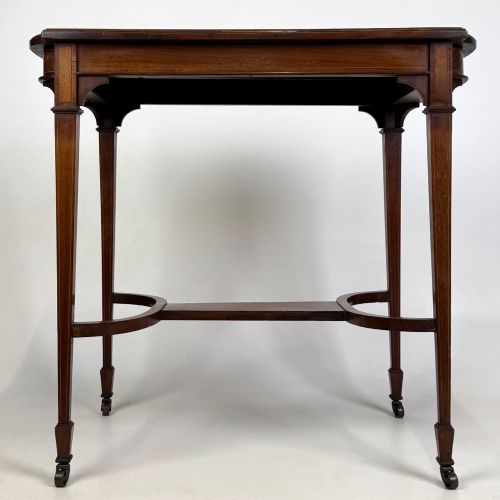
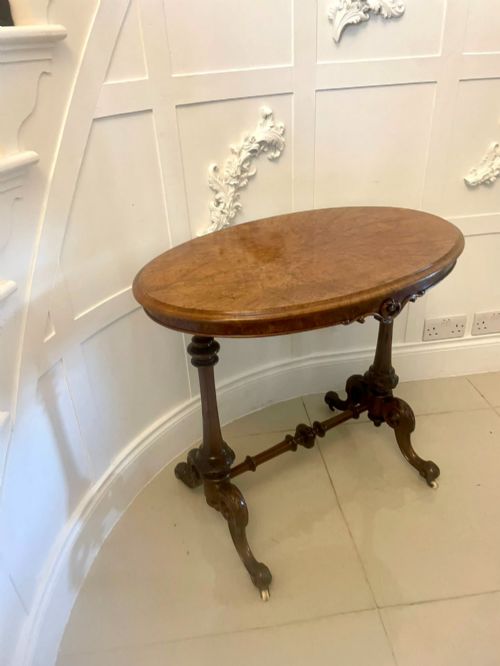
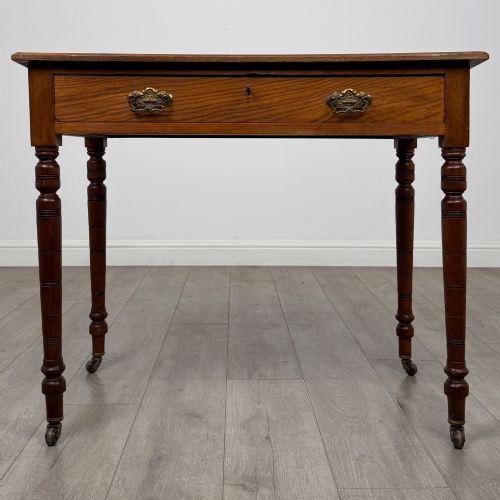
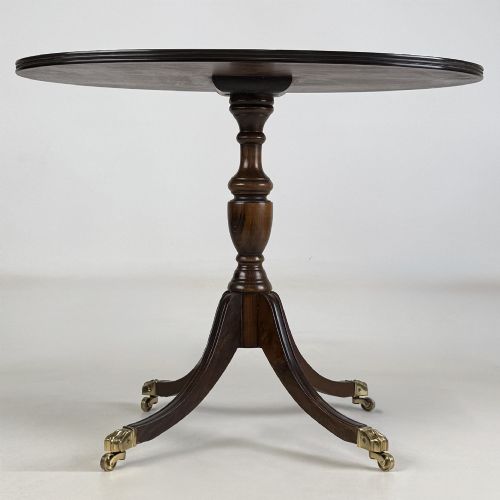
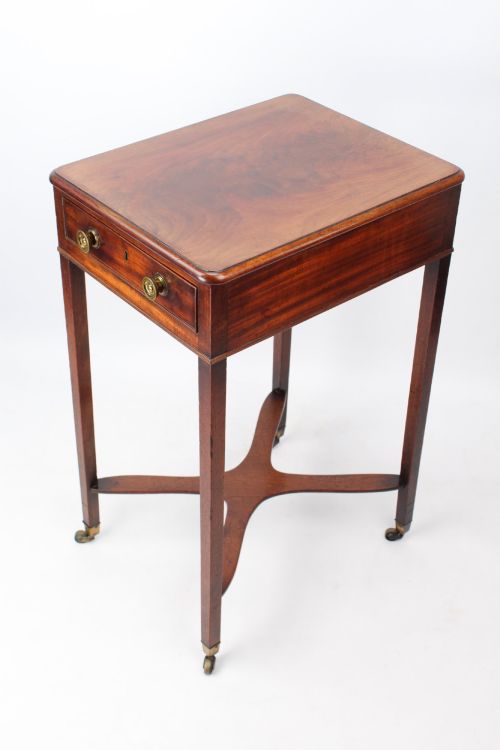
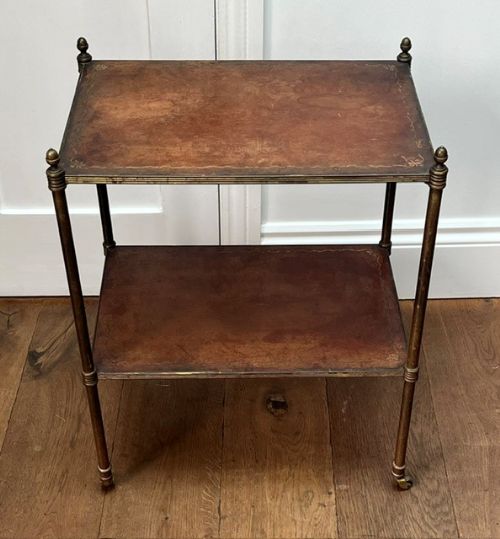
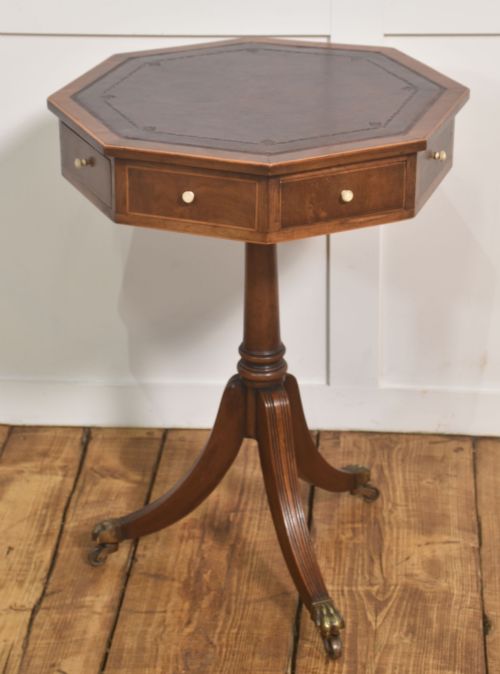
Side Table with Castors
A side table with castors provides a moveable surface, shifting easily between rooms for tea, reading or writing.
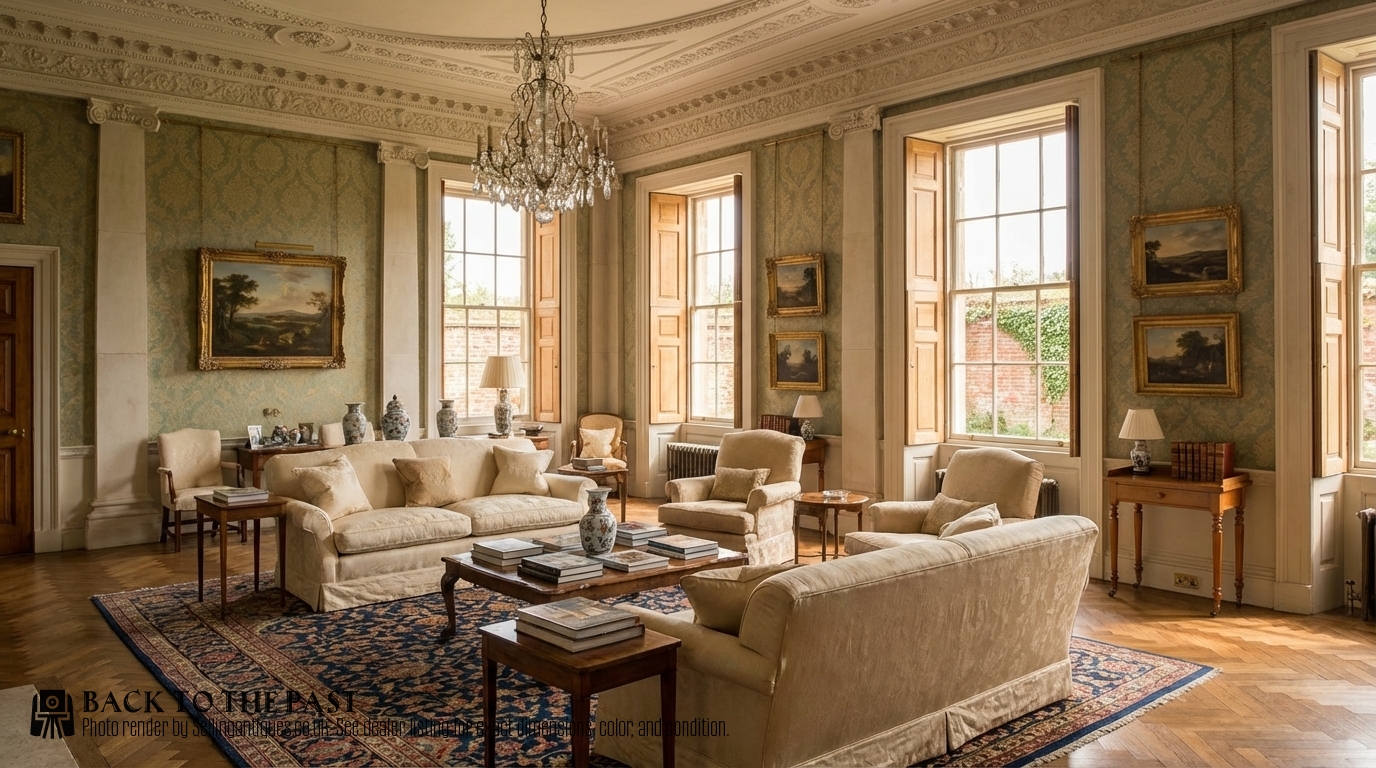
Side Table with Castors
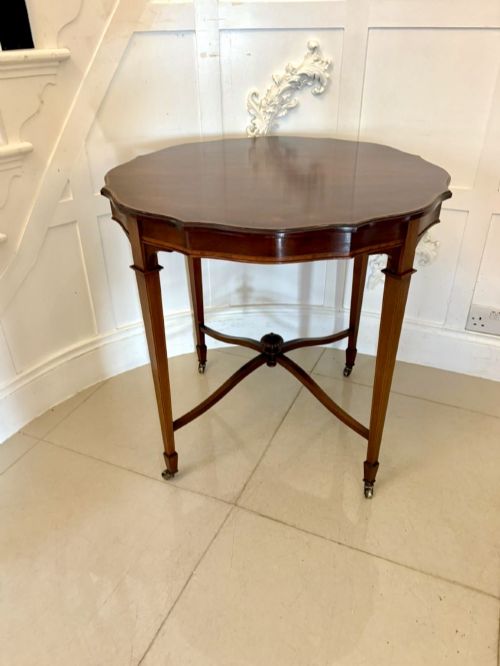
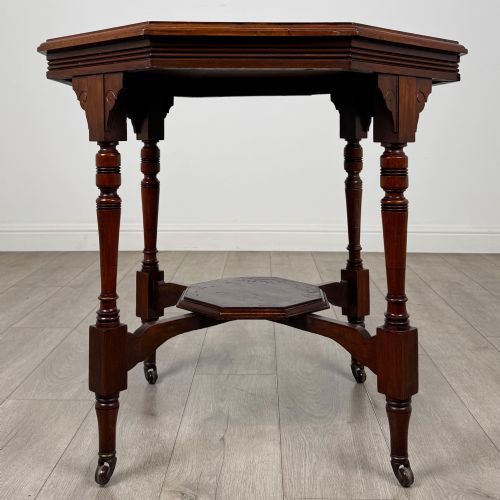
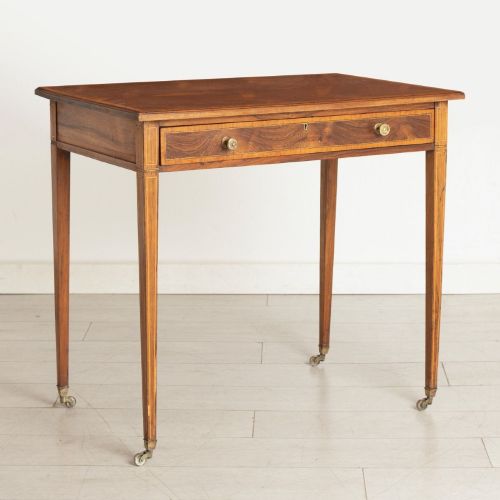
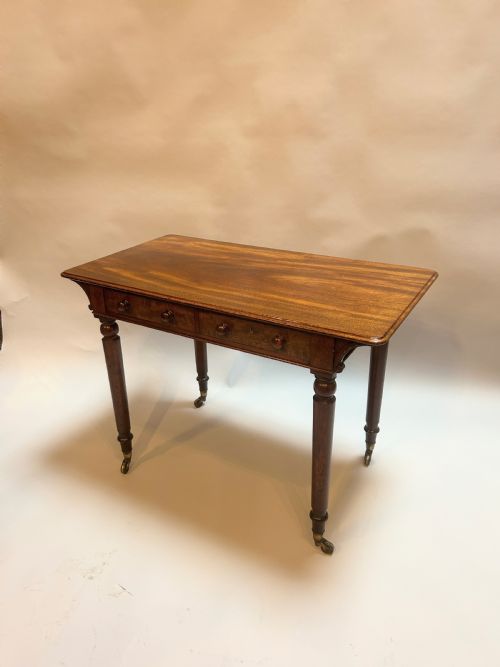
A side table with castors encompasses a variety of moveable furnishings designed for specific domestic tasks across the Georgian, Regency, Victorian and Edwardian periods.
The pieces appearing most frequently take the form of occasional tables, writing tables, Pembroke tables and work tables equipped with wheels for simple repositioning.
Craftsmen built these items in mahogany, rosewood, walnut and oak, frequently styling them to match the prevailing tastes of the nineteenth and early twentieth centuries.
Materials and Construction
Cabinet makers utilised dense timbers like mahogany, rosewood and walnut, often applying veneers and intricate inlay work in satinwood or lighter woods to create decorative surfaces.
Metal components played a crucial functional role, incorporating brass castors, sabots and drawer pulls that allowed heavy timber frames to glide smoothly across carpets and floors.
Listings feature woods including mahogany, rosewood, walnut, oak, satin birch and pine, spanning the Georgian, Victorian and Edwardian eras.
Design and Execution
Quality rests upon the selection of timber figures, the precision of the cabinet work in drawers and joints, and the integrity of the original brass castors.
Finely executed pieces display balanced proportions, restrained inlay and secondary woods of equal standard, whereas simpler examples rely entirely on plain domestic timbers.
Gregory and Co·Gillows of Lancaster·Johnstone and Jeanes·J A Mein Edinburgh
The Side Table with Castors Glossary
- Castor
- A small wheel mounted on a swivel assembly attached to the legs of furniture. This mechanism allowed heavy tables to be moved across a room without lifting.
- Pembroke table
- A small rectangular table featuring two hinged drop leaves on opposing sides. It often includes one or two drawers and rests on slender legs.
- Etagere
- A set of open shelves arranged in tiers for displaying small objects or holding books. These pieces frequently incorporate slender upright supports and castors.
- Work table
- A specialised small table designed for sewing, needlework or crafting. It typically incorporates a fitted interior or an attached fabric bag beneath the drawer.
Side Table with Castors: Frequently Asked Questions
What rooms suit a side table with castors?
These tables adapt well to sitting rooms, studies and bedrooms where moveable surfaces are practical for holding books, lamps or drinks.
Their original mobility makes them useful beside armchairs or sofas for flexible daily tasks.
How do I identify a Regency period table?
Regency pieces often display clean architectural lines, dark mahogany or rosewood surfaces, and classical brass mounts or sabots.
They frequently feature tilt-top actions or drop leaves designed for compact spaces.
Were these tables used for dining?
Standard side tables functioned primarily for reading, writing, sewing or serving rather than formal meals.
Larger variants such as Pembroke or sofa tables could expand slightly for light refreshments.
Why do some tables have two tiers?
Two-tier designs provided extra surface area for books and writing implements without occupying additional floor space.
They appear frequently in reading and occasional tables from the nineteenth century onwards.