

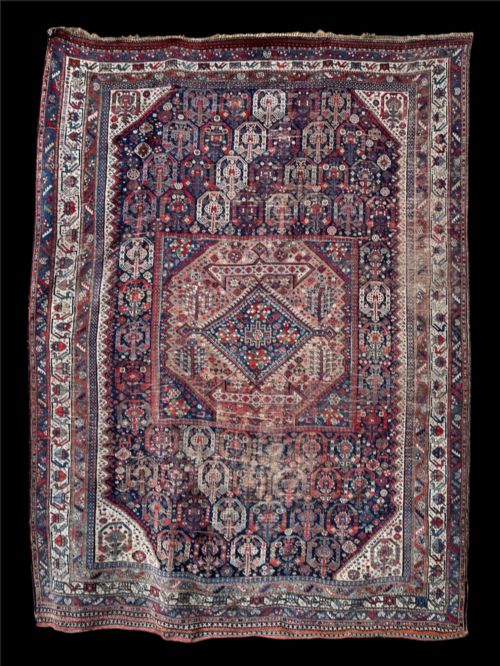


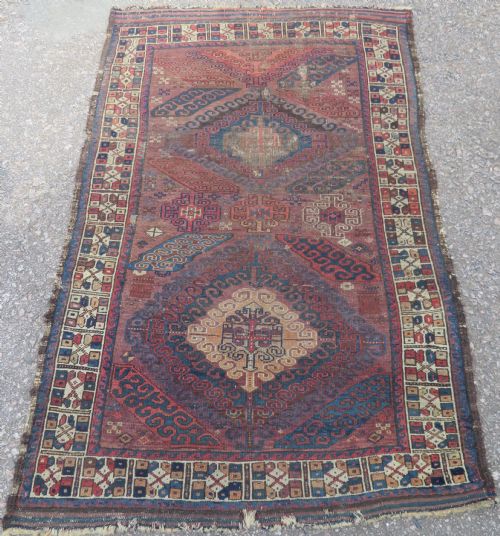


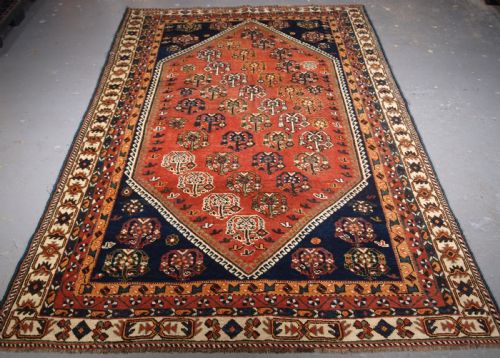

Shiraz Woven Wool Carpet
A shiraz woven wool carpet brings rich South Persian tribal colour and pattern into a room through enduring hand-knotted nomadic artistry.
Shiraz Woven Wool Carpet
A shiraz woven wool carpet represents the traditional textile output of South Persia, encompassing regional tribal work from Qashqai, Khamseh and Baharlu makers. These pieces function as floor coverings, area rugs and main carpets, bringing distinct South Persian nomadic styles into domestic spaces.
The examples found here range across the nineteenth and early twentieth centuries, spanning from eighteen eighty up to nineteen thirty. Buyers encounter both smaller nomadic rugs and larger room-sized carpets featuring traditional motifs such as centre medallions, peacocks, boteh patterns and architectural pillars of Persepolis.
Most items on this page adhere to Persian tribal and South Persian nomadic aesthetics, reflecting the heritage of weavers from the Shiraz region and surrounding tribal confederacies. Each piece demonstrates the enduring utility of hand-knotted wool furnishings produced for both daily tribal use and trade.
What varies in quality
Quality in a shiraz woven wool carpet rests upon the fineness of the knotting and the density of the wool pile. Tighter knots allow for sharper definition in complex designs like medallions and pictorial elements.
The artistic ambition of the individual weaver distinguishes standard production from finer examples. Pieces incorporating unusual pictorial details, such as pillars or specific bird motifs, demonstrate greater individual expression alongside technical skill.
Watch closely for cheeky woven peacocks keeping silent guard inside the central medallions of nineteenth-century Qashqai tribal rugs.
The Shiraz Woven Wool Carpet Glossary
- Medallion
- A central ornamental design motif placed in the middle of the carpet field. Shiraz and Qashqai examples frequently employ single or multiple medallions to anchor the composition.
- Boteh
- A traditional Persian motif resembling a curved almond, pear or pine cone shape. This ancient symbol appears frequently in tribal rugs representing fertility and life.
- Khamseh
- A confederacy of five distinct tribes in South West Persia known for distinctive dark-ground carpets and geometric designs. Their woven works share regional characteristics with broader Shiraz production.
- Qashqai
- A prominent nomadic tribal group of South Persia celebrated for finely knotted wool rugs and carpets. Their work often incorporates saturated colours and engaging pictorial or geometric imagery.
- Warp
- The vertical threads stretched lengthwise on the loom that form the foundational skeleton of the carpet. The visible fringes at either end of the rug are the extension of these warps.
Shiraz Woven Wool Carpet: Frequently Asked Questions
How do I clean a wool carpet?
Vacuum gently using a suction-only attachment without a rotating brush roll to protect the vintage wool pile from unnecessary friction.
Professional specialist cleaning is recommended for heavier washing to preserve the natural lanolin and dyes within the fibres.
Where were these carpets made?
These pieces originate from South Persia, specifically associated with tribal weavers and nomadic groups operating around Shiraz and the broader Fars province.
Production centres included nomadic encampments and regional markets where tribal confederacies such as the Qashqai and Khamseh traded their woven goods.
Are these pieces fragile?
Hand-knotted wool and cotton construction yields a durable textile designed originally for practical floor use in nomadic and domestic settings.
Older nineteenth-century examples require thoughtful placement in low-traffic zones to preserve their historical integrity while still enjoying daily domestic life.
How do I date a tribal rug?
Dating relies upon stylistic analysis of the traditional motifs, structural materials, dye palettes and overall wear patterns compared against documented nineteenth and early twentieth-century examples.
Changes in chemical and natural dye usage between the nineteenth century and the nineteen thirties provide reliable chronological markers for experienced collectors.