


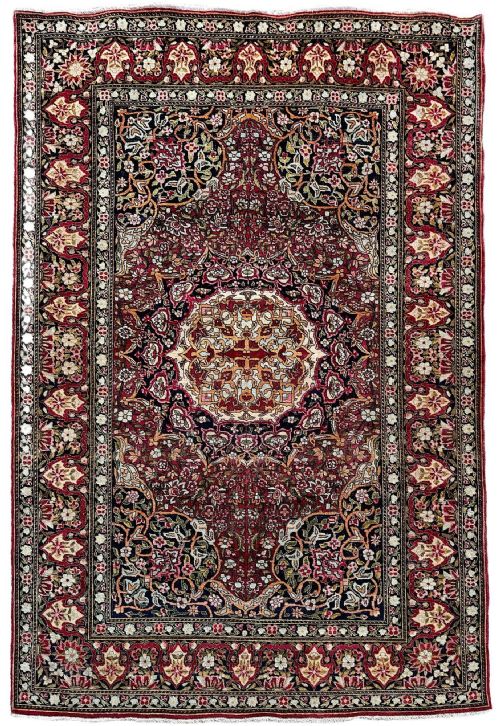
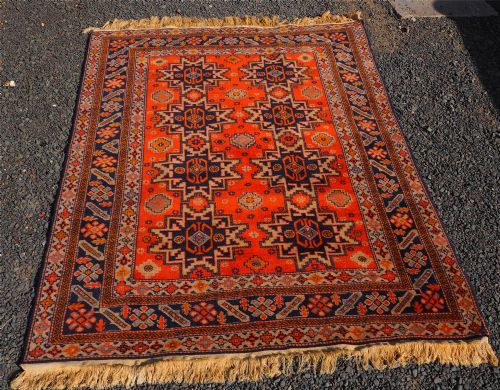
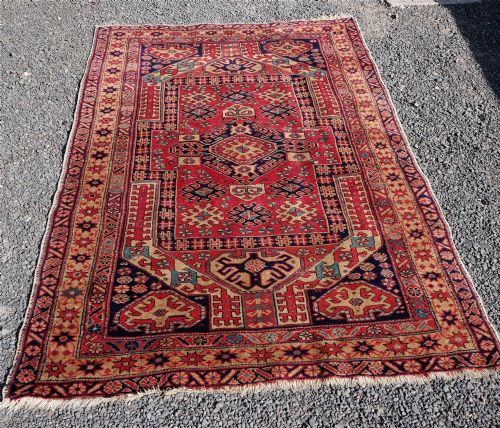
Navy Oriental Area Carpet
A navy oriental area carpet anchors a room with deep indigo wool and intricate geometric or floral designs woven across centuries.
Navy Oriental Area Carpet
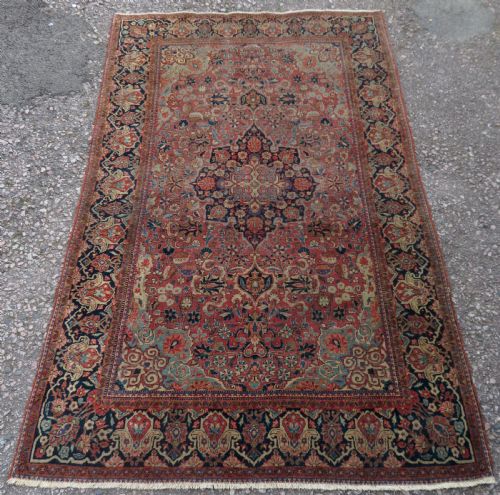
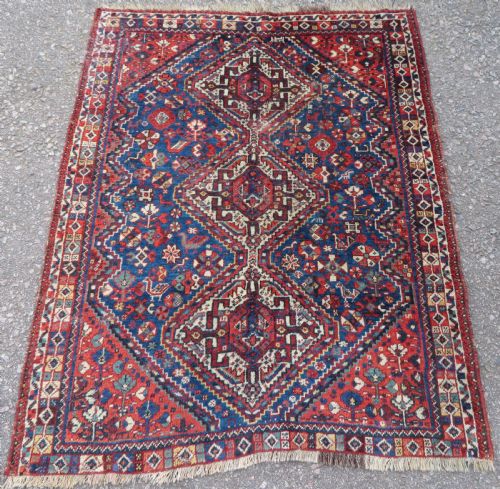
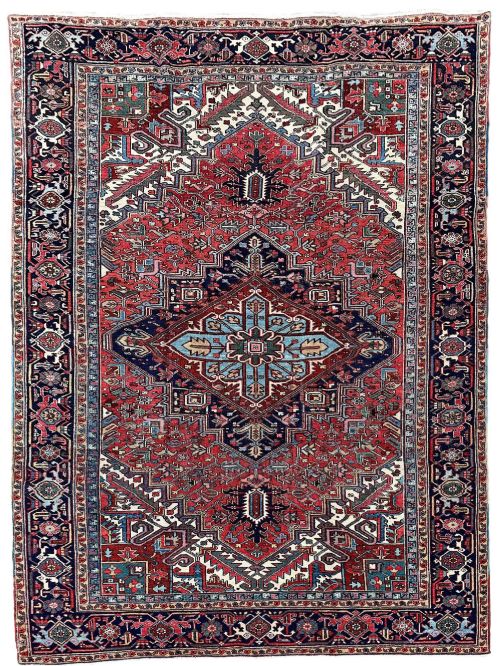
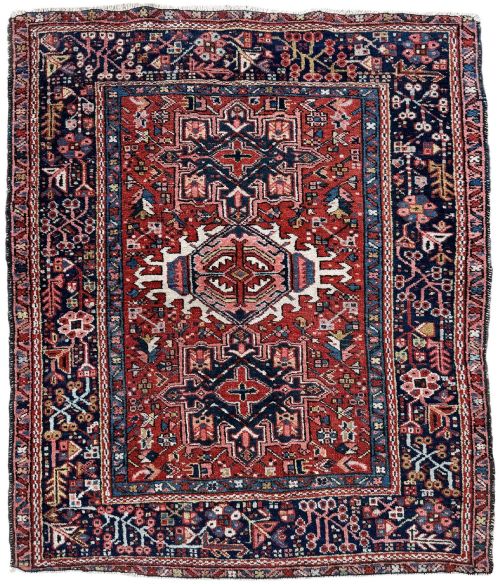
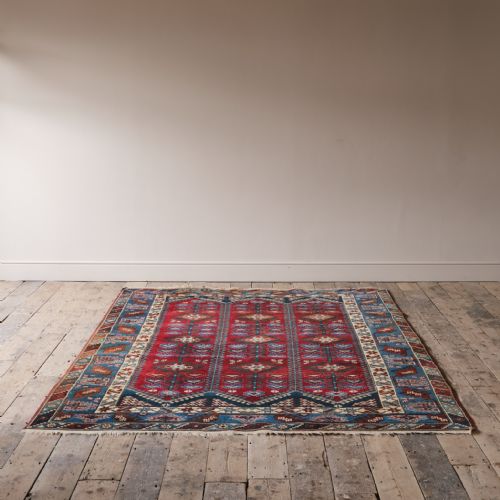
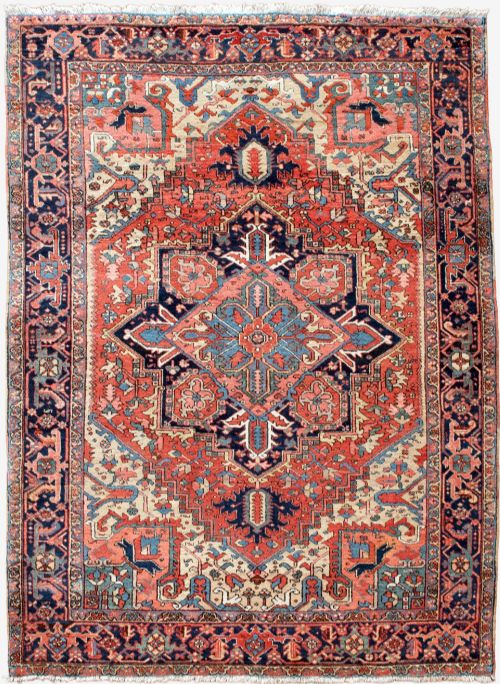
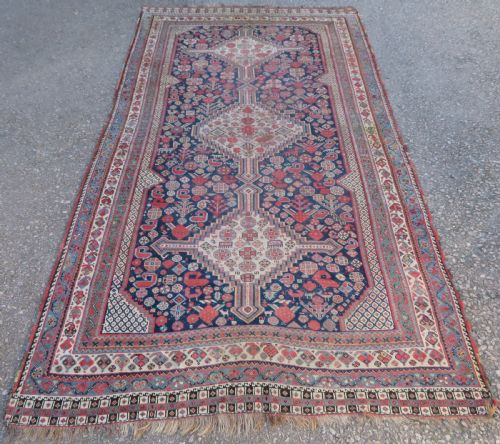
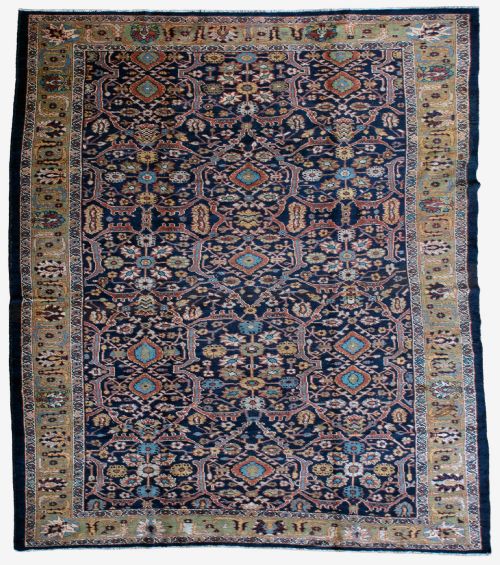
A navy oriental area carpet represents woven floor coverings originating from Persia, the Caucasus, and surrounding regions, typically featuring deep blue fields paired with contrasting medallion or tribal motifs. When searching for a navy oriental area carpet, buyers encounter pieces spanning from the mid nineteenth century through to the mid twentieth century, encompassing village works and city manufactories alike.
The selection here includes specific regional types such as Heriz, Mahal, Saroukh, and Caucasian tribal pieces, alongside Baluch and Afshar works. These floor coverings function equally well in country houses and urban interiors, offering substantial wool pile and enduring structural integrity.
Materials and construction methods
Makers utilised natural materials, predominantly hand-spun wool for the pile, combined with cotton foundations for warp and weft, and occasionally silk highlights in finer town pieces. Individual knots are tied by hand onto vertical looms, creating dense structures that withstand generations of foot traffic.
Dyers employed natural substances to achieve the characteristic deep indigo and navy backgrounds, contrasting them with madder reds, ivories, and soft yellows. The resulting textiles display subtle variations in tone across the surface, reflecting the organic dyeing process.
Several carpets preserve minor weaving irregularities and stray animal hairs spun directly into the wool, reminding buyers of the nomadic tents and village courtyards where they grew.
Distinctions in craftsmanship
Quality separates through knot density, the precision of the design execution, and the handling of the wool. Finer pieces demonstrate tighter knotting on the reverse, allowing intricate curves and sharp geometric lines to remain distinct.
The handling of natural dyes also dictates standing, as evenly struck indigo fields with minimal abrash demonstrate superior control, whereas uncontrolled colour bleeding indicates lesser workshop standards.
The Navy Oriental Area Carpet Glossary
- Abrash
- Variation in colour depth across a rug, caused by changes in dye batches or hand-spun wool batches. This natural phenomenon often appears as subtle horizontal bands of shading.
- Medallion
- A symmetrical central design motif found in many traditional woven carpets. It anchors the field composition and typically dictates the orientation of surrounding floral or geometric elements.
- Warp
- The stationary vertical threads stretched across the loom before knotting begins. Cotton and wool serve as the primary materials for these structural foundations.
- Weft
- Horizontal threads passed between rows of knots to bind the structure together. Beating the weft down firmly creates a dense, durable textile.
- Kilim
- A flat-woven carpet or rug produced without a pile. These pieces use interlocking weft techniques to create crisp geometric patterns.
Navy Oriental Area Carpet: Frequently Asked Questions
How do I choose the right size?
Measure the room dimensions and allow a uniform border of exposed flooring around the perimeter of the rug. Consider whether furniture will sit entirely upon the textile or just touch the edges.
Larger formats suit reception spaces and dining rooms, while runner and smaller rug variants fit hallways and fireside hearths.
Where should I place these carpets?
These textiles perform well in low to moderate traffic areas where their historical character can be appreciated without excessive wear. Living rooms and studies provide suitable environments for wool pile carpets.
Keep woven floor coverings away from direct, prolonged sunlight to prevent natural dyes from fading unevenly over time.
How do I care for an old rug?
Vacuum gently using suction attachments without rotating bristle brushes, which can pull at hand-knotted wool fibres. Professional cleaning by specialists in antique textiles is recommended every few years.
Utilise a breathable underlay beneath the piece to prevent slipping and reduce friction between the cotton foundation and the floor.
How do I tell regional styles apart?
Examine the primary motifs and the geometry of the field, noting whether the composition relies on bold geometric medallions or curvilinear floral vines. Heriz pieces often display strong angular corners, whereas Isfahan and Saroukh designs tend toward refined floral sprays.
Check the weave density and foundation materials, as village tribal pieces frequently exhibit heavier wool and coarser knots than city workshop carpets.