



Shipping Scene Painting
A shipping scene painting brings the movement of vessels, coastal harbours, and open water into a room through historic brushwork.
Shipping Scene Painting
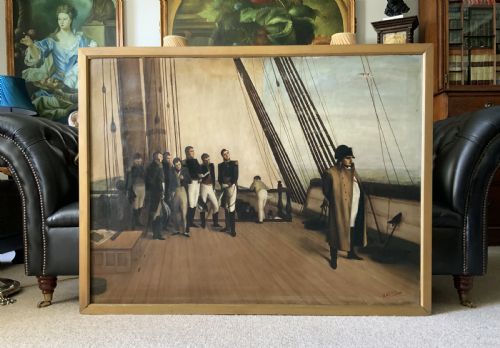
A shipping scene painting captures maritime life, coastal harbours, and vessels upon the water, primarily originating from the nineteenth century into the early decades of the twentieth century.
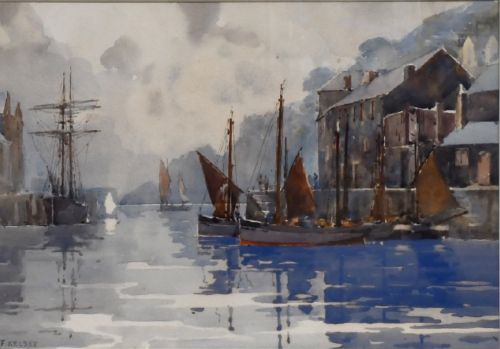
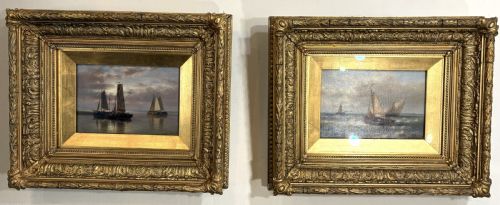
Buyers browsing this selection frequently encounter works rendered in oil on canvas or delicate watercolour on paper, often preserved within period gilt frames.
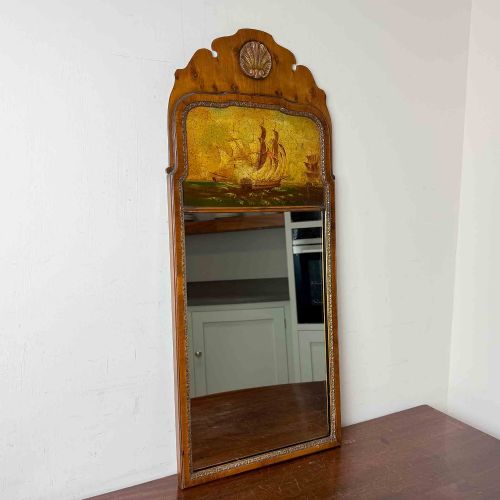
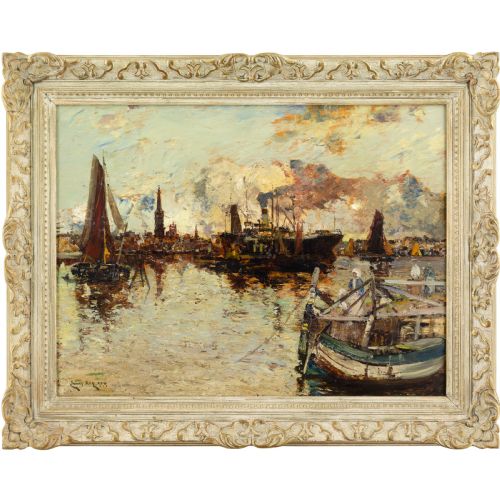
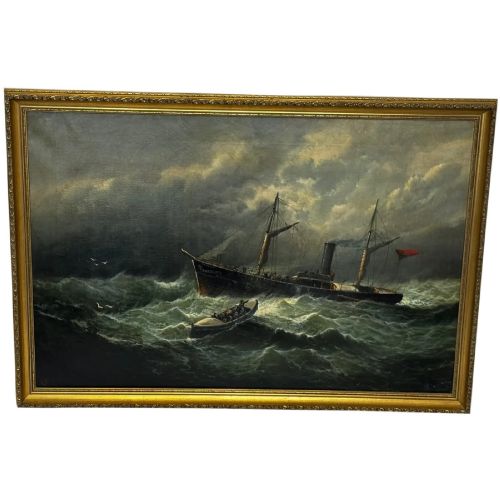
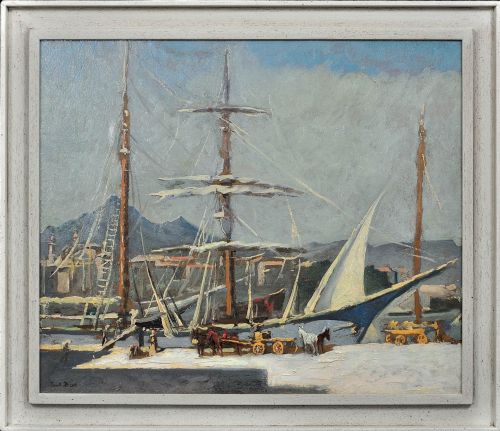
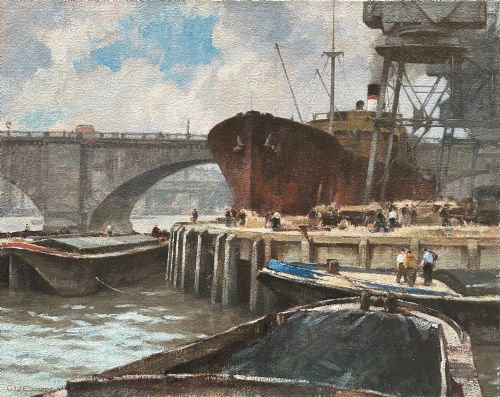
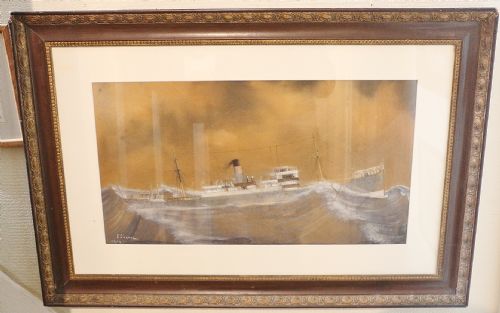
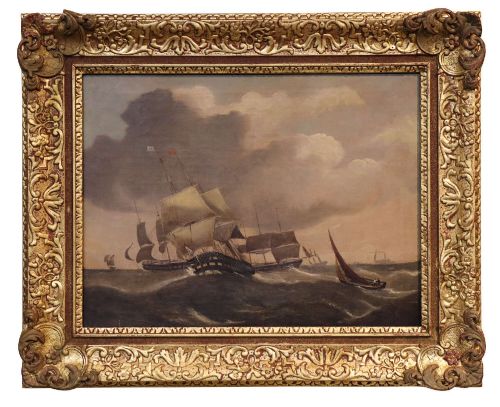
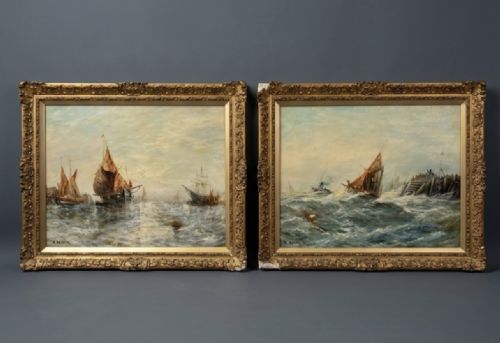
The subjects range from tranquil river traffic on the Thames and busy dockyards to dramatic depictions of steamships and sailing vessels navigating heavy seas.
How they were made
Artists utilised oil paint on stretched canvas or board, building up rich textures for stormy waves and atmospheric skies, whilst others preferred watercolour applied to paper for lighter coastal views.
Framing played an integral role in presentation, with many works housed in gilt wood frames or hand-enamelled polychrome surrounds that complemented the maritime subject matter.
What varies in quality
The distinction between works rests upon the artist's command of light, atmospheric perspective, and the precise rigging of vessels upon the water.
Examples demonstrating confident brushwork and accurate topographical detail stand apart from simpler decorative pieces produced during the same periods.
James Kay·William Broome·Paul Bret·Frank Kelsey·Abraham Hulk I·Thomas Bush Hardy·Samuel Owen·Marie-Edouard Adam·John Callow·Rowland Henry Hill·Frank W. Scarborough·Harold E Frecker·Hubert Thornley·Ludwig Hermann·Edward Fletcher·Arthur David McCormick
The Shipping Scene Painting Glossary
- Seascape
- A painting depicting the sea, ships, or coastal views. These works often focus on weather conditions and maritime navigation.
- Gilt wood
- Wood coated with a thin layer of gold leaf or gold paint. This material was commonly used for framing nineteenth-century paintings.
- Watercolour
- A paint consisting of water-soluble pigments used on paper. It allows for translucent washes suited to coastal light.
- Impressionism
- An art style characterised by relatively small, thin yet visible brush strokes and an emphasis on accurate depiction of light.
Shipping Scene Painting: Frequently Asked Questions
How do I date a shipping scene painting?
Dating relies upon stylistic clues, artist signatures, framing materials, and the types of vessels depicted in the artwork.
Steamships generally point toward the Edwardian era or later, whereas traditional sailing barques and man-of-war ships frequently indicate nineteenth-century origins.
Where should I hang a marine painting?
These works suit traditional reception rooms, studies, or hallways where adequate wall space allows the framed canvas or watercolour to be viewed clearly.
Placing the artwork away from direct sunlight preserves the pigments in both the oil paint and the paper watercolours.
What is the difference between oil and watercolour marine art?
Oil paintings on canvas offer heavier textures and deeper colour saturation, making them ideal for dramatic storms and nocturnal seascapes.
Watercolour paintings on paper present a softer, more luminous quality that suits bright daytime harbours and calm coastal inlets.
Are these paintings usually framed in period frames?
Many works retain their original gilt wood frames, which reflect the aesthetic tastes of the Victorian and Edwardian periods.
Examining the frame construction helps confirm the historical context of the piece alongside the canvas or paper within.