





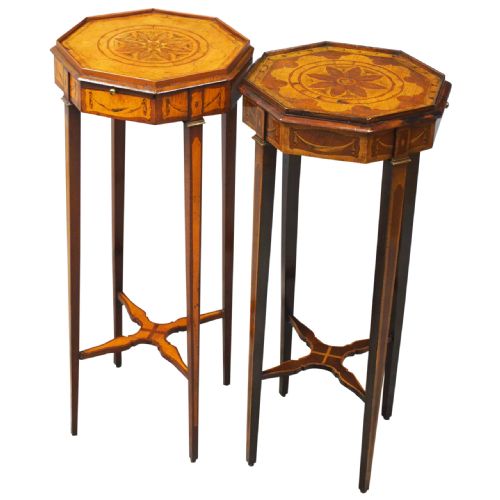

Sheraton Style Wine Stand
A sheraton style wine stand brings refined neoclassical elegance to a room, offering a slender surface for glasses and bottles.
Sheraton Style Wine Stand
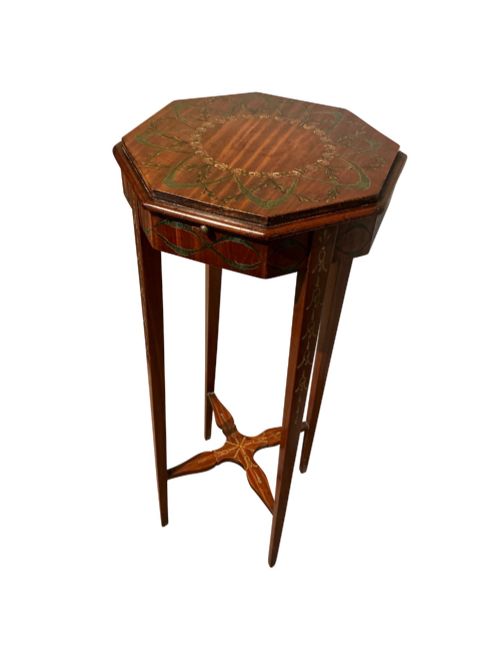
A sheraton style wine stand represents a refined form of occasional furniture, typically designed to hold small vessels or serve drinks. These pieces draw upon eighteenth-century neoclassical design principles, featuring slender proportions and delicate geometry.
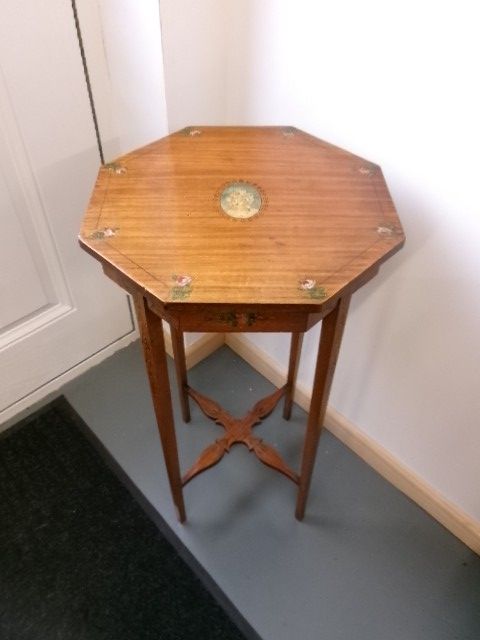
Origins span formal English workshops adhering to George III neoclassical traditions, later reinterpreted by Edwardian makers. The selection on this page demonstrates a strong presence of satinwood and mahogany constructions.
How they were made
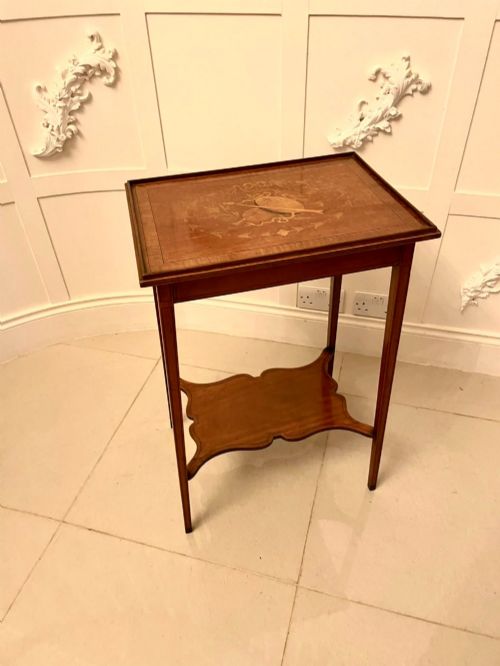
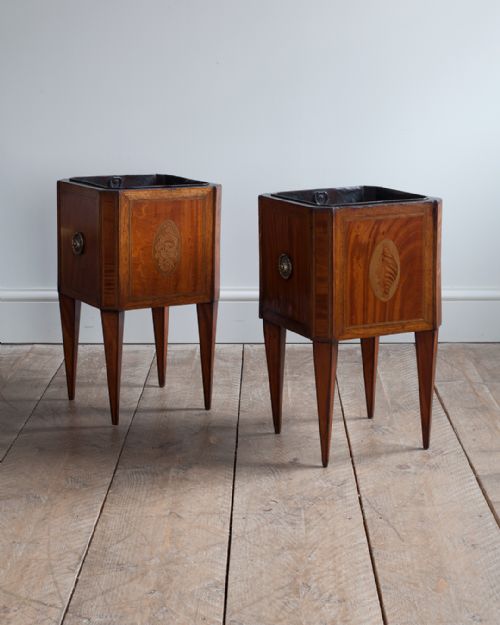
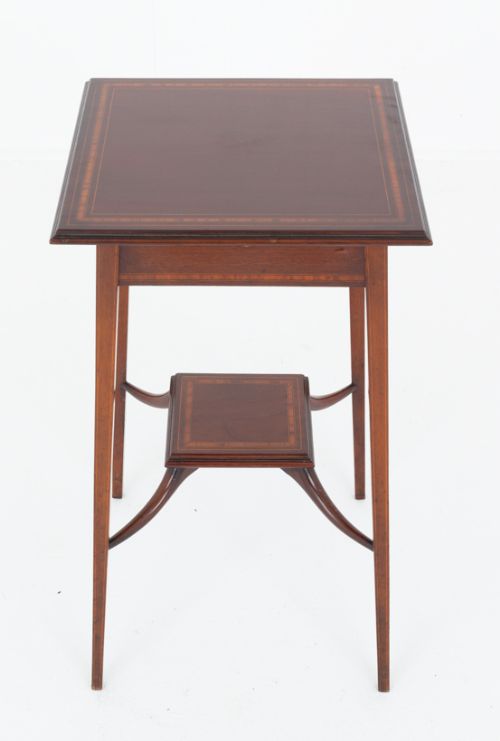
Construction relies heavily on fine timbers such as mahogany and satinwood, often enhanced with elaborate inlaid woods and painted timber details. Cabinetmakers utilised contrasting veneers to create delicate geometric borders and classical motifs across the tops and stems.
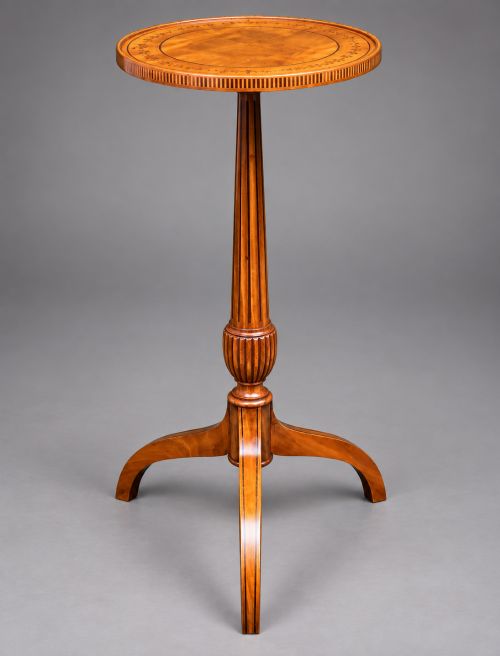
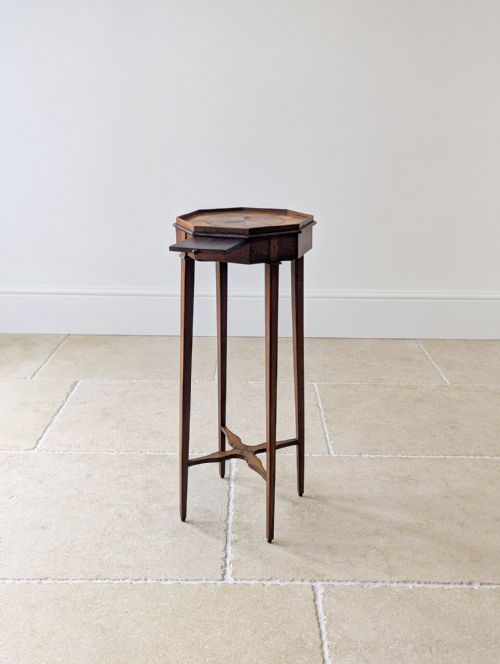
Structural refinement appears in turned or spiral fluted stems supporting octagonal and circular tops. Brass fittings and carefully joined legs provide stability to these slender tables without disrupting their graceful silhouettes.
Sheraton Style Wine Stand Retail Price Guide 2026
Typical asking prices for sheraton style wine stand among the pieces listed under this phrase on Sellingantiques today, from the lower quarter to the upper quarter. They describe what is for sale here now, not the wider market.
Listings feature periods spanning the eighteenth, nineteenth, and early twentieth centuries, dominated by satinwood and mahogany.
What varies in quality
Quality rests upon the precision of the inlay work and the choice of timber figures, where select satinwood and rich mahogany elevate a piece significantly. The crispness of carved details, such as spiral fluting on the stem, distinguishes standard production from finer craftsmanship.
Proportion and structural integrity dictate the standing of a piece within the range. Refined examples display balanced geometry and harmonious painted or inlaid decoration that remains integrated with the form.
The Sheraton Style Wine Stand Glossary
- Satinwood
- A lustrous, yellowish timber prized for its fine grain and smooth finish. It serves as a primary surface and a contrasting veneer in neoclassical furniture.
- Urn Stand
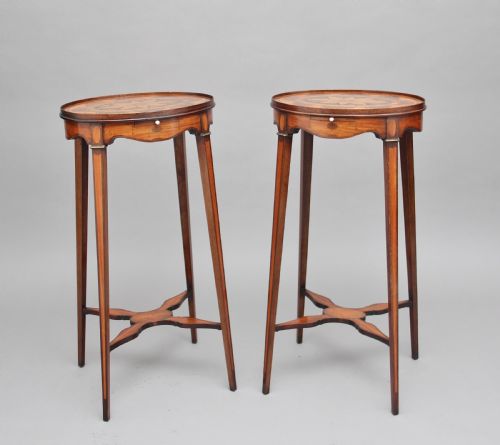
- A tall, slender table originally designed to hold a heated water urn for tea. These pieces feature compact tops raised on high legs.
- Inlay
- A decorative technique where pieces of contrasting wood or other materials are fitted into depressions in the base timber. This creates flat ornamental patterns.
- Neoclassical
- A style drawing inspiration from classical antiquity, characterised by symmetry, straight lines, and restrained ornamentation. It forms the basis of Sheraton design.
- Spiral Fluted
- A decorative carving on a column or stem featuring a twisting, grooved pattern. It adds vertical movement to the support of a stand.
Sheraton Style Wine Stand: Frequently Asked Questions
What is a sheraton style wine stand used for?
These pieces function primarily as small occasional tables for holding glasses, small decanters, or decorative objects. Their compact footprint allows them to fit easily beside seating.
Historically, similar stands supported urns or served drinks in formal rooms. Today, they suit living spaces as accent tables that occupy minimal floor area.
How do I date a wine stand?
Dating relies on examining timber selection, construction methods, and stylistic cues. Georgian pieces from the eighteenth century show different joinery and wear patterns compared to Edwardian revivals.
Revival pieces from around nineteen hundred often combine earlier Sheraton motifs with the manufacturing techniques of their own period. Comparing the secondary timbers helps clarify the age.
What is the difference between mahogany and satinwood models?
Mahogany models utilise a deep reddish-brown hardwood that typifies eighteenth-century English furniture. They often rely on subtle carving and dark grain patterns.
Satinwood models present a lighter, golden-yellow surface that frequently incorporates painted decorations or intricate inlay. This brighter timber became particularly popular during later revival periods.
Are these tables sturdy enough for daily use?
Their slender proportions and delicate stems mean they are built for light display rather than heavy weight. Careful placement prevents accidental knocks to the narrow legs.
With sensible handling, they withstand normal domestic use as lamp tables or surface spots for small items. Their structural balance supports appropriate loads securely.