


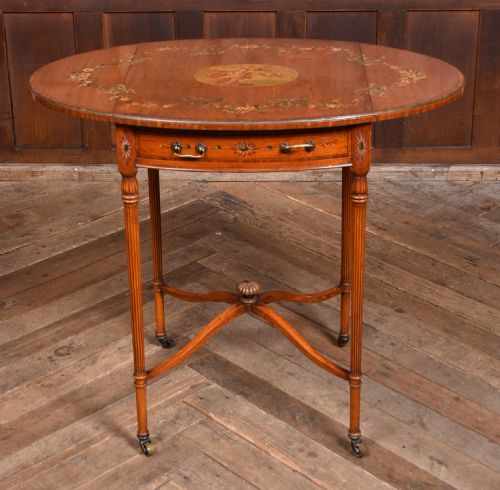

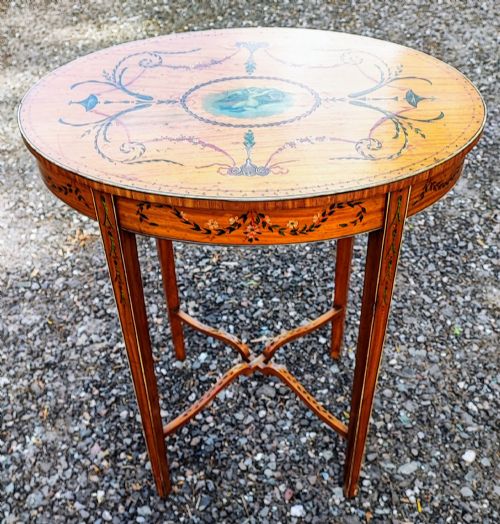

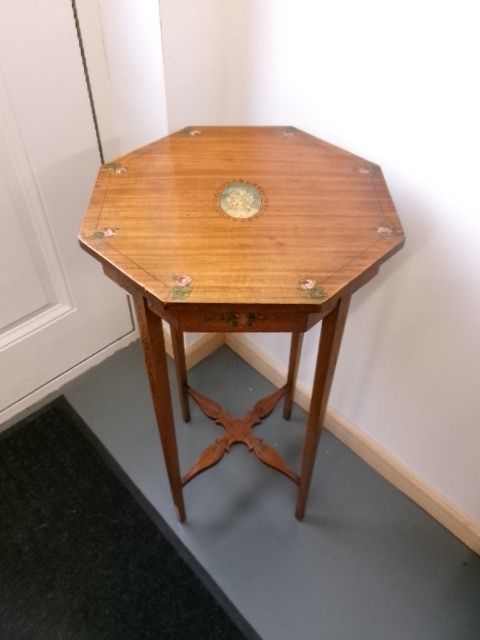

Sheraton Style Occasional Table
These sheraton style occasional table pieces offer light, elegant display surfaces for a room, bringing refined neoclassical lines to any corner.
Sheraton Style Occasional Table
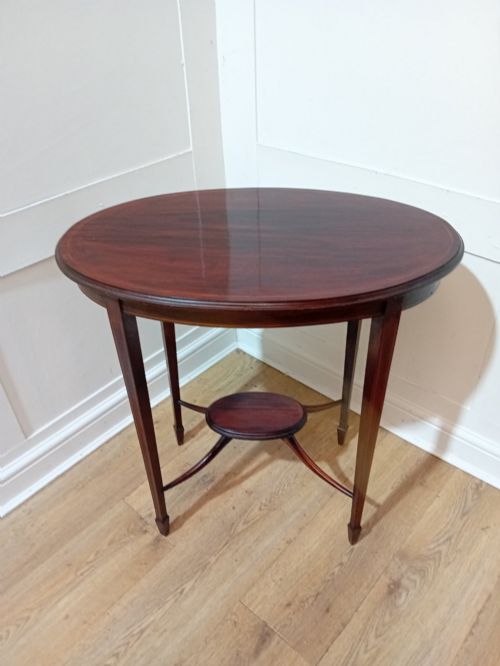
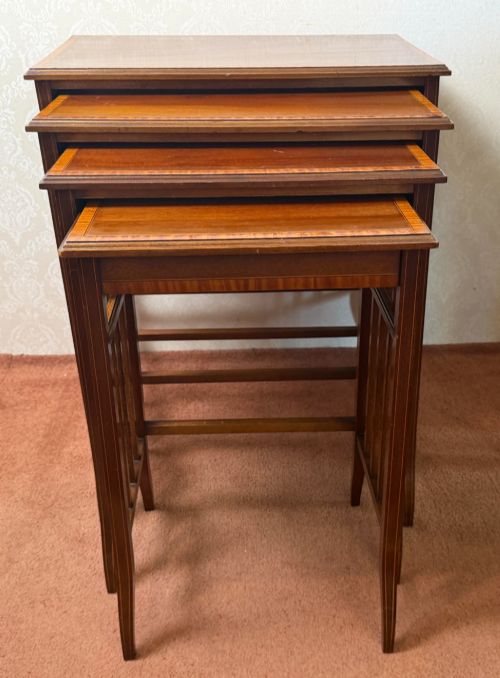
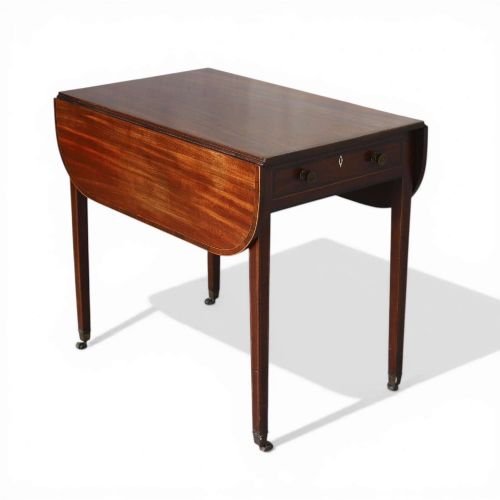
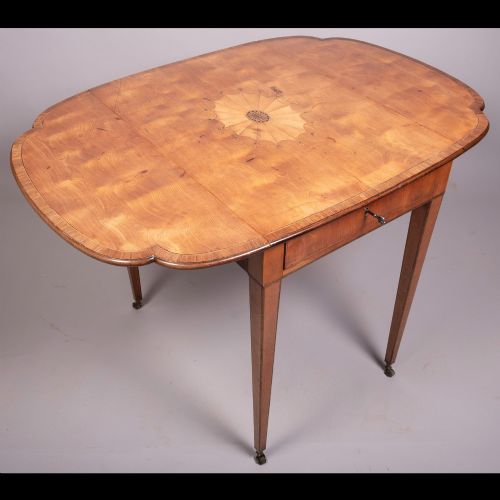
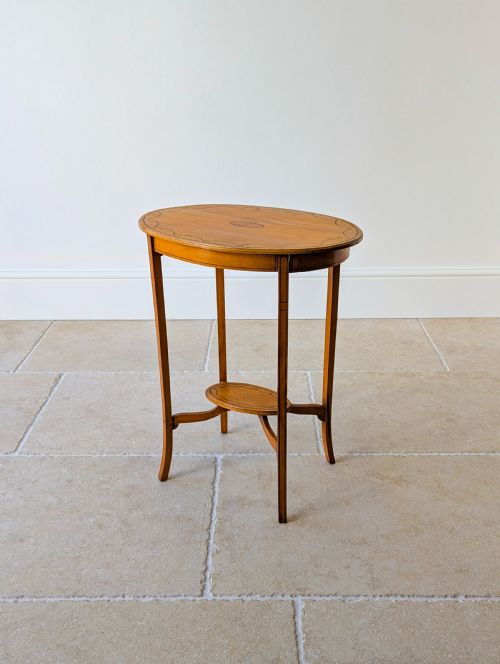
When you search for a sheraton style occasional table, you encounter a selection spanning the late eighteenth century through the Edwardian period, alongside Victorian revivals. The pieces range from simple side tables and Pembroke tables to nests of four tables, urn stands, and occasional tables with painted floral decoration.
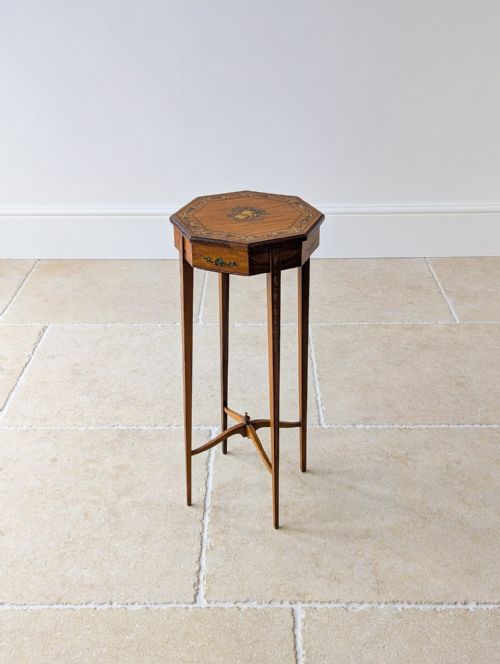
Earlier Georgian examples also appear, showing restrained construction in solid mahogany and satinwood with subtle cross banding. Whether round, oval, kidney-shaped, or octagonal, each form maintains the slim proportions characteristic of the design vocabulary.
Materials and construction methods
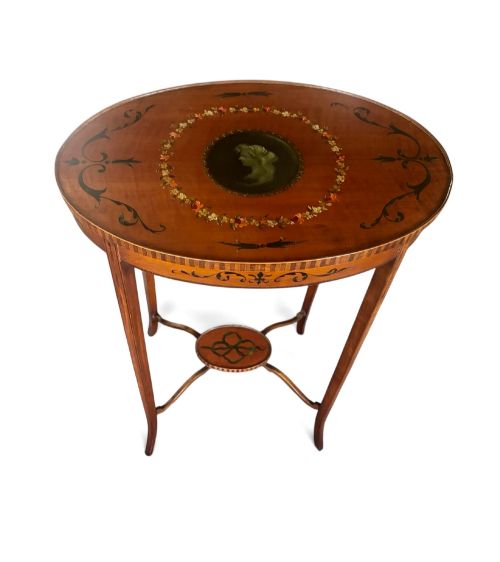
Makers utilised mahogany and satinwood as primary timbers, often enhanced by rosewood and contrasting boxwood inlay. These woods provided a smooth canvas for delicate cross banding, marquetry, and painted floral motifs.
Inlay and edge banding required precise carpentry, set into solid timber frames and tabletops with great care. Elements such as square tapered legs and drop leaves depended on neat joinery to maintain stability without bulk.
Listings for a sheraton style occasional table span from the 18th century through the Edwardian era, with mahogany and satinwood dominating the materials.
Distinctions in craftsmanship
The standard of a sheraton style occasional table rests upon the crispness of its inlay and the selection of figured timber veneers. Better examples display fine boxwood contrast lines and evenly executed marquetry or hand painting rather than stencilled decoration.
Structural integrity also separates individual items, visible in the tight fit of joints on nesting tables and the smooth movement of drop leaves or drawers. Finer pieces maintain balanced proportions and straight tapered legs that support the tabletop securely.
The Sheraton Style Occasional Table Glossary
- Cross banding
- A narrow strip of veneer applied to the edge of a tabletop with the grain running perpendicular to the centre.
- Satinwood
- A pale, lustrous hardwood commonly utilised in late eighteenth-century and revival furniture for its golden sheen.
- Quartetto
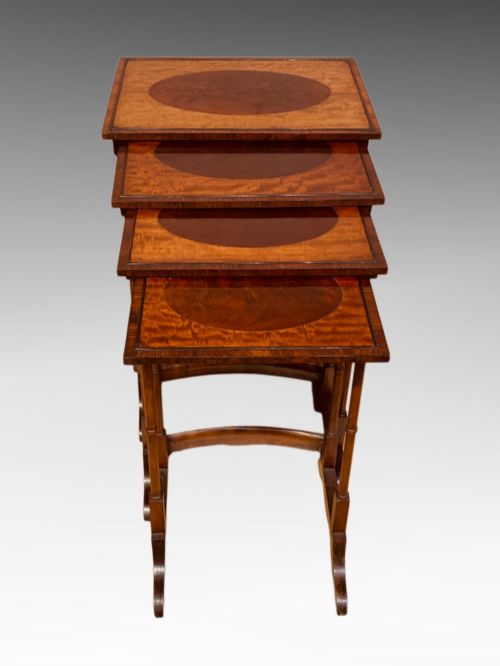
- A set of four nesting tables designed to slide neatly beneath one another.
- Pembroke table
- A small drop-leaf table with hinged flaps on two opposing sides supported by pivoting brackets.
- Marquetry
- Decorative patterns formed by fitting together small pieces of coloured wood veneer into a surface design.
Sheraton Style Occasional Table: Frequently Asked Questions
What is a sheraton style occasional table?
It is a light, movable display or utility table inspired by the neoclassical designs of the eighteenth century. Most examples date from the Victorian and Edwardian revival periods.
These pieces include side tables, nests of tables, and Pembroke tables featuring straight tapered legs and delicate inlay.
How were nesting tables used?
Nesting tables, often called quartetto tables in period descriptions, were kept stacked to save space in a drawing room. They were pulled apart when guests needed surfaces for tea or writing.
Victorian and Edwardian households utilised these nested sets widely for their practical adaptability in smaller rooms.
How do I tell Georgian from Edwardian pieces?
Georgian tables date from the late eighteenth century and generally display heavier patination and simpler, structural use of solid mahogany or satinwood. Edwardian and late Victorian pieces often exhibit brighter revival marquetry, painted floral decoration, and lighter secondary timbers.
Construction details and timber ageing help reveal whether a table originates from the original period or the later revival eras.
Where should I place an occasional table?
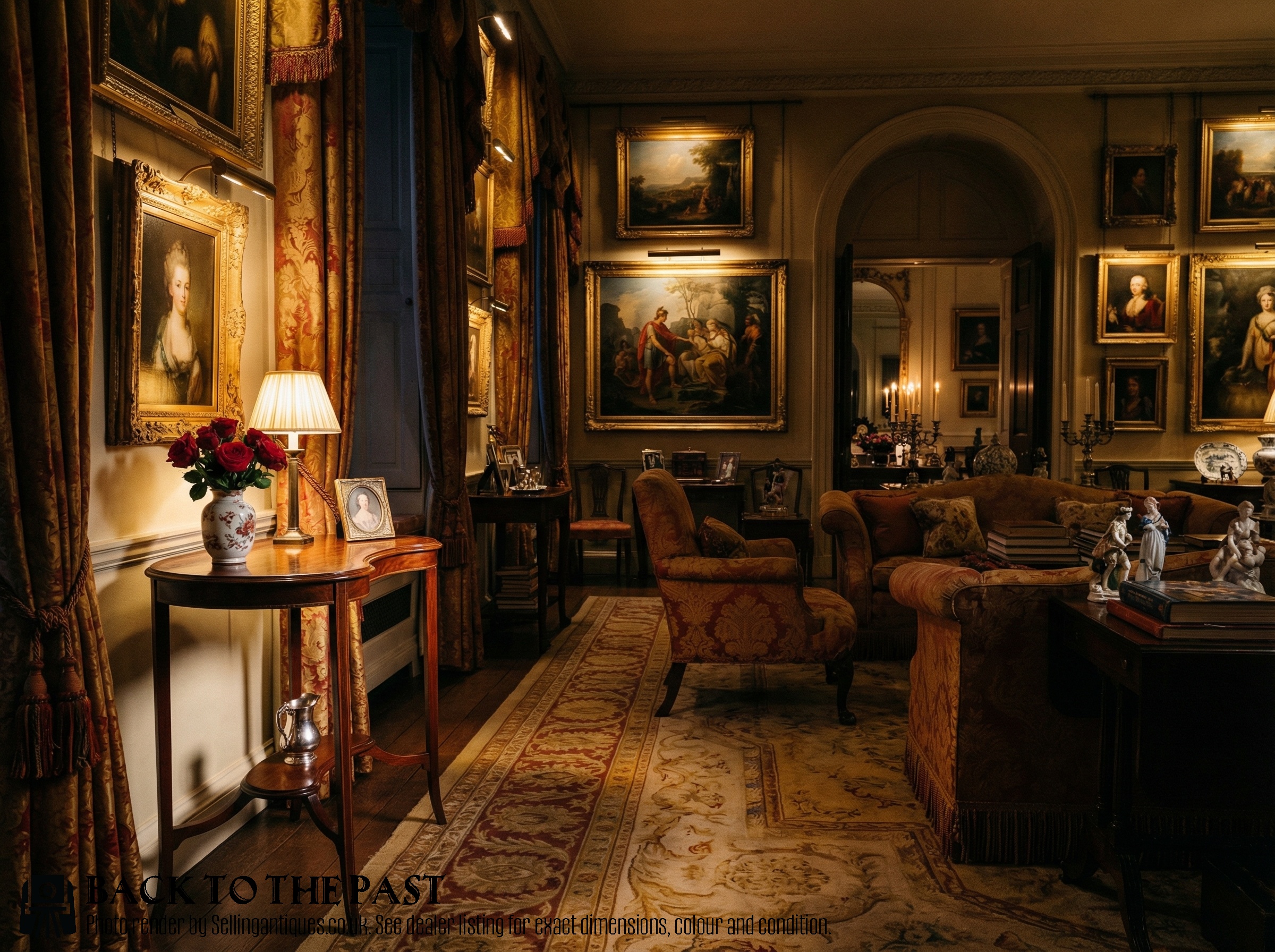
These tables suit hallways, beside armchairs, or against drawing-room walls where a slim profile is required. Their decorated surfaces and painted or inlaid tops look best in well-lit areas free from damp.
Because of their light construction, they function well for display rather than heavy daily use.