



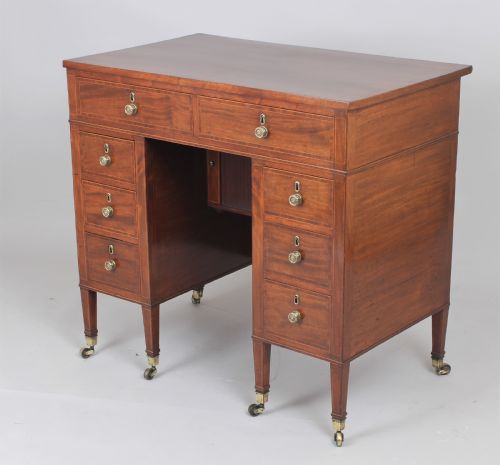


Sheraton Period Writing Desk
These sheraton period writing desk pieces offer refined Georgian and Regency utility, bringing balanced proportions and fine timber inlay to your study.
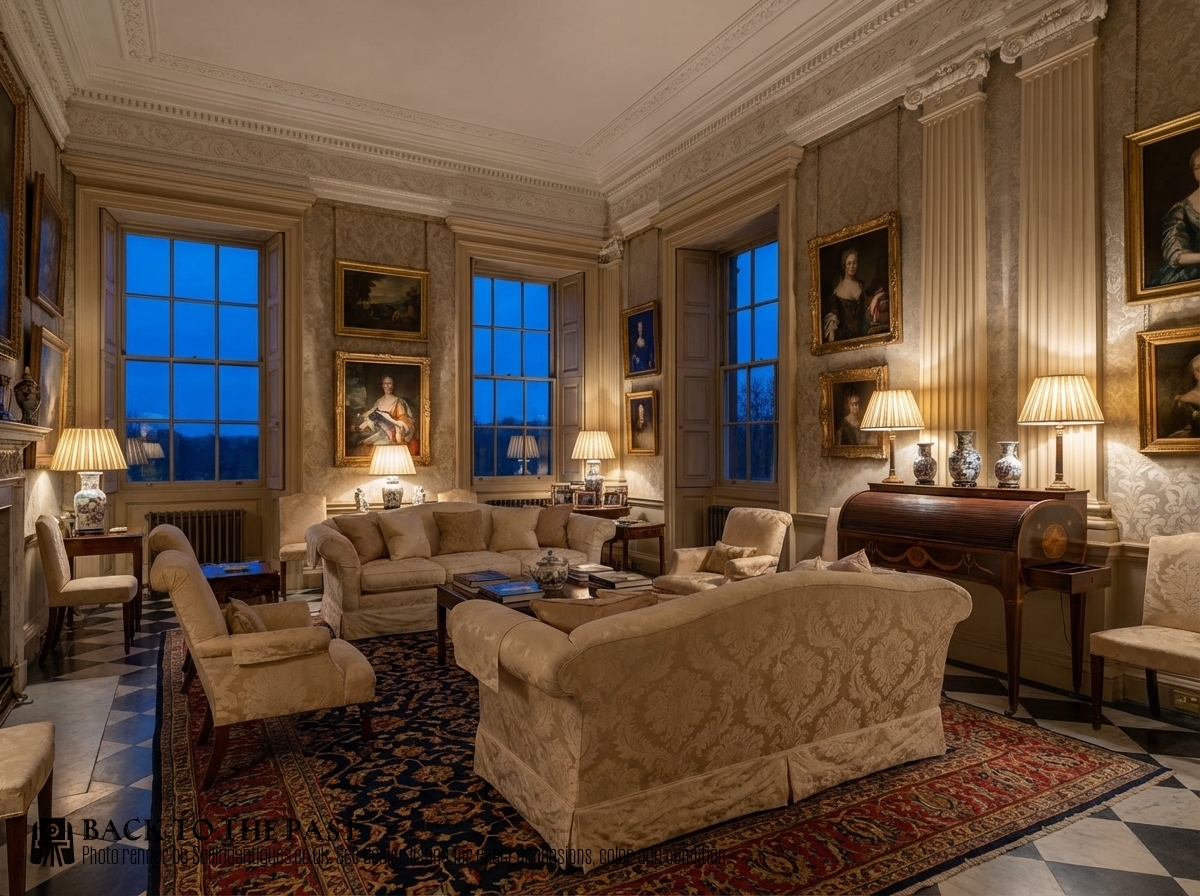
Sheraton Period Writing Desk
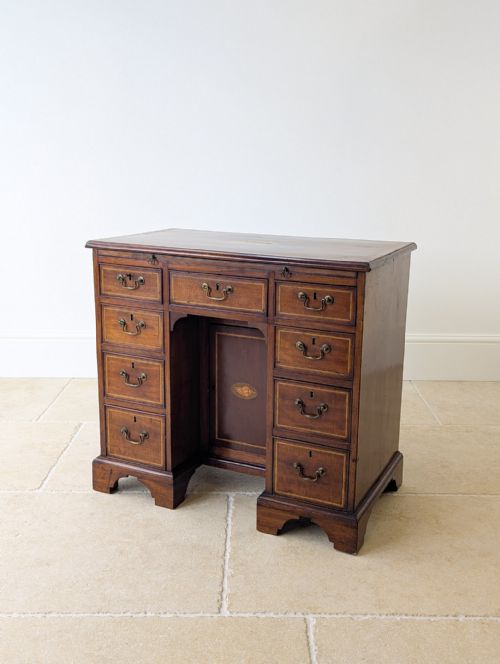
A sheraton period writing desk brings together the lighter forms of the late eighteenth and early nineteenth centuries, encompassing writing tables, kneehole desks, and tambour desks. These pieces originate across the Georgian, Regency, and Edwardian periods, reflecting the neoclassical shift toward elegance and utility.
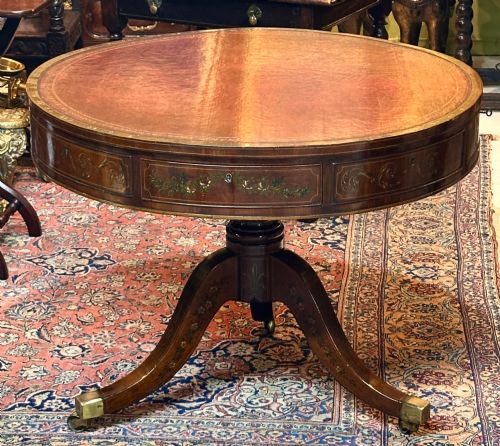
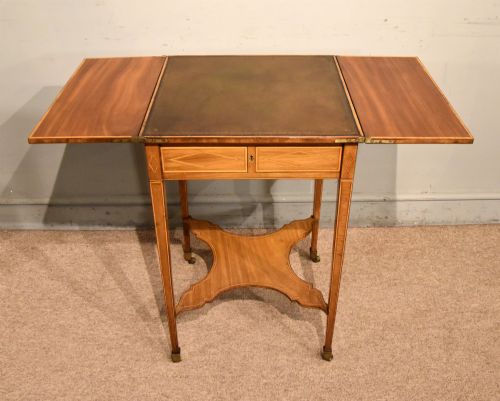
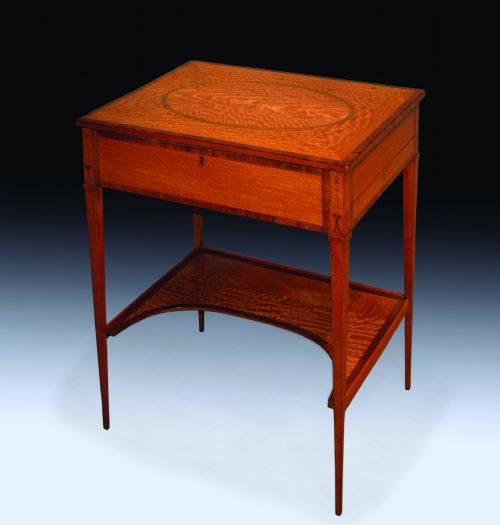
You will encounter various interpretations on this page, from mahogany drum tables and satinwood occasional tables to elaborate bonheur du jour cabinets and secretaire bookcases. Each form shares a distinct architectural restraint, avoiding the heavier mass of earlier decades in favour of tapered legs and geometric clarity.
Timbers and Construction
Cabinet makers constructed these pieces primarily in solid and veneered mahogany, complemented by lighter timbers such as satinwood and partridgewood to create contrast. Workshops applied marquetry inlay and satinwood inlay with precision, framing drawers and tabletops within delicate geometric borders.
Internal elements often reveal secondary timbers like oak lining, alongside brass hardware and fitted leather writing surfaces. Specialised items integrate tambour shutters, silver mounts, and clever compartmentalisation for stationery and correspondence.
Sheraton Period Writing Desk Retail Price Guide 2026
Typical asking prices for sheraton period writing desk among the pieces listed under this phrase on Sellingantiques today, from the lower quarter to the upper quarter. They describe what is for sale here now, not the wider market.
Listings feature pieces spanning the Georgian, Regency, and Edwardian periods, constructed in mahogany, satinwood, partridgewood, and rosewood.
Judging Quality in Sheraton Pieces
Quality rests upon the crispness of the timber inlay and the selection of figured veneers, where balanced grain patterns elevate the visual impact of a satinwood or mahogany surface. Superior examples demonstrate rigorous joinery in drawer construction and meticulous attention to internal fittings.
The sophistication of the secondary design elements, such as finely chased brass mounts or integrated cabinets, distinguishes ambitious workshop productions from standard utility pieces.
The Sheraton Period Writing Desk Glossary
- Satinwood inlay
- A decorative technique using fine, pale hardwood veneers inserted into a darker ground to form contrasting geometric or floral patterns. This method defines the bright, neoclassical aesthetic associated with Sheraton designs.
- Tambour
- A sliding door constructed from narrow vertical strips of timber glued to a canvas backing, allowing flexible closure over desk compartments. It operates within recessed grooves to conceal fitted stationery interiors.
- Bonheur du jour
- A light ladies writing table featuring an enclosed cabinet, shelves, or drawers fitted to the upper surface. These versatile pieces emerged in the late eighteenth century for correspondence and light reading.
- Secretaire
- A cabinet or chest incorporating a fall-front writing drawer that opens to reveal a fitted interior of small drawers and pigeonholes. It combines storage capacity with a concealed writing surface.
Sheraton Period Writing Desk: Frequently Asked Questions
What is a sheraton period writing desk?
A sheraton period writing desk is a neoclassical furniture form characterised by straight lines, tapered legs, and contrasting timber veneers. These pieces date primarily from the late eighteenth and early nineteenth centuries.
They encompass various specialised forms including kneehole desks, tambour desks, and ladies writing tables designed for home correspondence.
How do I date a sheraton writing desk?
Dating relies upon examining construction methods, secondary drawer timbers like oak, and stylistic markers such as inlay complexity. Pieces from the seventeen-nineties typically display precise satinwood banding and restrained neoclassical proportions.
Later Regency interpretations often introduce bolder rosewood elements or heavier brass mounts while retaining the foundational Sheraton geometry.
Where were these desks used?
These desks served primarily in private libraries, withdrawing rooms, and dedicated writing chambers of Georgian and Regency homes. Their lighter forms allowed owners to move them easily near windows for optimal natural light.
Compact models like the bonheur du jour functioned in ladies boudoirs for organising letters and personal papers.
How do I care for satinwood and mahogany?
Protect antique timber surfaces from direct sunlight to prevent the fading of delicate satinwood and mahogany hues. Maintain stable indoor humidity to keep veneered surfaces and inlay secure.
Apply traditional wax sparingly and polish with a soft cloth to preserve the natural lustre of the wood.