
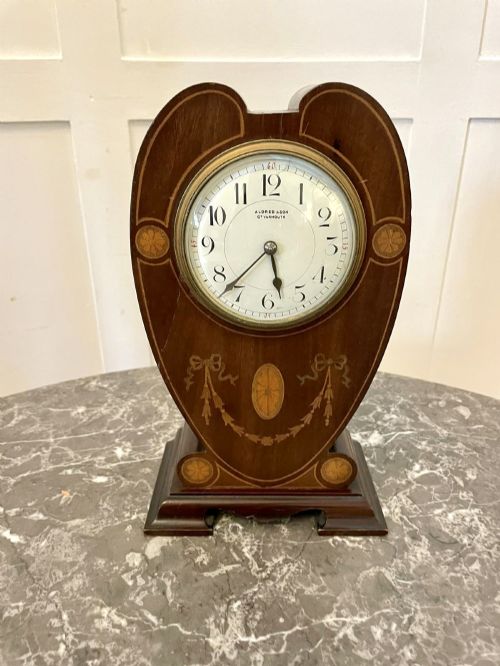
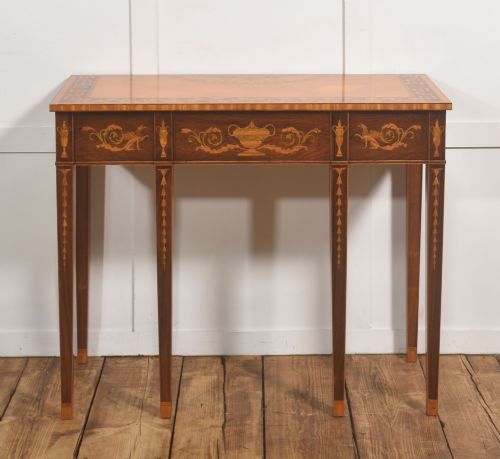
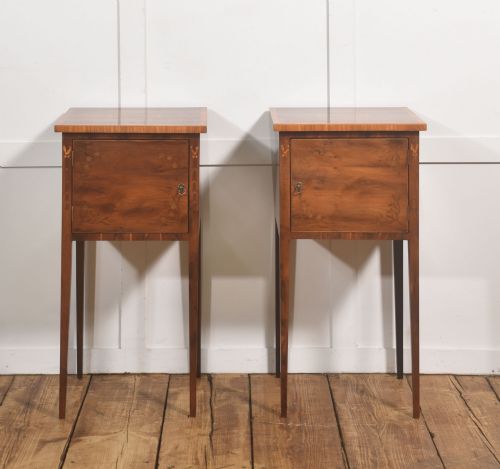
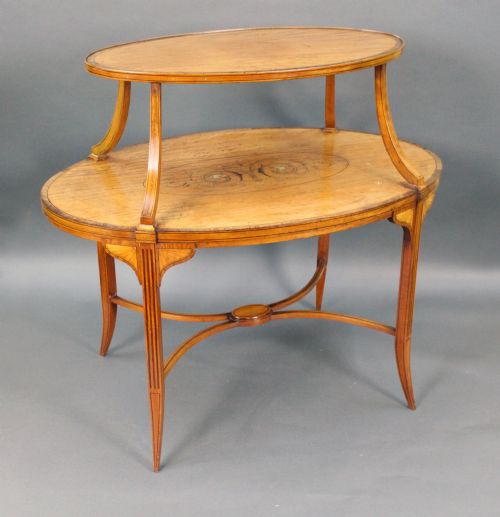
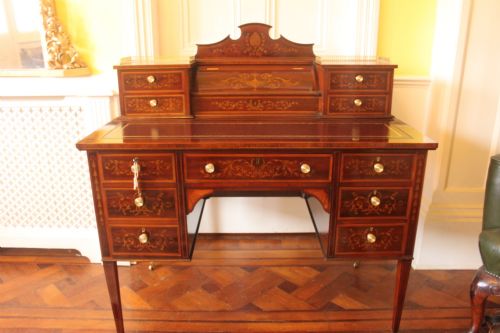
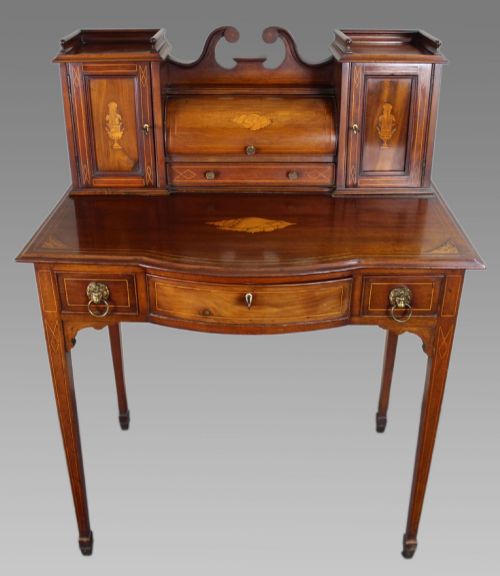
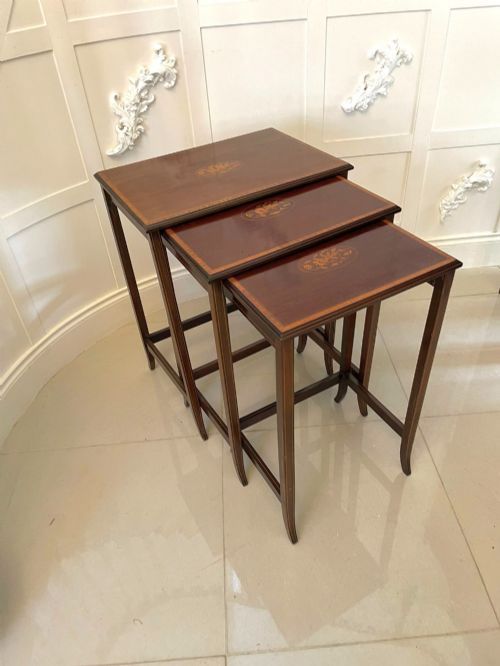
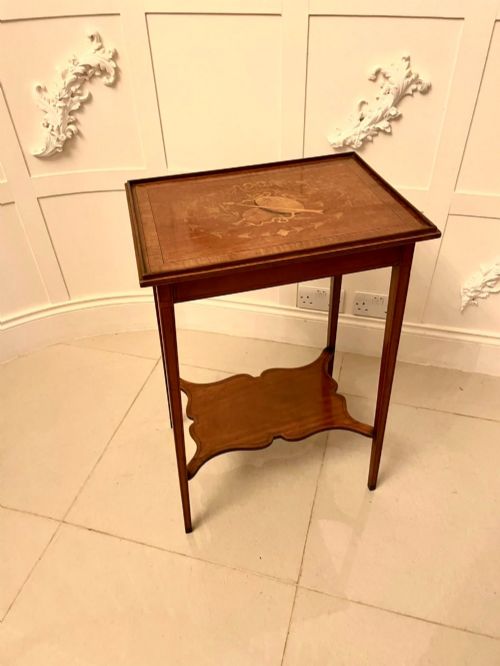

Sheraton Marquetry Table
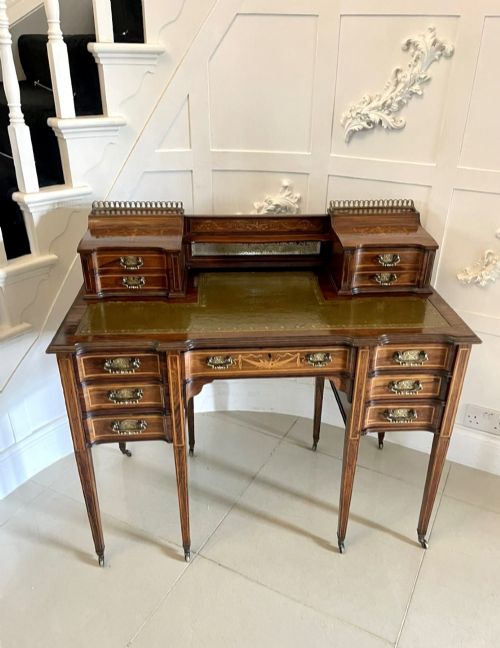
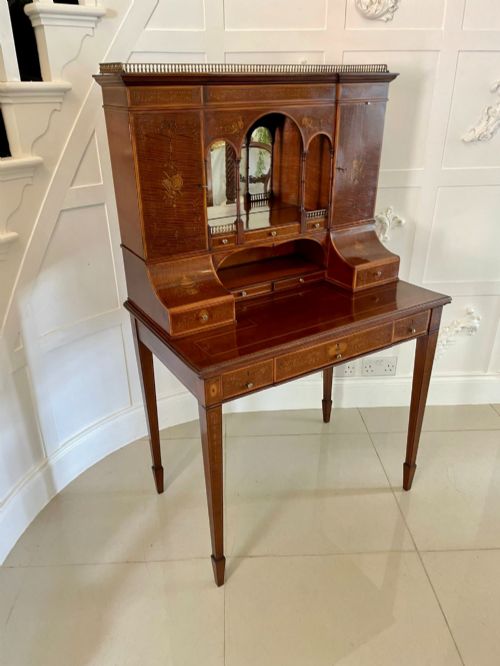
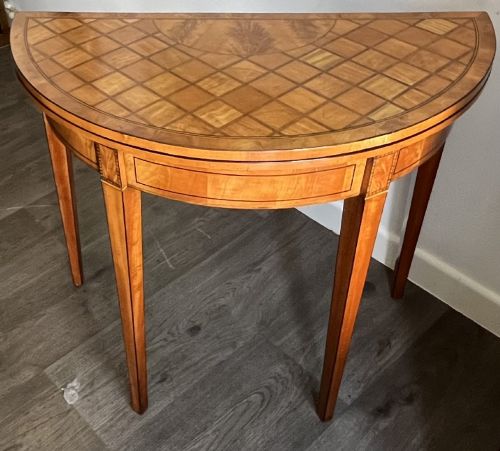
A sheraton marquetry table brings together disciplined neoclassical geometry and intricate floral or ribbon inlay from the eighteenth century and its later revivals.
Sheraton Marquetry Table
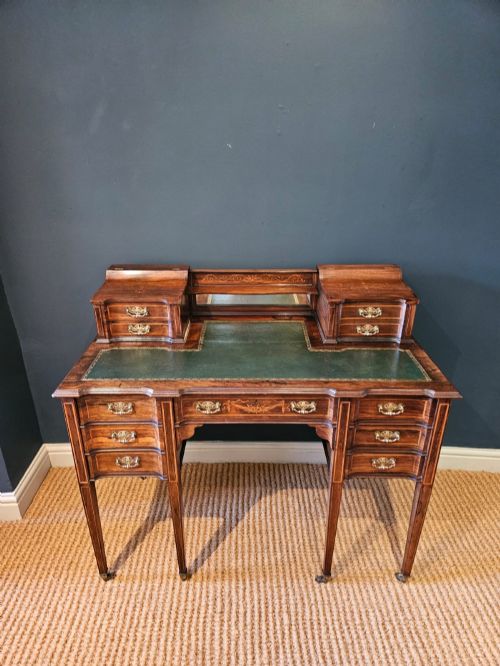
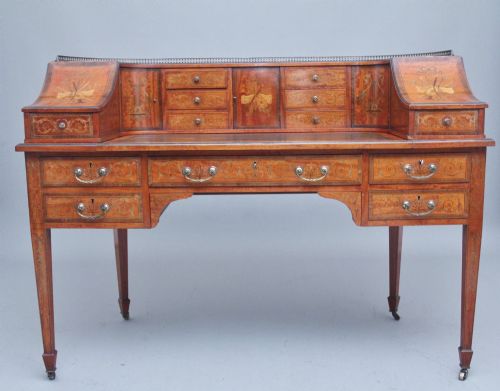
When you search for a sheraton marquetry table, you encounter a range of functional furniture forms spanning from the Georgian and eighteenth century periods through to Edwardian and Victorian revivals. The selection includes Pembroke tables, card tables, and demi-lune side tables, alongside various writing desks and occasional pieces.
The eighteenth-century originals sit alongside late nineteenth and early twentieth-century interpretations, particularly from the Edwardian era and the Sheraton Revival movement. These later pieces replicate the lighter proportions and inlaid decorative programmes of the earlier Georgian era.
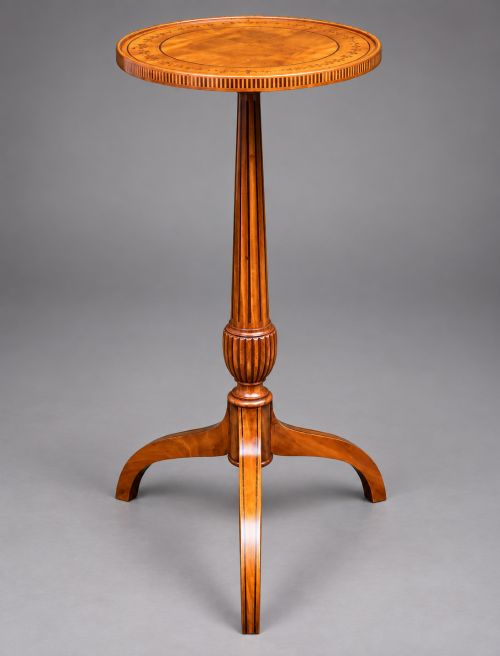
Tables take both rectangular and curved shapes, including kidney-shaped desks, serpentine card tables, and oval occasional tables. The underlying framework typically supports delicate tapering legs typical of the neoclassical style.
Materials and Construction
Cabinet makers utilised a palette of contrasting timbers, pairing foundational structural woods like mahogany, walnut, and rosewood with lighter decorative veneers such as satinwood, harewood, and partridgewood.
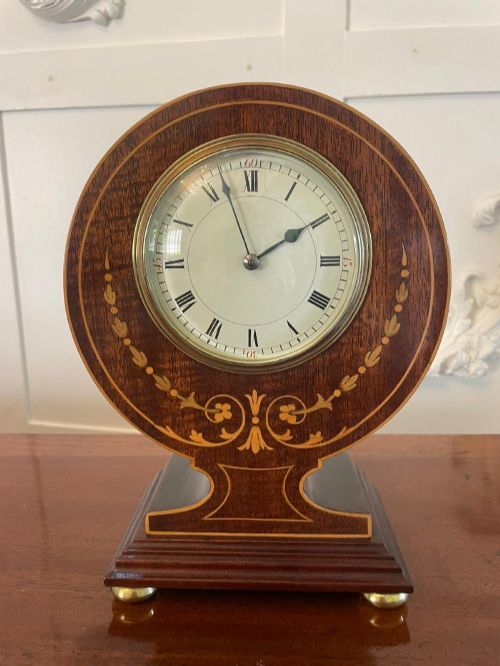
The characteristic surface decoration relies on marquetry and inlay work, incorporating boxwood and brass details to delineate floral motifs, ribbon scrolls, and geometric banding across the tops and drawers.
Listings feature items spanning from the eighteenth century through the Edwardian period, executed in satinwood, mahogany, rosewood, and walnut.
Distinction in Execution
The division between standard workshop production and superior output rests in the precision of the marquetry cutting and the choice of veneers. Finer examples display a seamless integration of contrasting woods where individual petals and stems retain crisp outlines without excessive filler.
Structural integrity also separates the grades, visible in the stability of leg joints, the choice of secondary timbers inside drawers, and the preservation of original brass hardware or leather writing surfaces.
Maple and Co·Edwards and Roberts
The Sheraton Marquetry Table Glossary
- Marquetry
- The decorative technique of applying fine pieces of veneer to a structure to form pictorial or geometric designs. This method differs from inlay by assembling the pattern across a sheet before fixing it to the surface.
- Pembroke Table
- A small table featuring two hinged drop leaves on opposing sides. It usually includes one or more small drawers and stands on four slender legs.
- Demi-Lune
- A half-moon shape characteristic of side and card tables designed to stand flat against a wall. These pieces often feature fold-over tops supported by a swing leg.
- Satinwood
- A durable hardwood yielding a lustrous, yellow-toned timber with a natural sheen. Cabinet makers prized it for contrasting borders and light background veneers.
- Sheraton Revival
- A late nineteenth and early twentieth-century design movement inspired by the furniture designs of Thomas Sheraton. Pieces from this phase adopt neoclassical motifs, lighter proportions, and delicate inlay.
Sheraton Marquetry Table: Frequently Asked Questions
How do I date a sheraton marquetry table?
Dating relies on examining the secondary timbers, construction methods, and the style of the veneer work. Eighteenth-century pieces typically show hand-cut dovetails and period-specific framing.
Later Sheraton Revival pieces from the Victorian and Edwardian eras often reveal machine-sawn components beneath the decorative marquetry surfaces.
What is the difference between an original and a revival piece?
Original eighteenth-century items reflect the construction practices and timber availability of the Georgian period. They show natural wear consistent with extensive age.
Revival pieces date from the late nineteenth or early twentieth centuries, employing the same aesthetic vocabulary but utilising the workshop techniques of the Victorian or Edwardian periods.
Where were these tables placed in a home?
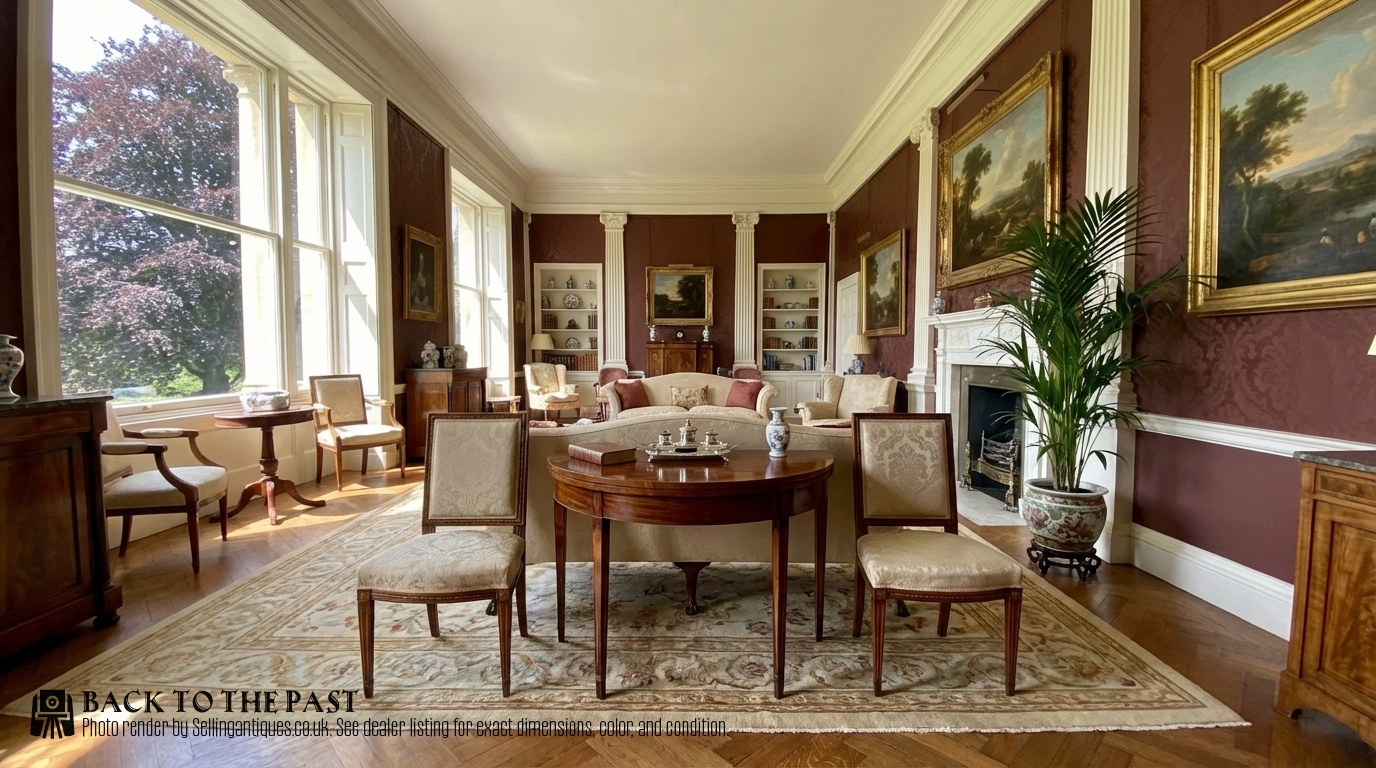
Pembroke and occasional tables served flexible functions in sitting rooms for sewing, writing, or holding decorative items. Demi-lune and side tables stood against walls in halls and drawing rooms.
Card tables remained folded until needed for evening games, after which servants returned them to the perimeter of the room.
How should I care for satinwood and marquetry surfaces?
Protect delicate veneers from direct sunlight to prevent the light satinwood and dyed marquetry elements from fading. Maintain a stable room temperature to avoid timber movement that can crack the veneer.
Apply high-quality beeswax sparingly and buff gently with a soft cloth to preserve the sheen without building up heavy residues.